
Driven: Range Rover Sport Electric is great without the V8
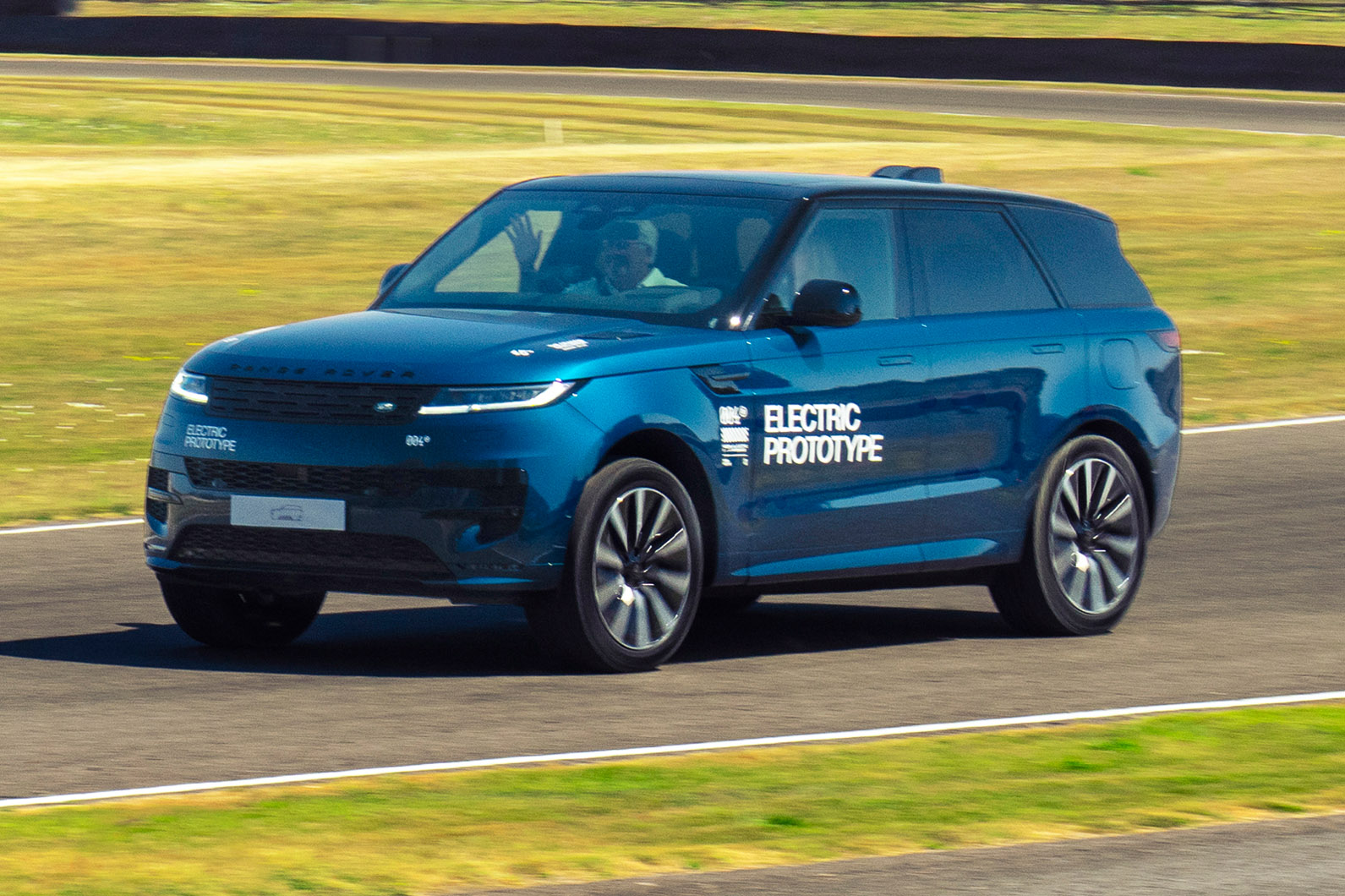
After all, job number one was to maintain that Range Rover character: the look, the refinement, the off-road capability and the commanding driving position. As such, the electric Sport isn’t meant to be an EV statement but rather just another powertrain option.
Indeed, unlike the iX5 prototype that I drove a while back, this car isn’t camouflaged, because there’s nothing new to hide. Other than the closed-off front grille and the EV badges on the slightly more aerodynamically optimised wheels, it looks the same as any other Sport.

As far as I could tell from a lap of the Goodwood circuit with some diversions onto gravel paths and some cones and a cut-up Airbus to drive through (an owner’s typical commute, then), it drives like one too — possibly even a bit better.
As Saunders noted about the full-size Range Rover EV, the really smooth power take-up is a boon off-road. There’s no waiting for an engine to rev or a torque converter to convert torque: it’s all there from zero and beautifully linear. There’s also no need for locking differentials or a low-range gearbox, because the electronics have much finer control over the electric motors compared with an engine.
The regenerative braking plays into this as well. There are no paddles, just D (which can be configured in the screen as ‘light’ or ‘standard’) and S (one-pedal) on the drive selector, but all settings are nicely progressive. The engineers say that the one-pedal mode is useful off-road, but in the hardcore rock-crawl-type stuff you often actually need quite a lot of braking force at a very low speed, which is something that friction brakes are much better at than regenerating motors, so I found that the brake pedal offered more consistent response in those situations.


Related posts

Latest Post


No Comments