
BMW’s Reliability Problems Officially Solved Thanks To An Inline-Six and 8-Speed Auto
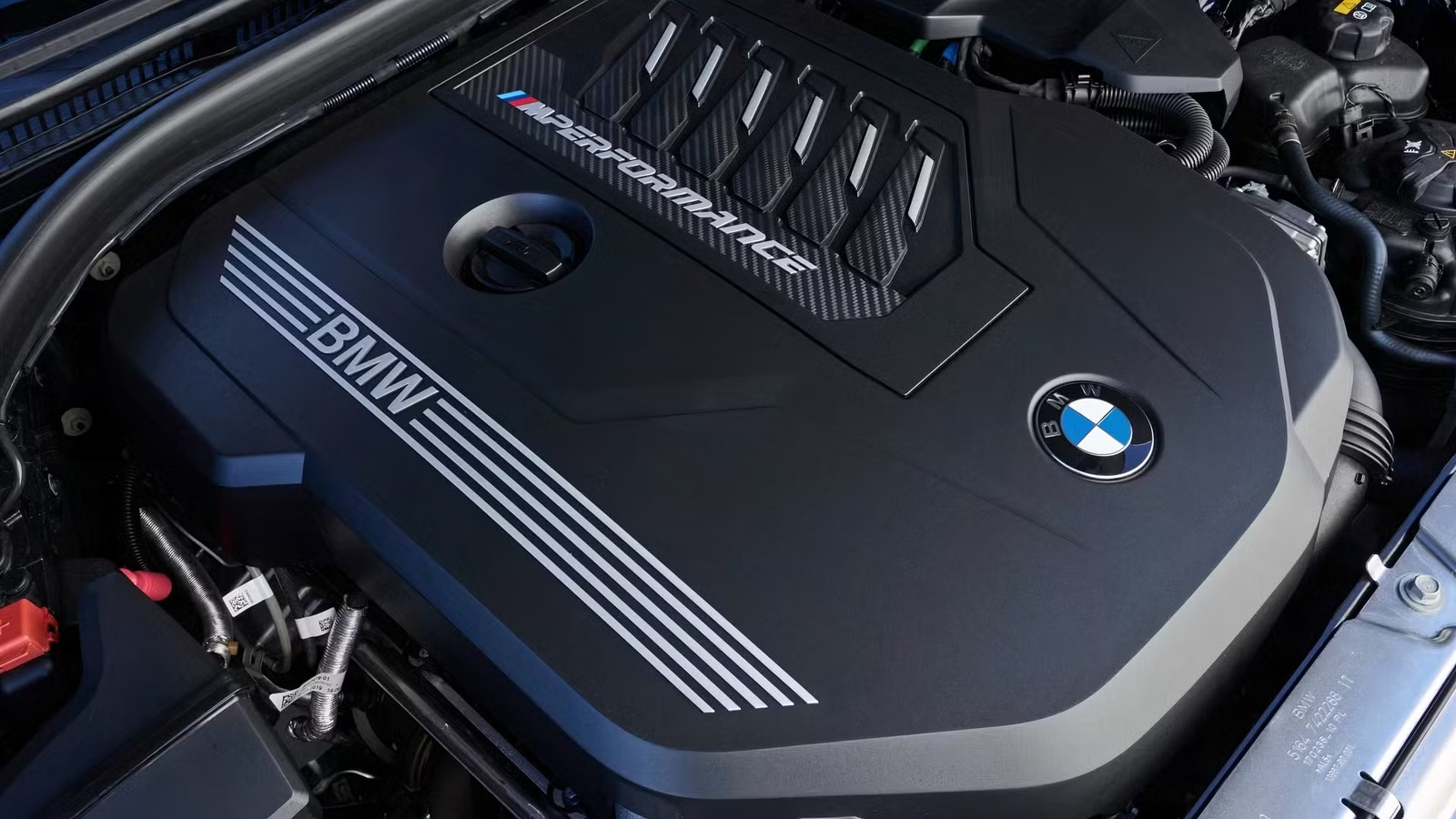
BMW once had a reputation for notorious reliability issues, but in 2026, the tide has officially turned. Consumer Reports recently ranked the German brand fifth overall in terms of reliability and first among European brands, with every model receiving an average-or-better predicted reliability rating. Considering that this would have seemed unthinkable two decades ago, the obvious question remains: What changed? BMW did not completely reimagine its engineering philosophy to achieve this feat. Instead, it strengthened the mechanical core of its vehicle lineup to the point that it redefined what buyers could expect from a modern German luxury car.
Why BMW Had A Poor Reliability Reputation

BMW may be leading the pack nowadays in terms of reliability, but for a considerable period, the automaker’s reliability record was considered subpar for several reasons.
Early Turbo BMW Engines Had Notorious Quirks

A major turning point in BMW’s history came with the introduction of its first mass-produced turbocharged inline-six engine, the 3.0-liter twin-turbocharged N54, which debuted for the 2007 model year in the U.S. The N54 was a major step forward for the automaker, but it also suffered from several issues that would tarnish its long-term reputation despite its strong performance and impressive power potential.
From wastegate rattle and high-pressure fuel pump failures to injector and water pump problems, the long list of issues that plagued the N54 made ownership not only unpredictable but also prohibitively expensive. While the later N55 variant addressed several of its predecessor’s weaknesses, including the turbocharger arrangement and fuel injectors, many reliability concerns persisted. Although catastrophic engine failures were not necessarily commonplace, exorbitant repair bills became a reality that N54 and N55 owners often had to contend with, making long-term ownership a proposition that could be difficult to justify financially.
Adding Durability Without Sacrificing Performance


However, because BMW’s appeal as a brand relies heavily on the performance of its vehicles, it could not simply sacrifice technological sophistication to make its cars more reliable. By the 2014 model year, BMW had largely transitioned to a turbocharged future, leaving naturally aspirated engines behind in most of its mainstream lineup.
The German automaker recognized that, with the right engineering changes, it could preserve the premium driving experience that defined the brand while directly addressing the reliability issues that had become a weakness. When BMW introduced its new modular engine family for the 2015 model year in the U.S., it marked a significant step toward delivering both performance and durability in the same package.
The B58 And ZF 8HP Became BMW’s Reliability Turning Point


For the 2016 model year in the U.S., BMW introduced the 3.0-liter turbocharged B58 inline-six in models such as the 340i, alongside the growing adoption of the ZF eight-speed automatic transmission across its lineup. Together, these components would become central to BMW’s improving reputation for mechanical durability.
The B58 Grew Stronger While Fixing Its Predecessor’s Weaknesses
The B58 inline-six was introduced alongside the B38 inline-three and B48 inline-four as part of BMW’s new modular B-Series engine family. The B-Series represented a significant evolution from its N-Series predecessor. While some fundamental design principles remained familiar, the new engines featured substantial architectural changes. The B58, for example, adopted a closed-deck block design that improved structural rigidity and provided a robust foundation for handling high cylinder pressures.
Thermal management was also significantly revised, helping improve durability under demanding operating conditions. Despite these changes, the B-Series engines also delivered more performance, torque, and efficiency than their predecessors while retaining considerable tuning potential. Consider that the B58 in the 2026 BMW M340i produces 386 horsepower from the same 3.0-liter displacement as the N54, but with a single turbocharger instead of two. Its combination of strong performance and improved mechanical durability has helped make it one of BMW’s most highly regarded modern engines.
The ZF 8HP Remains The Gold Standard

The six-speed ZF automatic transmission used in various BMW models during the E9X generation of the 3 Series developed a reputation for durability. However, by the early 2010s, the eight-speed ZF automatic had become increasingly common across BMW’s lineup. The newer transmission offered another level of refinement and efficiency while maintaining a strong reputation for handling the demands of modern powertrains.
Part of the B58’s success can be attributed to its pairing with such a capable transmission. The ZF eight-speed delivers quick, smooth shifts and a broad spread of gear ratios, helping the engine produce strong performance without compromising everyday drivability. Its torque capacity also makes it well suited to turbocharged engines that deliver substantial low-end torque. In terms of compatibility, the B58 and ZF 8HP make a particularly effective pairing, further strengthening BMW’s reputation for building durable, high-performance drivetrains.
The Misconception That Reliability Means Low Ownership Costs

One common misconception is that predicted reliability scores automatically translate to inexpensive ownership. At the end of the day, a BMW is still a European luxury car, which means that many ownership expenses will be higher than those of comparable domestic or Asian competitors.
That includes parts, labor, and everything in between. Reliability and affordability are not interchangeable because when something does break, it can still be expensive to repair. BMW maintenance costs remain relatively high compared with some competitors, including the Genesis GV80 Coupe, which has a cited five-year maintenance estimate of $2,802. That figure is notably low for a luxury SUV, demonstrating that even if BMW has improved its reliability, it has not necessarily eliminated the financial disadvantages associated with luxury-car ownership.
Why The BMW Reliability Conversation Has Changed

Before the introduction of BMW’s B-Series engines, buying a used turbocharged BMW could be a dubious decision at best. Today, however, shoppers can view certain newer models as compelling ownership propositions that offer a level of confidence that was harder to justify a decade ago.
A Used B58 Is A Completely Different Proposition Than A Used N54
Buying a BMW with an N54 might require a certain appetite for risk, but a B58-powered model inspires a different level of confidence. The B58 and ZF eight-speed automatic combination is available across a wide range of BMW models, giving used-car shoppers plenty of options. However, just because these newer engines are substantially more reliable than some of their predecessors does not make them indestructible.
Complete maintenance records remain essential when buying any used German luxury car, particularly one with a performance-oriented powertrain. Do yourself a favor and arrange a pre-purchase inspection with a local BMW specialist who can identify potential problems and give you greater peace of mind.
BMW Has Become Europe’s Most Reliable Automaker

BMW’s reliability credentials have never been stronger, while competitors such as Genesis have faced challenges of their own. That does not automatically make BMW more reliable than Genesis in every comparison, but it does demonstrate why broad assumptions about entire brands can be misleading. The old advice to avoid used German cars altogether is simply too simplistic for today’s luxury market, particularly when newer BMW powertrains have established a stronger reputation for long-term durability.
Sources: BMW, Genesis, iSeeCars, Consumer Reports, J.D. Power, NHTSA

Related posts

Latest Post


No Comments