
Chevy’s $4,160 Engine Option Made A 1969 Camaro Cost More Than An L88 Corvette
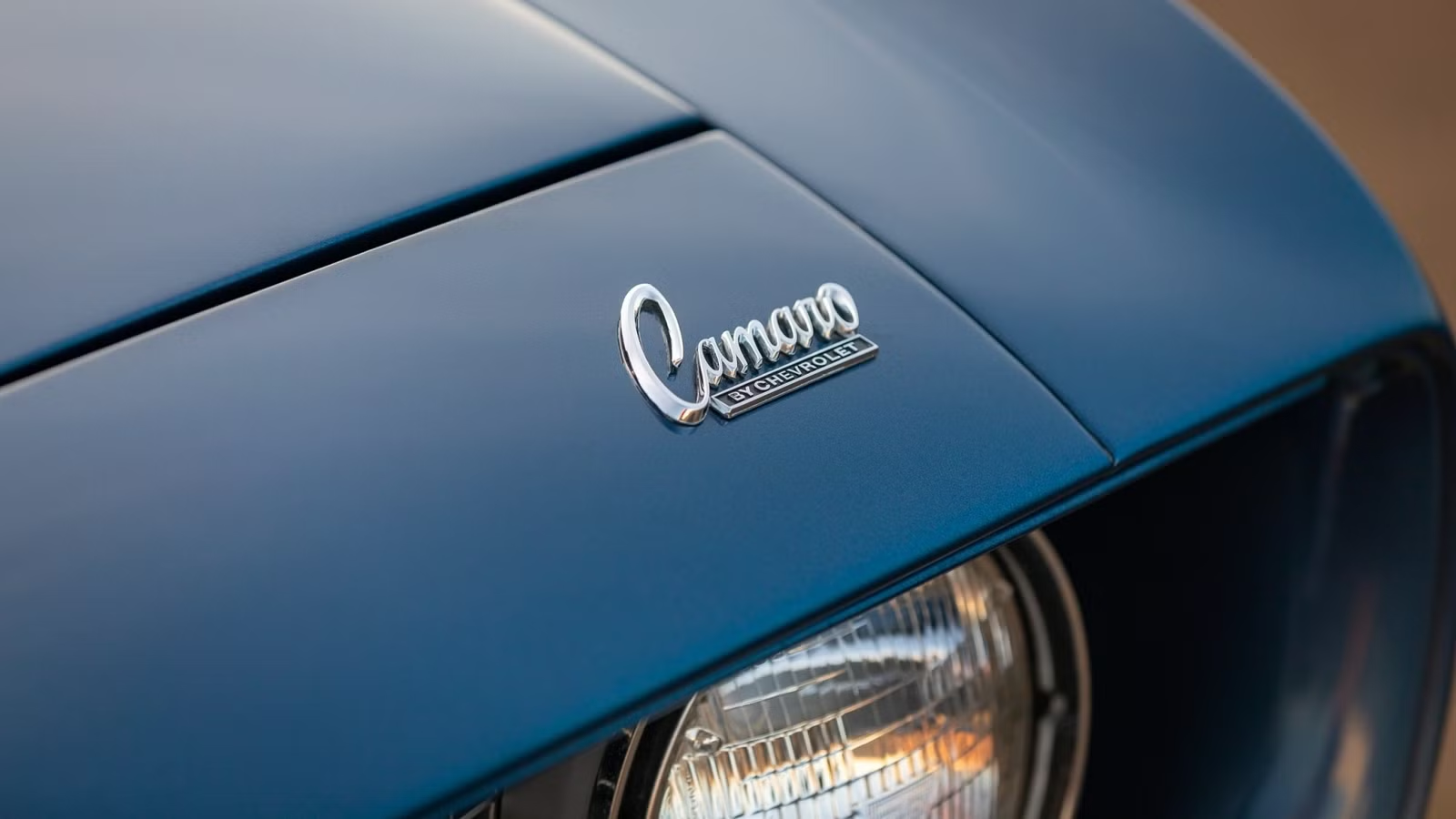
Imagine walking into a Chevrolet dealership in 1969 and finding the car at the center of the showroom wasn’t a Corvette, but an ultra-rare Camaro that actually cost even more. For one year only, GM flipped the usual hierarchy on its head. But one dealer would never forget when the first two racing-ready Camaros rolled off the truck and wouldn’t even start. The bad omen said more than any fender badge ever could.
The Corvette Was A Sports Car For The Everyman

Harley Earl famously watched Jaguars and MGs road racing and had the realization that America needed its own two-seat sports car. You might expect General Motors to slap an upmarket Oldsmobile, Buick, or Cadillac badge on the thing. But the Corvette wore a bowtie instead. That made America’s sports car an odd halo car: an exotic sold by the everyman’s division. Chevrolet continually improved the Corvette, using the performance technology of the day.
By the late 1960s, that meant independent rear suspension, four-wheel disc brakes, and engines borrowed from the racing division. A stock L88 Corvette led its GT class deep into the 24 Hours of Le Mans in 1967, before suffering engine failure. The Corvette combined road-course engineering and outrageous power in one package. To protect the halo, GM refused to sell customers the same huge engines in cheaper midsize cars.
Dealers Sidestepped GM’s 400-Cubic-Inch Ban


GM’s corporate policy barred engines over 400 cubic inches from smaller Chevrolets such as the Camaro. The decision protected the Corvette’s place atop Chevrolet’s performance hierarchy. It also frustrated buyers who wanted both the 427-cubic-inch L72 and a back seat. The Camaro was a light, short-wheelbase muscle car that already offered 375 horsepower from its big-block L78 396. Dealers could smell a major opportunity.
Don Yenko began selling 427-swapped Camaros in 1967. Other Chevrolet dealers built similar combinations. Yenko’s success demonstrated customers would pay for a rude, big-block Camaro Chevrolet refused to offer. Yenko, Fred Gibb’s drag-racing program, and allies inside Chevrolet’s Product Performance organization demanded a factory-built 427 Camaro. Chevy gave them much more than they were asking for.
Checking Chevy’s $4,160 ZL1 Option Made A Camaro Cost More Than An L88 Corvette

A reasonable choice would have been to install the L88 427 Yenko had been swapping into Camaros, with an iron block and aluminum heads, at the factory. Instead, the Camaro ZL1 made an unreasonable choice with an aluminum-block 427 developed for the Can-Am program. Chevrolet rated both engines at 430 hp, though they likely made much more power. More importantly for a drag racer, the ZL1 cut roughly 100 pounds from the nose versus the cast-iron block.

The Dusk Blue No. 2 ZL1 (pictured) was one of the first cars delivered to drag racer Fred Gibb. It was a plain-looking Camaro with an engine exotic enough to turn Chevy’s product hierarchy upside down. Then the invoice arrived. Gibb had expected a complete ZL1 Camaro to list around $4,900. Instead, Chevrolet demanded an extra $4,160.50 for the COPO 9560 “High Performance Unit” upgrade. One of Gibb’s four-speed cars stickered at $7,269.35. A similarly configured 1969 L88 Corvette coupe works out to roughly $6,695, so the Camaro cost about $575 more than Chevrolet’s purpose-built halo sports car.
The $7,300 ZL1 Camaro Was So Expensive, Dealers Yanked The Engines To Sell Separately

On December 31, 1968, the first two identical Dusk Blue ZL1 Camaros arrived at Fred Gibb Chevrolet in La Harpe, Illinois. It was 22 below zero and neither would start, an appropriately chilly omen. Gibb sold No. 2 to a private buyer. With the help of Dick Harrell, he rushed Camaro No. 1 into drag-racing trim. At its first outing, Herb Fox drove No. 1 past the two top qualifiers, including Ronnie Sox’s Hemi Barracuda, before losing in the semifinal.
Those early timeslips may have made the expensive ZL1 feel worth the money. Then they kept rolling onto the lot. Gibb had ordered the first 50 cars GM built to satisfy NHRA Super Stock’s homologation. But the sticker price made them brutally difficult to move. He was stuck with a lot full of new Chevrolets that nobody wanted.

Chevrolet eventually did something almost unheard of and accepted many of Gibb’s cars back. Returned Camaros went to Norwood for redistribution, while Gibb also wholesaled cars directly to other dealers. The problem followed them. Dealers even removed the aluminum ZL1 engines, selling them separately, then installing cheaper iron 396s or 427s, sprucing the cars up with stripes or mag wheels, and rolling them back onto the lot with lower sticker prices. Chevrolet eventually offered a $1,000 rebate to customers. Even so, Gibb did not sell his final new 1969 ZL1 until 1972.
Chevy’s $490 COPO 9561 Was The 427 Camaro Buyers Actually Wanted

Americans wanted big, race-bred V8 pony cars. Ford proved it with the 1969 Boss 429 Mustang: its NASCAR-homologation engine used an iron block with aluminum heads, and 857 buyers paid $4,798 for the complete car—including a $1,208.35 engine premium. Mopar made the same case in 1970 with the NASCAR-bred 426 Street Hemi, another iron-block monster. A bare four-speed Hemi ‘Cuda went for around $4,386 and a Challenger R/T around $4,395.

The irony is that Chevrolet also had a more reasonable answer. COPO 9561 Camaros came with the iron-block L72 427, still rated at 425 hp. They retained the ducted hood, heavy-duty cooling, and special 4.10 rear axle. The package cost just $489.75. Put another way, the aluminum block’s 100 pounds of weight savings cost $3,671—over $36 a pound. Chevrolet built about 997 of the iron-block cars, including Yenko’s famous double-COPO examples that also got the COPO 9737 Sports Car Conversion goodies. Chevrolet had simply flown too close to the sun with its all-aluminum COPO 9560 gamble. And it got burned.
Sources: GM, National Corvette Museum, Camaro Research Group, Mecum, and Sports Car Market

Related posts





Latest Post


No Comments