
Pontiac’s Last In-House V8 Was A 120-HP De-Bored 301 That Barely Saved Gas
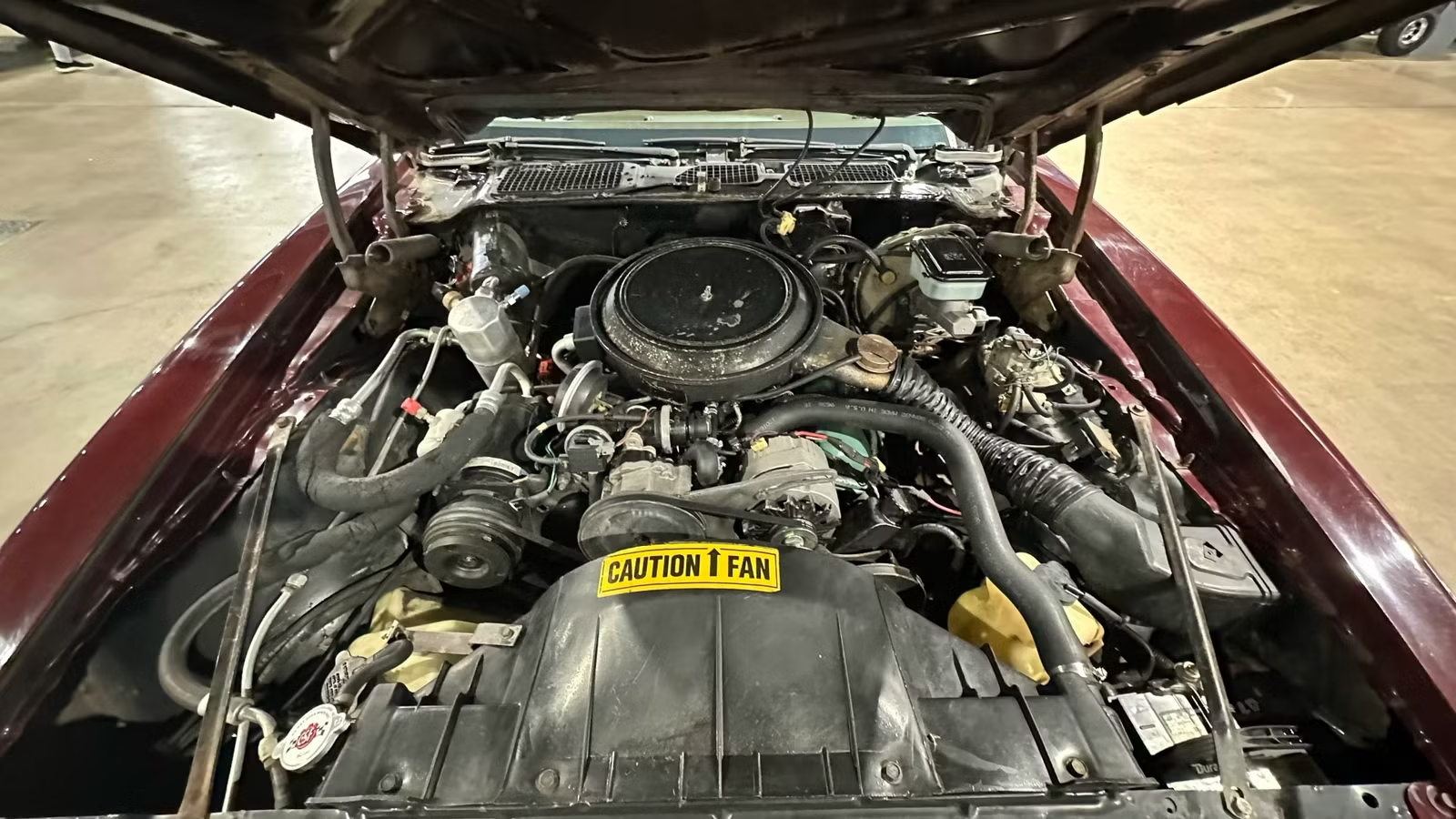
After building its brand around powerful V8s, from the early 287 Strato-Streak to the now-legendary 455, nobody was asking Pontiac for a less powerful, fuel-sipping engine. Until they were.

Tightening emissions requirements, rising fuel economy standards, and a changing automotive industry came for everyone. Pontiac was no exception.
Pontiac’s Mighty V8s Were Getting Smaller And Smaller
Prior to the 1970s, the trajectory of Pontiac’s engine development was one of relentless increase, eventually peaking at 455 cubic inches just in time for the automotive world to turn upside down.

Emissions regulations, an energy crisis, and federal Corporate Average Fuel Economy (CAFE) standards created unprecedented pressure on automakers to improve efficiency. Pontiac’s 455 would disappear after 1976 and the comparatively modest 400 was gone after 1979.
In their place appeared a new 301-cubic-inch V8, which started landing in cars beginning in 1977. It had lower displacement, was substantially lighter, and was engineered for fuel economy rather than horsepower. Pontiac used a shorter engine block, thinner castings, and a simplified crankshaft to reduce weight by more than 100 pounds compared to larger V8 predecessors.
The two-barrel 301 made just 135 horsepower. Enthusiasts could feel things tilting in the wrong direction, but Pontiac was just getting started.
The 265 Was A Smaller Version Of An Already Small V8

Being a car enthusiast in the 1980s was often as baffling as being one in the ‘70s was frustrating.
For the 1980 model year, Pontiac introduced an even smaller V8, the 265-cubic-inch LS5. Rather than developing an entirely new engine, engineers started with the 301 they already had and reduced its bore from 4 inches to 3.75. The result was a 4.3-liter V8 that now made even less horsepower and just 210 lb-ft of torque, sucking air through a two-barrel carburetor as best it could. Even by the lowered expectations of malaise-era America, the numbers didn’t impress.
Now making just 120 net horsepower, the anemic 265 found its way into a variety of GM models, including the Pontiac Grand Prix, the Buick Regal, and the Oldsmobile Delta 88. They were the kinds of places you’d begrudgingly expect to see such a thing, yet Pontiac didn’t stop there.
For 1981, you could order the 265 in the Firebird, effectively creating a car that looked like a Trans Am but could barely get out of its own way with less than two-thirds the horsepower of its proper muscle car of an older sibling. (We told you the ‘80s were baffling.)
All That Downsizing Delivered Questionable Fuel Savings

Of course, the 265 wasn’t there to win drag races. Its job was to help General Motors meet CAFE standards. As of 1978, that meant an 18 mpg average across the fleet, and for 1981 that number rose to 22. So the question is, did the smaller engine deliver?
Not really.
According to EPA figures from the time, a 1980 Buick Regal equipped with the 265 returned a combined fuel economy rating of 20.4428 mpg compared to the 301, which got 20.0093 mpg. No, you’re probably not used to seeing that many decimal points when discussing fuel economy averages and, yes, you do need to look that closely to draw a distinction between the two.
As far as a window sticker was concerned, cars showed the same “17” for city driving. For all that downsizing, plus incalculable levels of compromised performance endured on the road, the efficiency improvement amounted to little more than a rounding error.
That incremental improvement mattered to GM’s corporate fuel economy calculations, of course, but that wasn’t much consolation to someone stuck with a 120-horsepower V8.
Pontiac’s Engine-Building Era Ended In 1981

For all of the research, development, compromise, and downsizing, the 265 didn’t have much of a chance to make its mark. Pontiac ended production of its own V8 engines in 1981, with future V8s sourced from other corners of the General Motors family. The GM parts bin now included entire engines.
It was the end of an era, to be sure. Between 1954 and 1981, Pontiac built more than 14.5 million V8s, with comparatively few of those being the underpowered 265s that marked the end of the line. They powered everything from ordinary family commuters to some of the most iconic muscle cars we ever saw out of Detroit.
The final chapter of that history could have been a fire-breathing GTO or a leave-it-all-on-the-table Trans Am, but instead we got a 120-horsepower compromise that let Pontiac’s V8s leave with a whimper, another automotive victim of the baffling ‘80s.
Sources: Pontiac V8 Engine History, Curbside Classic, Ate Up With Motor, Over-Drive Magazine

Related posts





Latest Post


No Comments