
Pontiac Sold A Four-Door, Four-Speed Gem Nobody Remembers
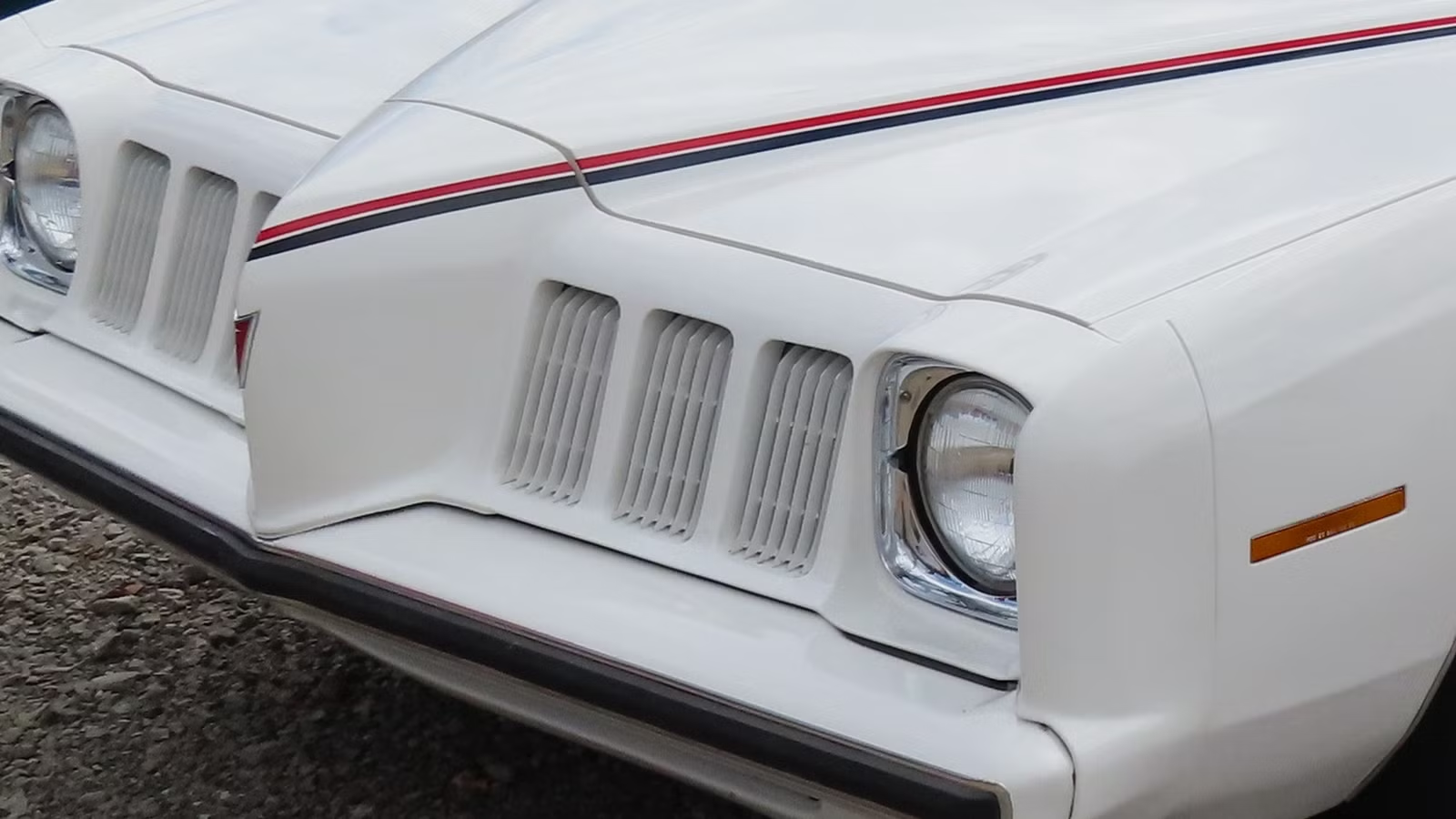
By the early ‘70s, Pontiac had firmly established itself as a master of building genuinely exciting cars out of otherwise ordinary transportation. But even by the standards of the company that gave us the GTO, sometimes the resulting combinations of practicality, performance, and styling could be surprising.

The original Grand Am was a comfortable, relatively upscale car that could be ordered with a proper V8. But it turns out that the order sheet left some room for creativity, resulting in some fascinating and now-ultra-rare cars.
The Grand Am Was An American Sports Sedan
Pontiac first introduced the Grand Am for 1973, with the car landing loosely between the comfort of the Grand Prix and the performance of the Firebird Trans Am. There it would serve as something of a competitor to the German sports sedans and coupes of the day, but with a take that was unmistakable Detroit.

Like German offerings from BMW and Mercedes-Benz, the Grand Am was available as a two-door coupe or a four-door sedan. It combined European-inspired handling and styling with the dimensions and V8 power of a traditional American midsize car, and although it shared some interior bits from the Grand Prix, the Grand Am was intended to represent a distinctly different driving experience.
A 400-cubic-inch V8 with a two-barrel carburetor was standard, but buyers who wanted to step up into proper muscle car territory could do so with a 455 V8. Pontiac built more than 43,000 of them in its first year. As you might expect, the overwhelming majority had automatic transmissions. But not all of them.
Pontiac Offered A Four-Speed Manual In A Four-Door Family Car

At a time when BMW’s M cars were still just a gleam in Jochen Neerpasch’s eye, Pontiac was willing to sell customers a four-door Grand Am with a V8 and let them shift their own gears. Many performance-oriented cars of the era expected you to sacrifice back doors for such a package.
There was a catch, though. The four-speed was only available paired with the L78 400 V8 with the four-barrel carburetor. That meant that the entry-level two-barrel 400 was automatic only, and worse, so was the most powerful 455.
The four-speed was the M20, and the Grand Am’s bucket seats made the shifter look right at home between them, where it would pretty clearly announce that this wasn’t a typical American family car. It was an unusual proposition in 1973. In any case, the combination didn’t resonate with a whole lot of buyers.
Almost Nobody Ordered The Four-Door With A Manual

Among the more than 43,000 Grand Ams produced for 1973, 1,058 had a manual transmission, making for a take rate of around 2.5 percent. That was across both sedans and coupes. Digging into production records further shows that the combination of the four-speed manual and the four-door body style was exceedingly rare, with just 87 cars built with that combination according to Pontiac historian Rocky Rotella with assistance from retired Pontiac employee Fred Simmonds.
These numbers weren’t widely available for decades, as surviving factory option reports from Pontiac revealed how many manuals were installed across its midsize cars without distinguishing between individual models and body style. Simmonds and Rotella were able to get to the bottom of it thanks to the kind of enthusiast work that has more to do with shuffling through papers than turning wrenches.
So while the two-door manual cars remain relatively rare finds, the four-door is a proper automotive oddity. It’s a car that could easily be mistaken for an ordinary ‘70s Pontiac until you look between the bucket seats.
The Manual Grand Am Disappeared After Just Two Years

The four-speed manual remained on the menu for 1974, but demand was even weaker. For 1975, the option was gone.
The Grand Am would eventually become a fairly mundane fixture on American roads through the ’80s and ’90s. The later versions of the car were a very different thing compared to the European-inspired V8-powered machines of the early ’70s.
For a nameplate that ended on an unremarkable note, the 87 cars with four doors and a manual transmission represent an odd footnote in Pontiac history, one of those obscure factory configurations that it wouldn’t even occur to you existed, if not for the diligent rummaging of a Pontiac fan with a penchant for posterity.
Sources: PontiacV8, General Motors

Related posts






Latest Post


No Comments