This 5-Year-Old Flagship Luxury Sedan Is Now A $40,000 Car
7 minutes reading
Saturday, 3 Oct 2026 23:01 0 64 autotech
Few automotive segments drop in value as steeply as full-size flagship luxury sedans. When launched, these flagship cruisers showcase the absolute peak of automotive engineering, comfort, and status, commanding six-figure window stickers aimed at corporate executives, high-net-worth individuals, and high-end leasing fleets.
Fast-forward half a decade, however, and the financial reality changes dramatically. On the secondary market, those same six-figure executive machines transform into surprisingly accessible vehicles. For savvy buyers who know what to look for, five years of market depreciation creates an extraordinary opportunity: acquiring a world-class luxury sedan loaded with active safety tech, whisper-quiet cabin insulation, and effortless powertrains for the price of a mid-tier, mainstream family crossover.
The Financial Reality Of Heavyweight Luxury Depreciation
The Math Behind The Plunge
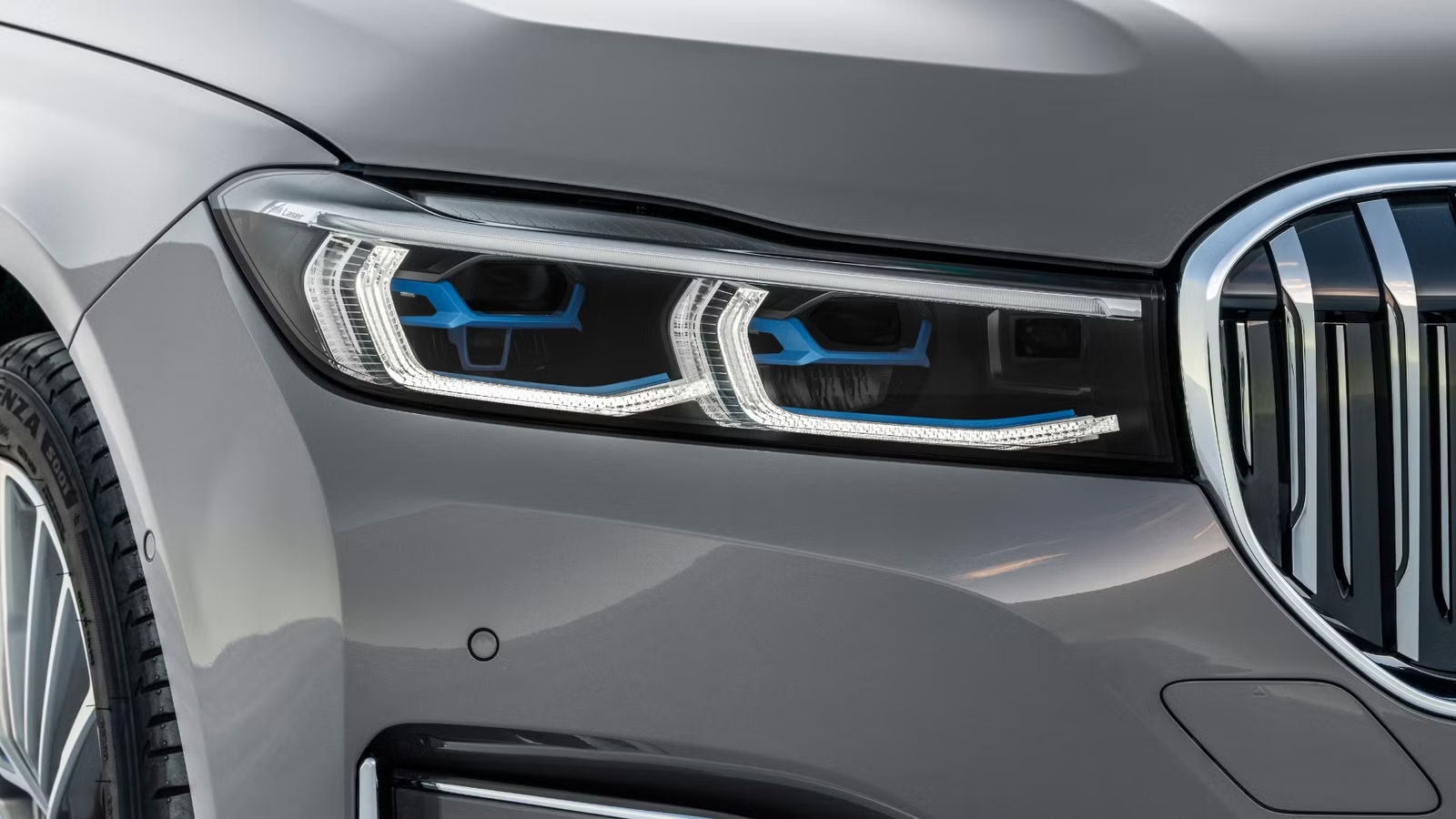
2019 BMW 7 Series Front WheelBMW
When analyzing market value retention over a five-year window, data from automotive research firm iSeeCars reveals the stark mechanics of flagship depreciation. Full-size luxury sedans consistently rank among the fastest-depreciating vehicles on the road. Specifically, a typical flagship sedan in this class suffers a 60.6 percent five-year depreciation rate.
To put that percentage into concrete financial terms, roughly $60,442 of original value vanishes into thin air over the first 60 months of ownership, driving the residual market value down to approximately $39,358. Broader market pricing data settles five-year-old examples directly around the $40,000 threshold, meaning an executive land-yacht loses more than three-fifths of its original sticker price before even reaching average mileage limits.
Why Super Sedans Lose Value So Quickly
Front 3/4 shot of 2023 Mercedes-Benz S-Class S 580 4MATIC drivingMercedes-Benz
This steep drop isn’t due to poor build quality; rather, it’s driven by the market dynamics of the luxury segment. First, the initial buyers of flagship sedans rarely purchase them outright to hold for a decade, preferring instead to lease them through corporate accounts or trade them in as soon as the factory bumper-to-bumper warranty expires, creating a predictable influx of well-maintained, three-to-five-year-old off-lease vehicles entering the used market simultaneously.
Compounding this supply is out-of-warranty tech anxiety, as second- and third-generation buyers are often intimidated by the sheer mechanical and electronic complexity of features like adaptive self-leveling air suspension, multi-zone climate modules, complex active-safety sensors, and high-strung turbocharged engines. These fears of four-figure repair bills create a perceived risk that suppresses second-hand demand, ultimately driving transaction prices down to irresistible levels.
Unveiling The $40,000 Executive Bargain: The BMW 7 Series
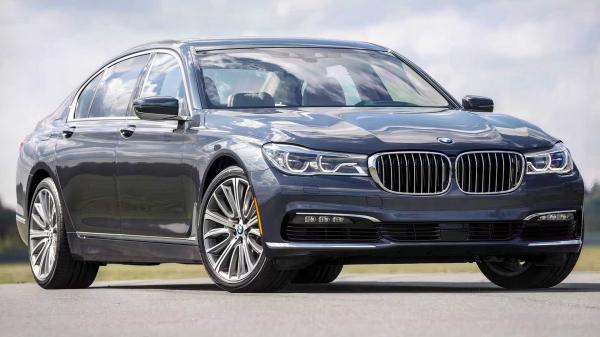
2020 BMW 7 Series front 3/4 shot parkedBMW
The flagship sitting right at this $40,000 sweet spot is the G11/G12 generation BMW 7 Series. At an average secondary market price hovering between $39,358 and $40,000, a five-year-old 7 Series (representing the refreshed LCI mid-cycle update years) offers a stunning value proposition. For context, $40,000 barely buys a mid-spec Toyota RAV4 or Honda CR-V in today’s new car market. Yet in the used luxury segment, that exact sum hands you the keys to Munich’s ultimate flagship engineering effort, complete with double-glazed acoustic glass, real leather upholstery, and road presence that still commands immediate respect.
Carbon Core Chassis, Twin-Turbo V8, And Massaging Rear Seats: What $100,000 Bought In 2019
The G11 (standard wheelbase) and G12 (long wheelbase) 7 Series brought structural innovations to the segment. This model is underpinned by BMW’s Carbon Core chassis structure, a hybrid architecture utilizing carbon-fiber reinforced plastic (CFRP) alongside high-strength steel and aluminum to lower the center of gravity while maximizing structural rigidity.
Depending on the exact trim selected at the $40,000 price point, the hardware remains formidable. Under the hood, models like the 740i feature the legendary 3.0-liter B58 inline-six engine, renowned for its balance of power, efficiency, and exceptional long-term mechanical durability. Stepping up to the 750i xDrive pairs a 4.4-liter twin-turbo N63 V8 with all-wheel drive, launching the large sedan from zero to 60 mph in under four seconds.
2016 BMW 7 Series badgeBMW
Inside, the cabin and tech integration showcase pure executive luxury, offering features like iDrive 7.0 with Gesture Control, dynamic ambient lighting, massaging multi-contour seating, and the optional Executive Lounge Rear Seating package, complete with reclining rear seats, footrests, and integrated seat-back entertainment displays.
What You Get Vs. What You Pay
The First-Class Driving Experience
2016 BMW 7 Series side driving shotBMW
Driving a five-year-old 7 Series highlights the difference between standard luxury and flagship engineering. On the highway, the standard two-axle self-leveling air suspension glides over road imperfections, while the active noise cancellation and acoustic laminated glass
Air Suspension, ECU Modules, And The Real Cost Of Owning A $100,000 Car At $40,000
2016 BMW 7 Series side shot with doors openBMW
While buying a $100,000 sedan for $40,000 cuts initial acquisition costs significantly, it is vital to remember that you are still maintaining a $100,000 car: replacement components, brake rotors, and specialized tires retain their original high-end pricing. Key inspection points on the G11/G12 platform include the factory air suspension struts and compressor units, where undetected leaks can cause the chassis to sag after sitting and lead to premature air pump burnout.
Furthermore, with dozens of onboard ECU modules and advanced driver assistance suites, handling routine electronics and iDrive resets requires specialized diagnostic software. Ultimately, navigating ownership costs successfully comes down to skipping steep dealership labor rates in favor of a trusted independent European specialist mechanic or securing a reputable aftermarket vehicle service contract that explicitly covers air suspension components and high-tech electrical systems.
Market Alternatives & Buying Strategy
Why The 7 Series Beats The S-Class And A8 At $40,000 — And The One Area It Doesn’t
Front 3/4 shot of 2017 BMW 750i xDrive in blue parkedBMW
2018 Mercedes-Benz S-Class front shotBring a Trailer
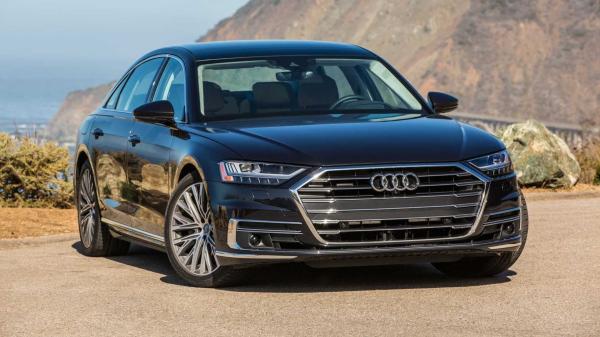
2019 Audi A8 front 3/4Audi
In the five-year-old flagship market, buyers are generally weighing three primary German contenders. The Mercedes-Benz S-Class (W222) remains the benchmark for pure isolated comfort and holds its resale value slightly better than its rivals, meaning a $40,000 budget typically forces buyers into an older or higher-mileage example compared to a cleaner 7 Series of the same model year.
Meanwhile, the Audi A8 (D5) comes standard with Quattro all-wheel drive and an understated cabin, but its heavily screen-centric dual-touchscreen infotainment system lacks the tactile ergonomics of physical controls, and second-hand inventory remains sparse. This leaves the BMW 7 Series in the sweet spot for driving engagement: its lighter Carbon Core chassis structure and responsive tuning make it feel noticeably more agile from the driver’s seat, while models equipped with the B58 inline-six offer superior long-term powertrain reliability.
Five Non-Negotiables Before You Hand Over $40,000 For A Used BMW Flagship
2020 BMW 7 Series 750i xDrive is a combo of power and luxuryBMW
If you are ready to shop for a five-year-old 7 Series around the $40,000 mark, narrow down the best candidates by prioritizing the right powertrain, verifying service history, and commissioning a professional inspection. Unless you explicitly require V8 acceleration, target the 740i or 740i xDrive, as the B58 engine is widely regarded as one of the most reliable modern powertrains BMW has ever produced for keeping long-term maintenance costs manageable. Next, demand a complete, documented service history showing regular oil changes—ideally performed every 5,000 to 7,000 miles rather than the full factory 10,000-mile schedule—along with routine coolant system checks.
Finally, never purchase a used flagship without spending $200 to $300 on a rigorous Pre-Purchase Inspection (PPI) by an independent BMW specialist who can scan for hidden fault codes, check air strut pressures, inspect the oil filter housing gasket, and examine the lower control arm bushings. The 60.6 percent five-year depreciation hit suffered by the BMW 7 Series may be painful for original buyers, but it creates one of the most compelling value propositions on the used luxury market.
2016 BMW 7 Series rear seatsBMW
By trading a mainstream new vehicle purchase for a well-inspected, five-year-old flagship sedan, you gain access to world-class engineering, ultra-quiet highway cruising, and high-end prestige for roughly $40,000. As long as you budget wisely for ongoing maintenance and buy with a clear service history, the five-year-old 7 Series delivers a six-figure driving experience at a fraction of the cost.













No Comments