
One Year After Its 270-HP 455, Oldsmobile’s Hurst/Olds Mostly Wore A 180-HP 350
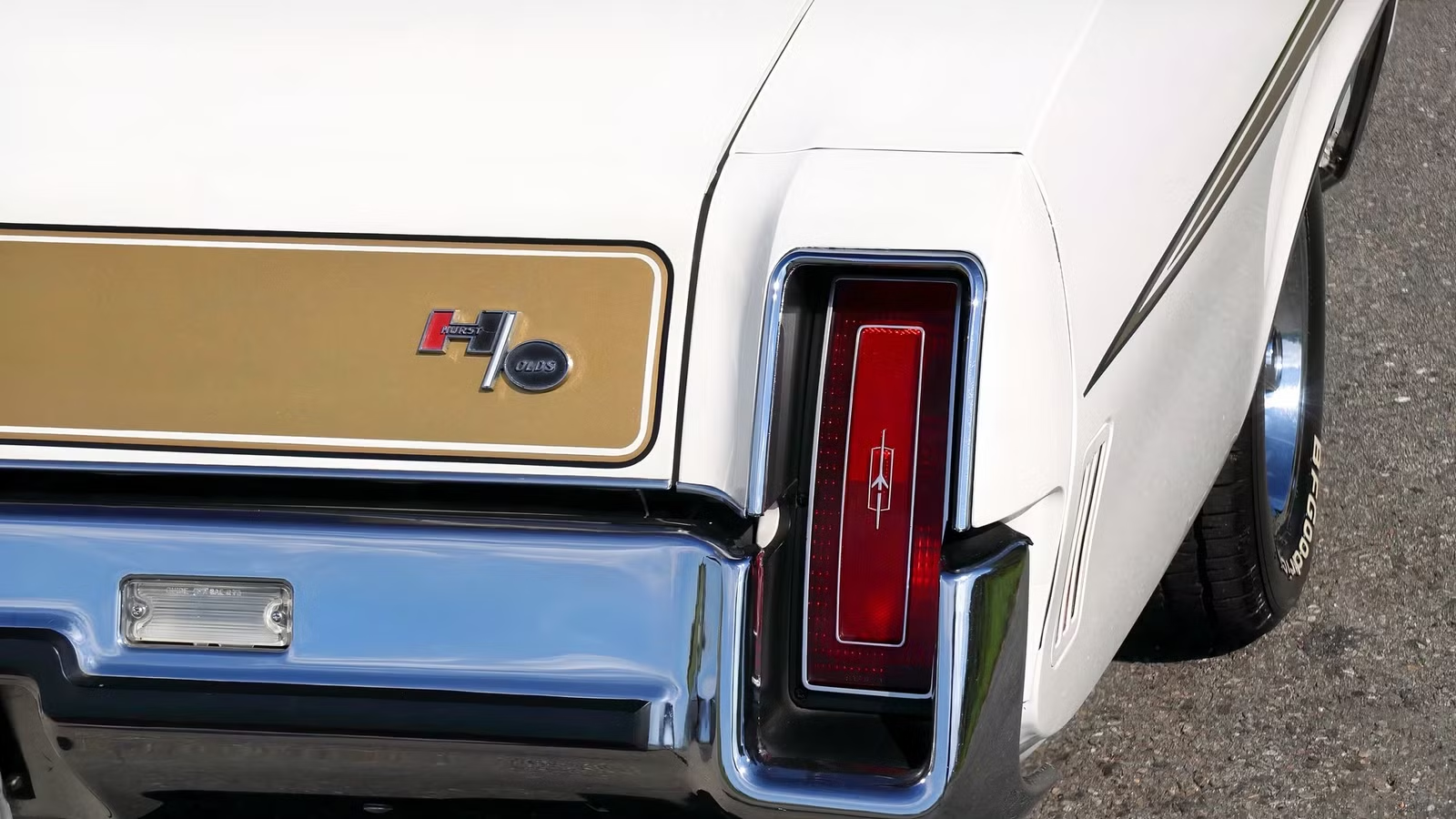
American Muscle Cars were getting a serious reality check in the early 1970s. Emissions rules were tightening, compression ratios were falling, and horsepower was vanishing from showroom brochures. Detroit was trying to keep performance buyers happy while forcing its big V8s to play by a whole new set of rules. One famous performance badge took a particularly wild turn. Its successor had a lot less muscle, yet Oldsmobile built more of them. And the Indianapolis 500 had a big hand in the story.
American Muscle Was Running Out Of Road

The early 1970s were a rough time for anyone who liked big engines and tire smoke. Automakers faced tougher emissions requirements and growing pressure to improve fuel economy. That meant lower compression ratios, softer engine tuning, and fewer of those outrageous horsepower figures that made the previous decade such a blast.
Then the industry switched from gross to net horsepower ratings for 1972, and the numbers on paper took another nosedive. Same engine, smaller number, sadder brochure. Performance cars weren’t disappearing overnight, though. Buyers still wanted aggressive styling and something entertaining under the hood. Manufacturers just had to keep those cars exciting without leaning on huge horsepower numbers. It was a tricky balancing act. The muscle-car formula was changing fast, and some familiar names were about to look very different.
Performance Cars Were Starting To Make Some Strange Compromises


The changes went deeper than engine output. Manufacturers were juggling transmission choices, axle ratios, and suspension setups to give buyers different flavors of performance. Shorter rear gearing could help a car jump off the line harder, while a hotter camshaft could change how an engine delivered its punch. Suspension upgrades also kept these increasingly heavy cars from wallowing like boats when the road got interesting.
But that performance hardware often came with strings attached. A buyer might have to give up air conditioning to get a hotter engine setup. That was a pretty big ask for anyone who wanted to survive a July drive without slowly melting into the vinyl seats. Special editions became another handy way to keep buyers interested. Distinctive paint, branded equipment, and motorsport connections gave manufacturers something to sell beyond the horsepower figure. One American performance badge was about to work that playbook like a pro.
The 1973 Oldsmobile Hurst/Olds Still Had A 270-HP 455

The 1973 Oldsmobile Hurst/Olds was still packing a 455-cubic-inch Rocket V8. Based on the new Colonnade Cutlass S, every single example got the big engine and a Turbo-Hydramatic 400 automatic. Gear changes ran through Hurst’s Dual-Gate shifter, which let drivers leave it in Drive or click through the gears themselves. The standard L75 engine was rated at 250 net horsepower. Buyers who wanted more could tick the W46 box and get the L77, rated at 270 hp.
That package added a hotter camshaft and steeper rear gears, but there was a catch. The W46 wasn’t available with factory air conditioning, so the quickest Hurst/Olds came with a free sauna every summer. The car looked the part, too. Buyers could pick Cameo White or Ebony Black with gold accents, while the louvered hood, Hurst badges, and swivel bucket seats gave the Cutlass serious showroom swagger. Hurst also offered an optional console-mounted digital tachometer. In 1973, glowing digits on a muscle car’s console were seriously space-age stuff. Production numbers are a small headache of their own. Mac’s Motor City Garage reports 1,079 examples, while the Hurst/Olds Club records 1,097.
One Year Later, Most Hurst/Olds Models Had A 180-HP 350

By 1974, the engine lineup had taken a noticeable step backward. The 455 was still around as the W-30, now rated at 230 net horsepower, but Oldsmobile added a W-25 version with a 350-cubic-inch V8 making just 180 hp. Production hit 1,800 Hurst/Olds coupes, with 1,420 carrying the 350 and only 380 getting the 455. That’s roughly 79%, or nearly four out of every five buyers driving home with the 180-hp version.
A Hurst/Olds had already paced the 500 in 1972, and for 1974, a specially modified version led the field with 1960 Indy winner Jim Rathmann behind the wheel. Hurst even converted a batch of full-size Delta 88 convertibles that year, a one-time oddity in Hurst/Olds history. Despite the shrinking horsepower, Oldsmobile built more Hurst/Olds coupes than the year before. Even the 1,420 cars with the 350 outnumbered the entire 1973 production run.
The Hurst/Olds Badge Survived, But The Muscle Was Fading Fast

The contrast between these two cars is hard to ignore. In 1973, the Hurst/Olds still gave buyers a 270-hp 455, a proper performance package, and genuine big-engine attitude. A year later, most of them rolled out with a 180-hp 350. The Indy spotlight gave the later car plenty of attention, but the styling, the special-edition appeal, and a market drifting toward smaller engines all played their part. For old-school muscle fans, that’s a pretty bitter trade. The 455 hadn’t vanished, but the smaller engine was now carrying the badge for most buyers. That’s how fast things changed. A name built on big V8 power was suddenly selling mostly on its looks, its gadgets, and that gold-striped Indy glamour. The badge was still there. The muscle that made it famous was getting a lot harder to find.
Sources: Mecum, Classic.com

Related posts

Latest Post


No Comments