
Mercury’s Thinking Man’s Muscle Car Wrapped Lincoln-Style Luxury Around An Underrated 428
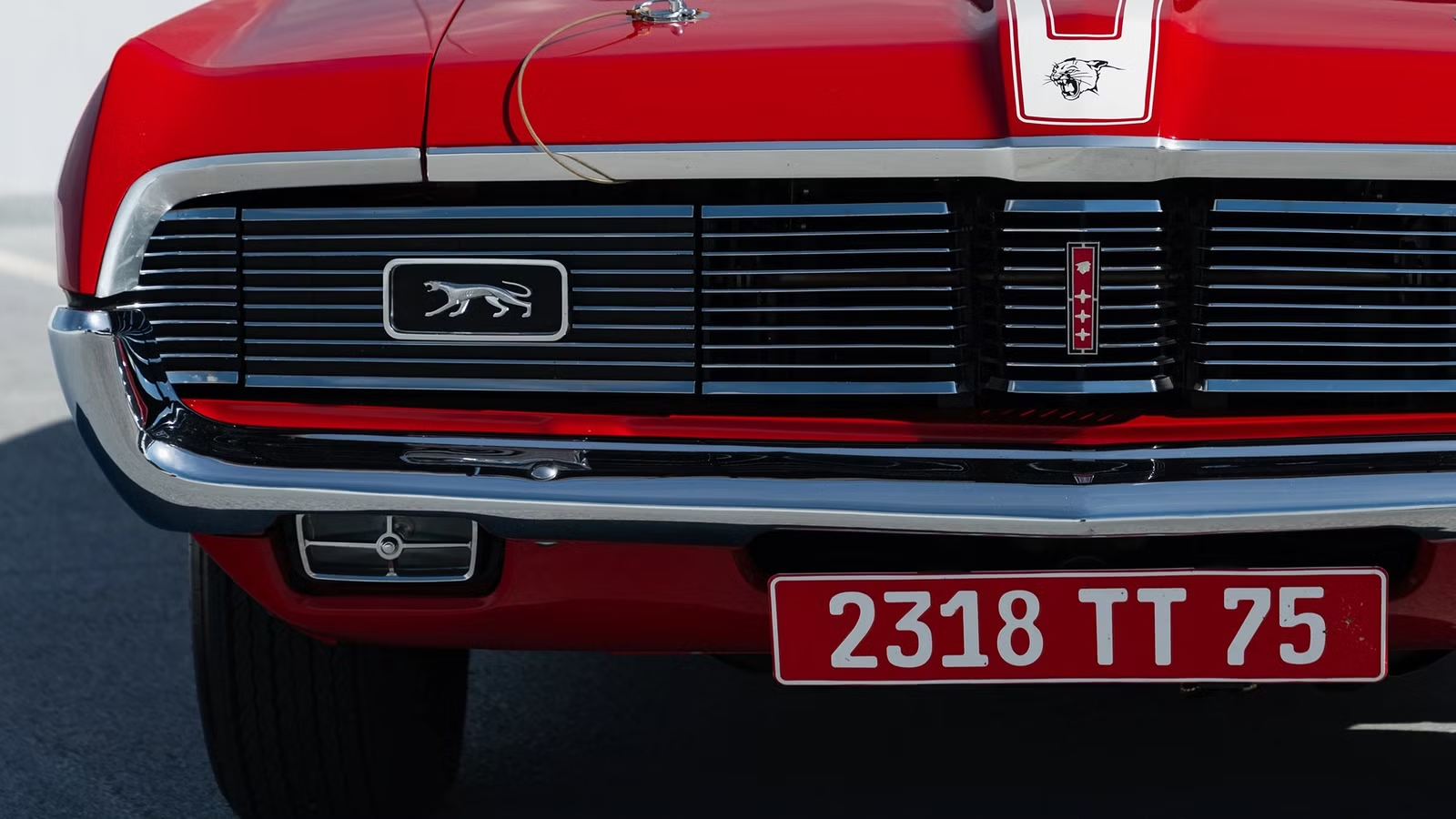
Picture a sleek cruiser rolling down the highway, swallowing up miles with ease, its cabin stitched in rich leather with burled-walnut trim. Now swap the relaxed highway cruise with the tire-burning quarter mile on the drag strip. Logically, the two settings call for two very specific types of automobiles. One belongs in the country club parking lot, and the other has a raw, loud V8 vibrating your bones. But in the late 1960s, one Detroit manufacturer tried to merge these two worlds, resulting in a muscle car that became a unicorn collectors still whisper about today.
The Great Compromise That Muscle Car Buyers Had To Make

As the golden era of the 1960s was coming to a close, the muscle car formula was set in stone, and the direction was clear. Cars on the showroom floor were stripped-down, bare-knuckled street fighters designed to do one thing: setting the quarter mile ablaze. And in that pursuit of speed, basic creature comforts were an afterthought. No sound insulation, no luxury trim; the designs were brutal.
The mainstream had one type of car: an aggressive, loud, rumbling muscle rocket — but that left a segment of drivers alienated, enthusiasts with a heavy right foot who also wanted elegance and refinement. The cars at the time were beasts on the drag strip but compromises in daily driving. Enthusiasts who wanted European elegance wrapped around an American V8 had few options; mature buyers wanted more. But a Detroit manufacturer addressed these niche needs and set out to build a car that became one of the classic era’s biggest engineering achievements.
How Mercury Stepped Up Its Game In 1969


Mercury stood in the shadow of its corporate sibling, Ford. The Mustang sold in the hundreds of thousands as the era’s classic pony car. Mercury needed a distinct identity. Mercury needed a car that could run with the heavy hitters at the drag strip while looking subtle and classy. A car that could bridge drag-racing and grand touring.
In 1969, they restyled the car to meet the challenge, dropping its vertical grille for a meaner, more aggressive horizontal sweep and introducing the sharp “downward spear” bodyline that completely transformed the car’s visual footprint. More importantly, in 1969, a convertible joined the lineup, offering an open-air experience that matched its new aggressive style with elevated luxury.
The restyled car even caught Hollywood’s eye, with a Candy Apple Red version appearing in James Bond: On Her Majesty’s Secret Service. But beneath the upscale look lay the main question: Could a luxury cruiser take on the purpose-built muscle drag racers? The task was monumental: the chassis was designed primarily for comfort, but Mercury’s result was staggering. Even more staggering was how many units they sold, and how it all ended.
The 1969 Mercury Cougar XR-7 And Its Rare 96 Units

The 1969 Mercury Cougar XR-7 Ram Air 428 convertible with an automatic transmission combined the drag-strip heart with a country-club interior. It was a statistical ghost, buried deep in a massive production run, and it represented the absolute pinnacle of Mercury’s engineering. Finding one today would be like discovering an automotive artifact, proving that factory custom orders could create something truly magical. And the numbers backed it up.
The Cougar had staggering production numbers that felt anomalous. Of the 100,069 Cougars manufactured for the 1969 model year, the upscale XR-7 trim accounted for 27,942 hardtops, leaving just 4,024 buyers who opted for the open-air grandeur of the plush XR-7 convertible. When you filtered the drop-top numbers down to the ultra-rare R-Code Ram Air 428 Cobra Jet V8, you entered extremely rare territory, with just 127 units built. Those final few also split by transmission preference: 31 manual 4-speed and 96 automatic examples.
Touring Comfort Matched to Drag-Strip Muscle

This combination worked because of the contrast between the Cougar’s two personalities. The XR-7 package transformed the interior into a European luxury car: supple leather-trimmed bucket seats, an authentic burled-walnut dashboard, a full instrument cluster with a functional tachometer, and a jet-aircraft-style overhead console. It felt less like a Detroit muscle car and more like an exclusive British gran turismo.
Yet a functional Ram Air scoop fed air to the 428 Cobra Jet. Factory specification sheets listed the engine at a conservative 335 hp and 440 lb-ft of torque, an intentionally understated official rating for insurance and homologation purposes. Period road testers and modern dyno accounts routinely estimate that the engine was actually pushing closer to 400 horsepower.
To reliably put this output on the strip, the car relied on stout, heavy-duty components, including robust 9-inch rear axle assemblies with optional Traction-Lok differentials. The automatic transmission, often dismissed by purists, complemented the setup masterfully, shifting smoothly during normal cruising while holding gears deep when urgency demanded it. The Cougar delivered effortless highway passing power wrapped in high-end acoustic and tactile comfort.
The Legacy of Detroit’s Thinking Man’s Luxury Muscle

Even decades later, the 96-unit Cougar XR-7 428 CJ convertible stands as a testament to an era when Detroit’s imagination pushed beyond conventional boundaries and created something entirely new. It wasn’t just a luxury car with a big engine, nor was it a stripped-down compliance special built solely for SCCA homologation.
It was the thinking man’s luxury muscle car, proof that a late-1960s enthusiast could indulge in Lincoln-style refinement without ever compromising what was under the hood in an automotive world flooded with the golden era’s standard hero cars. The Cougar stands out for its unique approach to solving a problem and the remarkable math behind its production numbers, making it one of the era’s rarest cars. A 400 hp luxury convertible with just 96 units built, it reminds us what happened when engineering audacity met untapped market ambition.
Source: Mercury, Ford, Bring a Trailer.

Related posts


Latest Post


No Comments