The Honda SUV That Makes A Strong Case Against The More Expensive Toyota
8 minutes reading
Monday, 21 Sep 2026 01:45 0 42 autotech
The compact SUV segment remains a battlefield where two Japanese giants fight for market dominance. One contender consistently draws buyers with a slightly lower entry price, exceptionally spacious cabin design, and refined driving characteristics.
Meanwhile, its long-time arch-rival relies on an aggressive hybrid-only strategy and more overall horsepower to justify a higher starting cost. Choosing between these top-selling family haulers comes down to balancing purchase price, long-term maintenance expenses, and specific mechanical layouts.
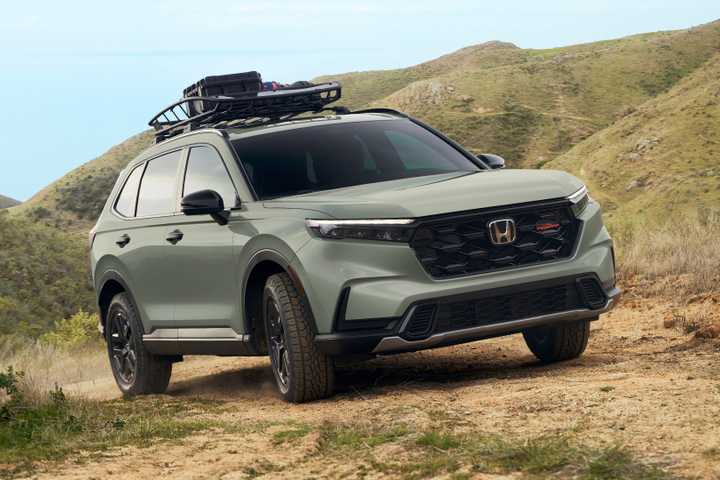
Front 3/4 shot of 2026 Honda CR-V parkedTopSpeed | Michael Frank
Honda continues its dominant presence in the American mainstream market. It achieves this by prioritizing practical utility, safety, fuel efficiency, and long-term reliability. While performance has its place in its catalog, the brand focuses on versatile, family-oriented vehicles equipped with straightforward ergonomics, user-friendly tech, and advanced driver-assistance features. A major pillar of this approach includes expanding hybrid powertrains to bridge the transition toward full electrification.
Through August 2026, American Honda exceeded one million total vehicle deliveries, recording a year-to-date sales increase of 3.5 percent. Light trucks and utility models drive the majority of this volume. Electrified options lead this momentum, with hybrid variants accounting for over half of total sales in key crossover lines. In fact, Honda’s flagship compact crossover claimed the top spot as the single best-selling non-truck vehicle in the country during the first half of 2026.
The target audience spans pragmatic suburban families, daily commuters, and active buyers who value low cost of ownership and strong resale value over flashiness. Overall consumer reception in the U.S. remains exceptionally positive. American buyers view Honda’s crossover portfolio as a dependable default choice, rewarding the brand with steady demand, low incentive requirements, and high brand loyalty.
The CR-V Remains Honda’s Champion
Front 3/4 action shot of 2026 Honda CR-V Sport Touring Hybrid driving on roadHonda
The 2027 Honda CR-V serves as the cornerstone of Honda’s SUV lineup, positioning itself between the smaller HR-V and the larger, three-row Pilot. With a base MSRP starting at $31,520, it anchors the practical, family-oriented segment for the brand.
Since the introduction of the first-generation model, Honda has built an exceptionally strong reputation for the CR-V among American consumers through a commitment to high resale value, interior space optimization, and intuitive driver technology. Its practical cabin design and emphasis on active safety features establish it as a default recommendation for suburban families and commuters.
2027 Toyota RAV4 front shotTopSpeed | Michael Frank
By comparison, the rival 2027 Toyota RAV4, starting at $31,900, targets the same demographic. However, the sales dynamic between the two rivals shifted noticeably throughout 2026. Supply constraints and inventory adjustments slowed RAV4 distribution early in the year, opening a clear path for Honda.
Through August 2026, Honda delivered 302,056 CR-V units in the U.S., representing an 8.3 percent increase year over year. Conversely, Toyota RAV4 sales fell to 219,472 units over the same timeframe, down 31.7 percent. Consequently, the CR-V holds a substantial sales lead over its primary competitor in 2026.
Honda’s Punchy Base Engine
Rear 3/4 shot of 2025 Honda CR-V in red parkedCarBuzz
The base-trim LX and EX Honda CR-V models feature a 1.5-liter turbocharged four-cylinder engine paired with a CVT.This setup generates 190 horsepower and 179 pound-feet of torque.Drivers can select front-wheel drive or an available real-time all-wheel-drive system.
In front-wheel-drive configuration, EPA fuel economy ratings reach 28/33/30 MPG on the city/highway/combined cycle.Choosing all-wheel drive reduces these figures slightly to 27/32/29 MPG. Fuel capacity matches the hybrid models with a 14.0-gallon fuel tank, yielding a total driving range of up to 420 miles per fill-up in front-wheel drive.
Comparing The Hybrid CR-V And RAV4 Models
Front 3/4 action shot of 2026 Honda CR-V Sport Touring Hybrid driving on roadHonda
The CR-V’s single gasoline-electric hybrid setup is the brand’s bestseller in monthly delivery reports. This configuration combines an Atkinson-cycle 2.0-liter four-cylinder engine with two permanent-magnet electric motors, producing a combined output of 204 hp and 274 lb-ft of torque. Buyers can select front-wheel drive or an available mechanical all-wheel-drive system with a direct-drive eCVT.
Front-wheel-drive variants achieve EPA consumption estimates of 43/36/40 MPG. Choosing all-wheel drive reduces efficiency slightly to 40/34/37 MPG combined. The front-wheel-drive CR-V achieves a total range of 560 miles from its 14-gallon tank, while the all-wheel-drive configuration provides 518 miles. EPA estimates project five-year fuel savings of $3,250 for the front-wheel-drive model compared to the average new vehicle sold in the U.S., costing approximately $1,550 to refuel annually, $2.56 to drive 25 miles, and $57 for a full tank.
Dynamic 3/4 shot of 2026 Toyota RAV4 Hybrid AWD drivingToyota
When compared directly to the Toyota RAV4 Hybrid, key mechanical and performance differences emerge across both powertrains. The RAV4 Hybrid utilizes a larger 2.5-liter four-cylinder engine pairing that generates higher system output at 226 hp in front-wheel drive and 236 hp in all-wheel drive, though the CR-V Hybrid maintains an advantage in peak torque at 274 lb-ft. Their all-wheel-drive executions also diverge fundamentally in engineering approach.
Honda retains a traditional physical driveshaft to transfer torque to the rear axle, whereas Toyota employs an Electronic On-Demand system that relies on a dedicated rear electric motor completely disconnected from the front driveline. Fuel efficiency favors the RAV4 Hybrid across all configurations, returning up to 47/40/43 MPG in front-wheel drive, as well as 46/39/42 MPG combined in all-wheel drive. Combined with a larger 14.5-gallon fuel tank, the Toyota delivers a superior overall driving range of up to 623 miles between fill-ups compared to the maximum 560-mile range of the Honda.
Competitive Review Scores And Running Costs
Side profile shot of a grey 2026 Honda CR-V Sport Touring Hybrid driving in the rainHonda
The 2027 Honda CR-V benefits from good overall mechanical reliability thanks to the dependable nature of its L-Series internal combustion engine unit, while the direct-drive system eliminates numerous potential mechanical failure points. J.D. Power grants the CR-V lineup an 83/100 consumer-verified overall rating, incorporating scores of 83/100 for quality and reliability, 79/100 for driving experience, 86/100 for resale, and 83/100 for dealership experience. By comparison, the Toyota RAV4 trails slightly in overall owner sentiment with a 79/100 J.D. Power score. This total reflects a 77/100 rating for quality and reliability, 79/100 for driving experience, 76/100 for dealership experience, and a strong 88/100 for resale value.
According to iSeeCars data, the CR-V delivers an average lifespan of 169,626 miles or approximately 13.9 years, alongside a 30.4 percent probability of reaching 200,000 miles. The outlet rates the CR-V at 7.9/10 for reliability, placing it second among the most reliable crossover and small SUVs.
Rear 3/4 view of a 2026 Toyota RAV4 LimitedIsaac Atienza | TopSpeed
The Toyota RAV4 ranks closely behind with a 7.8/10 reliability score, achieving a higher average lifespan of 175,778 miles and a 33.1 percent chance of crossing the 200,000-mile mark.
Financial metrics from CarEdge place the CR-V’s five-year ownership cost at $36,935, which runs roughly $1,000 higher than the RAV4. Furthermore, CarEdge projects ten-year maintenance expenses for the CR-V at $7,636 with a 21.74 percent chance of requiring major repairs. The Toyota RAV4 proves slightly more economical in long-term upkeep, averaging $6,004 in maintenance costs over ten years and carrying a lower 16.61 percent probability for major mechanical repairs.
Honda Covers All Bases Via Multiple Trim Options
TopSpeed | Michael Frank
Every 2027 Honda CR-V features an interior focused on ergonomics, visibility, and everyday functionality. The baseline LX model includes full LED headlights with auto-on/off, single-zone automatic climate control, push-button start, and a multi-function center console. Stepping up to mid-range configurations like the EX and Sport Hybrid. adds a one-touch power sunroof, dual-zone automatic climate control, heated front seats, a 10-way power driver seat with two-way lumbar support, and remote engine start.
Upper-tier trims like the EX-L, Sport-L, and Sport Touring Hybrid refine comfort further with genuine leather-trimmed seating, a four-way power front passenger seat, two-position memory settings for the driver, a leather-wrapped steering wheel, and a power tailgate. Top-tier Sport Touring Hybrid models add a heated steering wheel, rain-sensing windshield wipers, and a hands-free access power tailgate.
Shot of 2026 Honda CR-V Sport Touring Hybrid interior showing cabinHonda
Infotainment technology centers on user-friendly digital interfaces across the model lineup. Standard models utilize a color touchscreen interface paired with a 7.0-inch digital driver display. Wireless Apple CarPlay and Android Auto integration come equipped across the board, alongside Bluetooth streaming and multiple 3.0-amp USB-C charging ports for front and rear passengers. A 15-watt wireless smartphone charging pad and an enlarged 9.0-inch touchscreen feature on EX-trims and higher.
On TrailSport and Sport Touring Hybrid models, the semi-digital gauge layout is replaced by a fully digital 10.2-inch instrument cluster. Audio systems scale directly with trim levels, progressing from a base four-speaker, 160-watt setup to a six-speaker, 240-watt arrangement on mid-grade models. The EX-L and Sport-L Hybrid step up to an eight-speaker, 320-watt audio system, while the range-topping Sport Touring Hybrid includes a premium Bose 12-speaker audio system with a dedicated subwoofer. The flagship trim also incorporates Google built-in functionality, integrating native Google Maps, Google Assistant, and app connectivity directly into the center touchscreen display.
Base Trim Engine
1.5L I4 Turbo
Base Trim Transmission
CVT
Base Trim Drivetrain
Front-Wheel Drive
Base Trim Horsepower
190 HP @6000 RPM
Base Trim Torque
179 lb.-ft. @ 1700 RPM
Base Trim Fuel Economy (city/highway/combined)
28/34/30 MPG
Make
Honda
Model
CR-V
Segment
Compact SUV
Sources: Honda, Toyota, the EPA, J.D. Power, iSeeCars, Edmunds, and CarEdge.










No Comments