
Mercedes-AMG C63 S E Vs Volvo EX30: What A Head-To-Head Really Proves About Hybrid Power Vs EV Simplicity
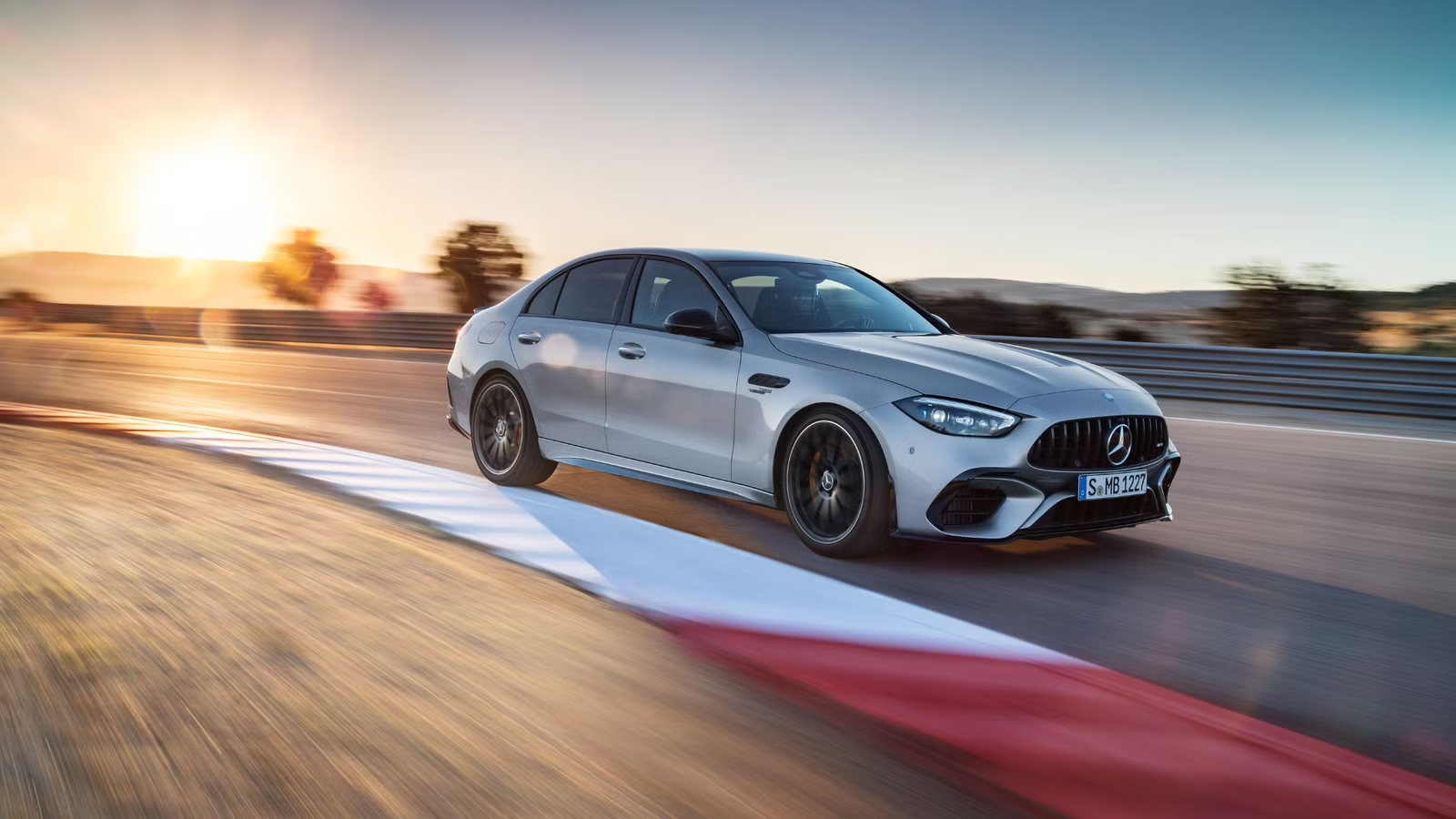
A viral video pitting the Mercedes-AMG C63 S E Performance against the Volvo EX30 has turned into something bigger than a drag race. On one side sits a 671-hp plug-in hybrid sedan built around a turbocharged four-cylinder, an electric motor on the rear axle, and a 6.1-kWh battery all working together to fake the drama of the V8 it replaced. On the other is a compact electric SUV that costs roughly a third as much, uses a single motor, and gets its thrust the simple way: straight from the battery.

The matchup went viral not because of who crossed the line first, but because it crystallizes two opposite bets on what electrified performance should feel like. Mercedes is spending enormous engineering effort to recreate a sensation EVs already deliver for free. Volvo is betting buyers don’t need the theater.
Two Totally Different Answers To The Same Question
The C63 S E Performance pairs a 2.0-liter turbo four with a 6.1-kWh battery and an electric motor integrated into the rear axle, part of a formula AMG also used on the larger E53 wagon, which combines a turbocharged six with hybrid assistance to post up to 604 hp in Race Start mode. The complexity buys drama: multiple drive modes, an electric-only range for creeping through neighborhoods, and a gas engine that can snap awake the moment you want it to.

The EX30 skips all of that. There’s no combustion engine to wake up, no transmission logic to manage, no buffer between the accelerator pedal and the motor. It’s the same instant-torque feeling the C63 S E Performance spends a six-figure engineering budget trying to simulate, built in from the ground up.
Why Automakers Keep Building It The Hard Way
Lamborghini’s product line director, Paolo Racchetti, made the case for this kind of complexity plainly when discussing the hybrid V8 Temerario: a super-sports car has to deliver emotion, not just acceleration, and that emotion still comes from a combustion engine revving to 10,000 rpm even when three electric motors are doing the heavy lifting. Mercedes is working from the same playbook on a smaller scale. The C63 S E Performance isn’t trying to be the quickest way to convert energy into speed. It’s trying to sound and feel like the V8 it quietly replaced, using hybridization to paper over what a turbo four alone can’t deliver.
That’s an expensive problem to solve. Every layer added to recreate that feeling, the turbo lag management, the battery buffering, the motor blending seamlessly with the gas engine, is a layer that can fail, needs servicing, or adds weight the EX30 never carries in the first place.
The Price Gap Is The Real Headline

A third of the price buys a lot of patience with an electric SUV that doesn’t try to impersonate anything. The EX30 skips the maintenance realities that come with a hybrid system: no turbo, no multi-speed transmission paired to an engine, less software complexity translating electric and combustion power into one output. Owners of a PHEV performance car are also signing up for battery upkeep eventually, on top of regular service for the combustion side, a bill the EX30 owner simply doesn’t get.
That gap is the actual argument buried in this viral comparison. It isn’t about which car is faster. It’s whether buyers are willing to pay AMG money for an experience built to feel like something it isn’t, when a cheaper, simpler EV already delivers the sensation everyone’s chasing.
The C63 S E Performance and the EX30 aren’t really competing for the same buyer. But side by side, they make an honest case for where electrified performance goes next: toward more layers and more nostalgia, or toward less complexity and a lower price tag.

Related posts

Latest Post


No Comments