
Mazda’s Diesel-Like Gas Engine Just Hit A Major Setback
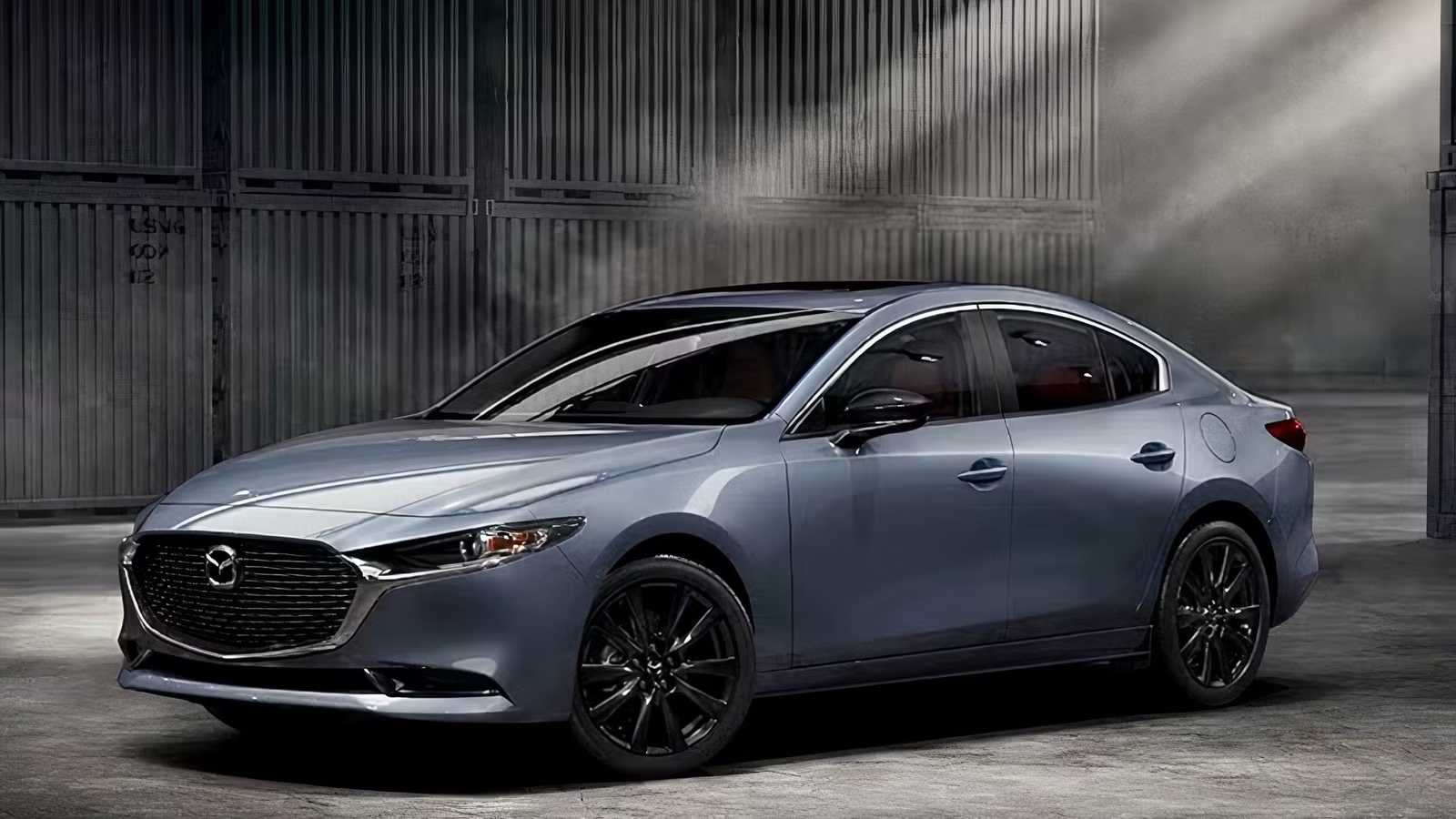
Mazda is quietly pulling the Skyactiv-X engine from the European Mazda3, according to Auto Express reporting confirmed by Carbuzz and Motor1. That leaves the 2.0-liter compression-ignition engine in just one European model, the CX-30, after barely seven years on sale. It was never sold in the US at all.

The move closes the book on one of the more ambitious combustion experiments of the last decade. Skyactiv-X used a spark plug to trigger diesel-style compression ignition in a gasoline engine, chasing efficiency gains that diesel engines got almost for free. The tech worked. It just never worked well enough, or cheaply enough, to beat the alternatives that every other automaker was already building.
How Spark Controlled Compression Ignition Actually Works
Mazda calls the tech SPCCI, short for Spark Controlled Compression Ignition. A conventional gas engine fires a spark plug to ignite the whole air-fuel charge. A diesel skips the spark entirely and relies on heat from compression alone. Skyactiv-X splits the difference: it compresses a very lean air-fuel mixture to a ratio of roughly 16:1, just short of the point where it would self-ignite, then injects a small, richer pocket of fuel right around the spark plug. The spark lights that pocket, and the resulting pressure wave pushes the rest of the lean mixture past its compression-ignition threshold, so it combusts the way diesel fuel does.

The payoff was supposed to be diesel-like efficiency without the particulate filters, the NOx headaches, or the fuel pump sourcing problem. Mazda claimed the engine could run in that efficient mode more than 80% of the time, with fuel economy gains up to 30% in low-speed driving compared to its older MZR engines.
The Spec Sheet That Killed It

Real-world numbers tell the story Mazda didn’t want to tell. The Skyactiv-X made 184 horsepower against 138 hp for the cheaper 2.5-liter Skyactiv-G, but its WLTP fuel economy rating only reached 39 mpg with an automatic. That’s a marginal gain for an engine that cost around $3,000 more. Buyers looked at that math and picked the simpler, cheaper four-cylinder.
It’s not that SPCCI failed on the bench. Ford, GM, and Honda all chased homogeneous-charge compression ignition for years and none of them got it to production. Mazda actually shipped it. But shipping a clever engine isn’t the same as shipping one that pencils out against a turbocharger, which was already cheaper to build, easier to package, and better understood by every supplier in the industry.
Why Hybrids Won The Argument Skyactiv-X Was Trying To Make

Mazda’s answer isn’t to abandon the idea, it’s to stop asking combustion alone to do all the work. The next-generation Skyactiv-Z, expected in the Mazda CX-5 around 2027, carries forward an evolved version of SPCCI aimed at burning even leaner mixtures, but it pairs that combustion tech with Mazda’s own hybrid system and new heat-recovery hardware that turns escaped exhaust heat back into usable power.
That’s the real postmortem here. Skyactiv-X proved spark-controlled compression ignition could work outside a lab, something Ford, GM, and Honda never managed. But the industry had already decided efficiency gains were cheaper to buy through electrification and turbocharging than through exotic combustion chemistry. Skyactiv-Z is Mazda’s admission that the engine was never going to get there alone, and that the only way the idea survives is wrapped around a battery and a motor.

Related posts



Latest Post


No Comments