
Lotus Built a 200 HP Motorcycle That Looks Like It Came From The Future
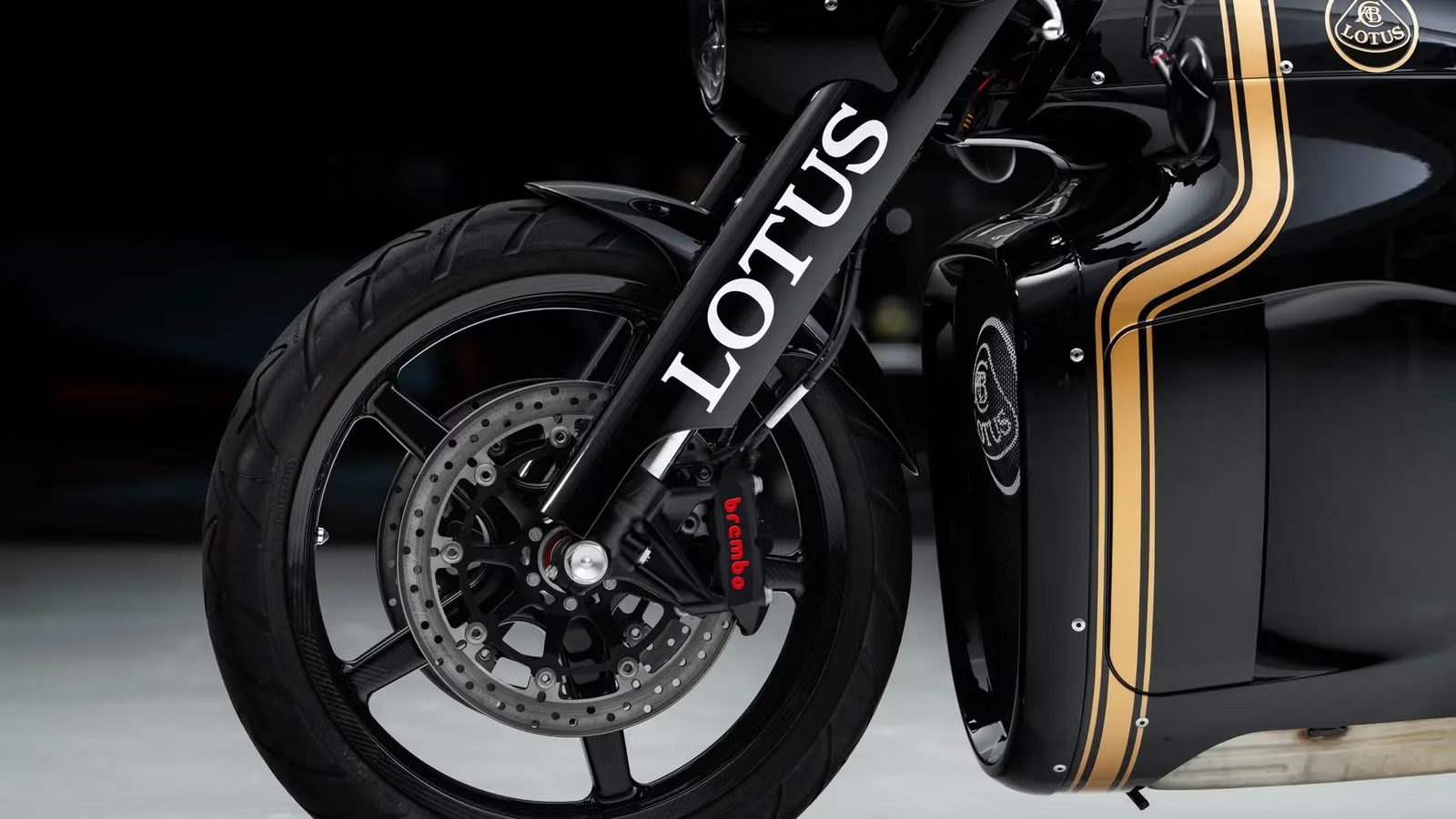
When car manufacturers start to look outside of cars for their next product, it usually turns into some vapid vaporware experiment that never sees the light of day, a concept that doesn’t leave the page, or a prototype that promises far more than it delivers in reality. But, in the mid-2010s, Lotus unveiled a motorcycle that not only looked outlandish, but had the power to back it up. And what’s better is they actually made them.
The 2010s Were An Age Of Outrageous Motorcycle Design

Motorcycle designers weren’t afraid to take a chance in the 2010s. Bikes were already devastatingly fast and incredibly quick to accelerate, so their very form became the next target for brands to differentiate their offerings.
The Ducati Diavel was one such example. Unsurprisingly, roughly translating to the Ducati Devil in Bolognese dialect, the 2011 Diavel had the aggressive stance of a muscle bike, the ergonomics of a cruiser, and the 162 HP and 94 lb-ft of torque of a superbike. Anyone brave enough to stretch the legs of its 1,198cc engine would get to nearly 170 MPH. Honda went in a different direction. Its NM4 Vultus bears more than a passing resemblance to the iconic bike from Akira, with its stealth-bomber bodywork, angular proportions, and overall futuristic vibe looking like they’ve been lifted straight from a science fiction movie.
Some brands still stuck with making their bikes ludicrous from a performance aspect, with the BMW S 1000 RR bringing nearly 200 HP to the masses, while Kawasaki stuck a supercharger on a sportbike in the Ninja H2, but looks were a burgeoning market. And it wasn’t just the big boys that made unique-looking bikes, either.

Motorcycle Designers Started Looking Beyond The Traditional Superbike Formula

While major brands continued down the path of diminishing returns on fractional performance gains, a different kind of bike was coming from smaller engineering companies. Freed from the concerns of mass-production, these brands could create bikes however they fancied and, in practice, that typically means massive engines, fancy materials, and minute production runs aimed at wealthy collectors rather than normal people.
Motorsport also plays a part. Racing technology is inherently cool, as it’s what wins races and is always on the bleeding edge of technology. Whether it’s carbon fiber, ceramic brakes, lightweight chassis, or some other feat of engineering brilliance, what works on track typically finds its way to the highest of the high-end in road-going vehicles.
This isn’t unique to bikes. Pagani and Koenigsegg do it in cars, and other car brands sometimes do it in luxury goods. Lamborghini and Aston Martin both have boats and motorcycles. For example, Lambo with the Tecnomar Lamborghini 36 boat and Ducati Panigale V4 Lamborghini, while Aston has the AM37 powerboat and the AMB 001 and recently-released AMB 002 bikes. And while these are certainly interesting pieces of rare machinery, one brand took both the style and performance of a motorcycle in a whole different direction.
The Lotus C-01 Was A 200 HP Bike Back From The Future

You likely know Lotus as a manufacturer of small, agile, British enthusiast cars. Perhaps, for those that are older, you know it as the John Player Special-liveried F1 team of the 1970s and 1980s run by the enigmatic and mustachioed Colin Chapman, whose “simplify, then add lightness” mantra still rings true today. If you’re really into your cars, you might even know it as the originator of the Caterham, given that the brand bought the Lotus Seven design in 1973 and still uses it to this day. Regardless, you don’t know it as a motorcycle manufacturer. But, in 2014, that’s exactly what it unveiled. And, contrary to Chapman’s mantra, it was anything but simple.
As the first motorcycle to bear the Lotus name, and being designed by Daniel Simon — the man who designed, among other things, the Light Cycles in 2010’s Tron: Legacy and the autonomous Robocar, the C-01 could hardly have looked any more unique if it tried. The fairing didn’t just cover the engine, but almost the entire body of the bike. It encased the mechanicals and extended up to the tank, creating a square mid frame that hid the bike’s internals. The front forks were viciously raked, to the point where the front wheel’s hub was far further forwards than the headlight, while the rear wheel sat further back than the rider, giving the bike a substantial ~7.6ft length. But it needed at least some of that length to house what lay underneath that bodywork.
While Lotus isn’t really known for having the most powerful of cars, the bike was a bit of a departure from this. That’s because it had a 1,195 cc V-twin engine from a KTM RC8R (itself a devilishly-powerful sporting machine) that was good for around 200 HP. For context, that’s more than a Lotus Elise Sport 135, more than the odd-looking Lotus 340R, and more than the Lotus Exige S1. In something that weighed 399 lbs dry. Flippin’ eck.

Of course, this was no ordinary bike, so it could have no ordinary paint job, either. Bikes could be purchased in a range of liveries from Lotus’ glory days, including the green and yellow first made famous in F1, a Martini-inspired white, red, and blue number, or exposed carbon fiber with gold pin striping and logo a la JPS. But that Lotus logo hid something that wasn’t entirely the full story.
We already know that the Lotus C-01 was secretly a KTM underneath, and was designed by Daniel Simon, but the external partnerships didn’t end there. It was actually built by German brand Kodewa, who now go by ByKolles, alongside the Holzer Group. They didn’t exactly have to clear their schedules, though, as just 100 examples of the bike were to be made.
The C-01 Was More Than Just A Futuristic Concept

Many manufacturers would have been happy to design the concept and then send some JPGs to news outlets to revel in the coverage. Some might have gone as far as creating a real-life version, offering something tangible to look at while still not turning a concept into reality. Lotus went one further. Or, rather, 100 further, with its very limited production run.
Bikes were sold for a little over $130,000, putting them firmly out of reach of normal riders, but that wasn’t really the point. A bike like the C-01 wasn’t necessarily meant for the road, nor was it meant to be some new leap into production motorcycles from a company that had only ever made specialist vehicles. And that’s what makes the C-01 so interesting.
Sure, much of the work was outsourced, but it wasn’t simply some regular bike with futuristic panels slapped on it. The styling influenced the engineering decisions, creating compromises that wouldn’t necessarily have been made for a conventional performance motorcycle. What resulted was something not only truly exciting, but something totally road-legal and available for the right price.
Lotus C-01 Became A Modern Motorcycle Design Icon

The Lotus C-01 ultimately became memorable for reasons beyond its already ludicrous performance figures. It might not have birthed a larger range of Lotus motorcycles, but what it did was prove that Lotus was still the bold, pioneering brand that it had been when Chapman was still adding lightness.
The bike’s deliberate scarcity was another part of its legacy. The 100 bikes that were made are exceedingly rare, with one example selling for $228,000 at auction in 2024. Forget having the money to buy one, it’s a hard job to just find one actually for sale.
But while the C-01 may be one of Lotus’ rarest vehicles, it remains one of its most exciting. A bike that not only looked like it came from the future, but which had the performance to back it up. At a time when bike design is becoming ever-more homogenized, the C-01 stands proud as something unique, and truly unmistakable.
Sources: Daniel Simon, Wired

Related posts





Latest Post


No Comments