
Jeep Could Give The Wrangler A Major Suspension Change To Fight The Bronco
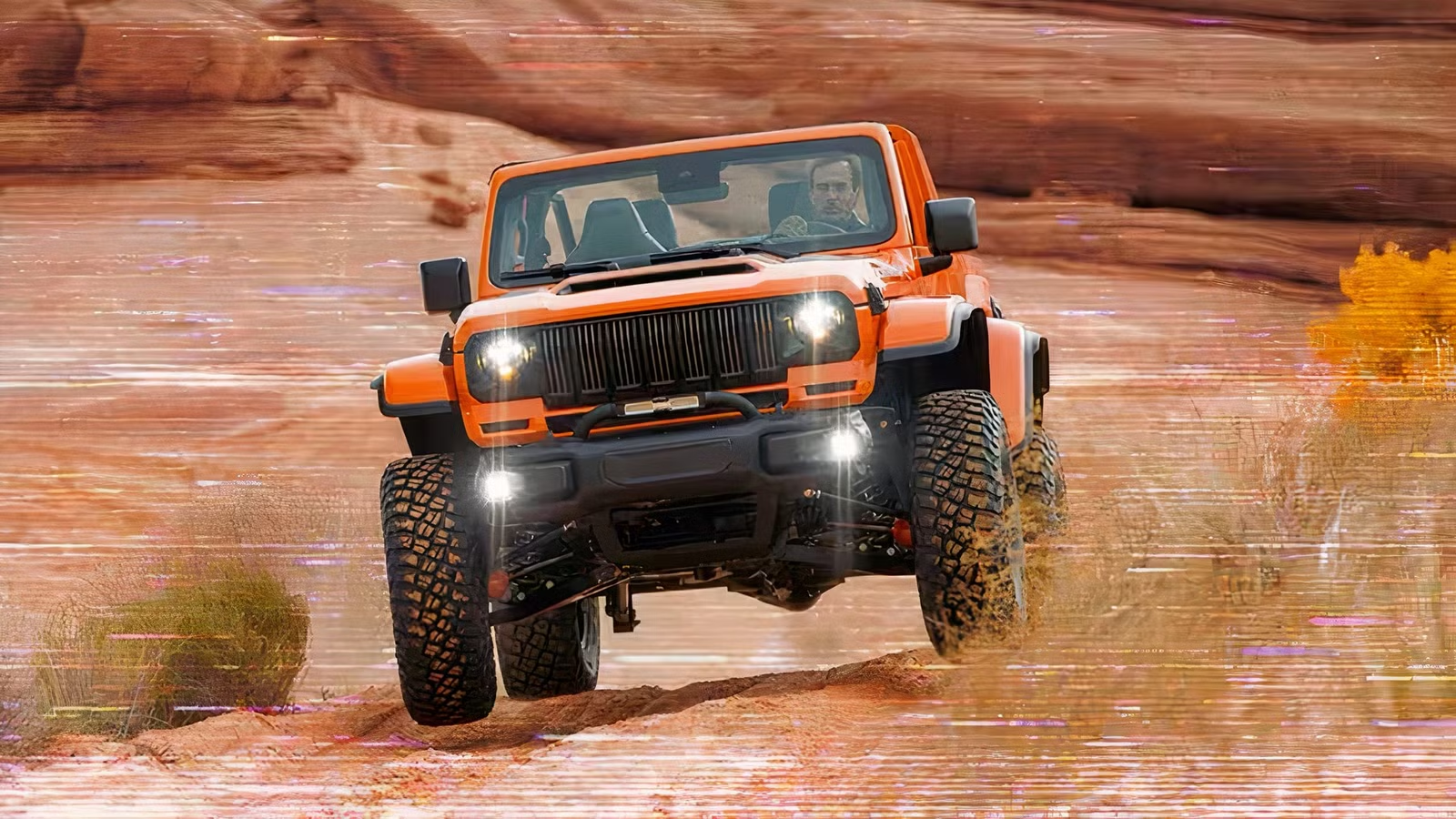
Jeep just floated the idea that could end one of its oldest traditions. At SEMA 2026 on November 3, Tim Kuniskis, Stellantis’s head of American Brands, unveiled the Wrangler Scrambler SRT Concept with independent front suspension, then posed a question to the crowd that had nothing to do with the concept itself: should IFS become an option across the entire Wrangler lineup, not just the low-volume SRT model?
It’s the kind of question Jeep has avoided answering for decades. The Wrangler‘s solid front axle is a point of pride for rock crawlers and a running joke for everyone else who’s driven one on the highway. Kuniskis didn’t pretend otherwise, and he tied the idea directly to the one rival that’s been quietly eating into Wrangler sales for years: the Ford Bronco.
Kuniskis Says Buyers Could Get Both Options
Kuniskis framed the pitch as additive rather than a replacement. “Before I start getting the hate mail, I’m not asking you to give that up, I’m asking you can you have both,” he said at the reveal, pointing to the Scrambler concept and a standard Wrangler side by side. The idea: keep the solid axle for low-speed rock crawling, and offer IFS as an alternative for buyers who spend more time on pavement or running high-speed desert trails.

The suspension itself isn’t theoretical. It was co-developed with off-road racing champion Casey Currie and uses 2.5-inch Fox shocks, a setup already validated in Currie’s custom Gladiator “Striker,” which won its class at the NORRA 500. Kuniskis said Jeep would watch customer reaction over the next few days before deciding whether the option moves beyond the Scrambler. “I don’t know the answer,” he admitted, “but I’m pretty sure in the next two or three days we are going to find out because we are going to get flooded with love mail and hate mail, and we are going to have to figure out where the tide breaks.”
Why Jeep Is Suddenly Open To This

The Bronco has been cutting into Wrangler sales specifically because it rides and handles better on-road, and independent front suspension is the biggest reason why. Jeep has leaned on its solid-axle heritage as a selling point for decades, but that same hardware is also what makes the Wrangler feel vague and tiring on a highway commute, a tradeoff Bronco buyers haven’t had to make.
There’s also a manufacturing case for spreading IFS beyond a single niche model. The Wrangler and Gladiator are both built at Stellantis’s Toledo Assembly Complex, and the upcoming Ram Dakota, which shares its underpinnings with the Gladiator, is expected to land at the same plant. Developing one IFS system that can be shared across Wrangler, Gladiator, and Dakota production would make the engineering cost far easier to justify than confining it to the SRT Scrambler alone.
Nothing Is Confirmed Yet

Kuniskis was clear that this is a trial balloon, not an announcement. No timeline, pricing, or production commitment exists for IFS beyond the Scrambler SRT, which itself remains a concept with an expected arrival by 2030. Whether Jeep actually offers IFS across the standard Wrangler lineup now hinges on how loud that love mail versus hate mail split turns out to be.

Related posts



Latest Post


No Comments