
JCB Hydromax Just Shattered The Hydrogen Land Speed Record At Bonneville
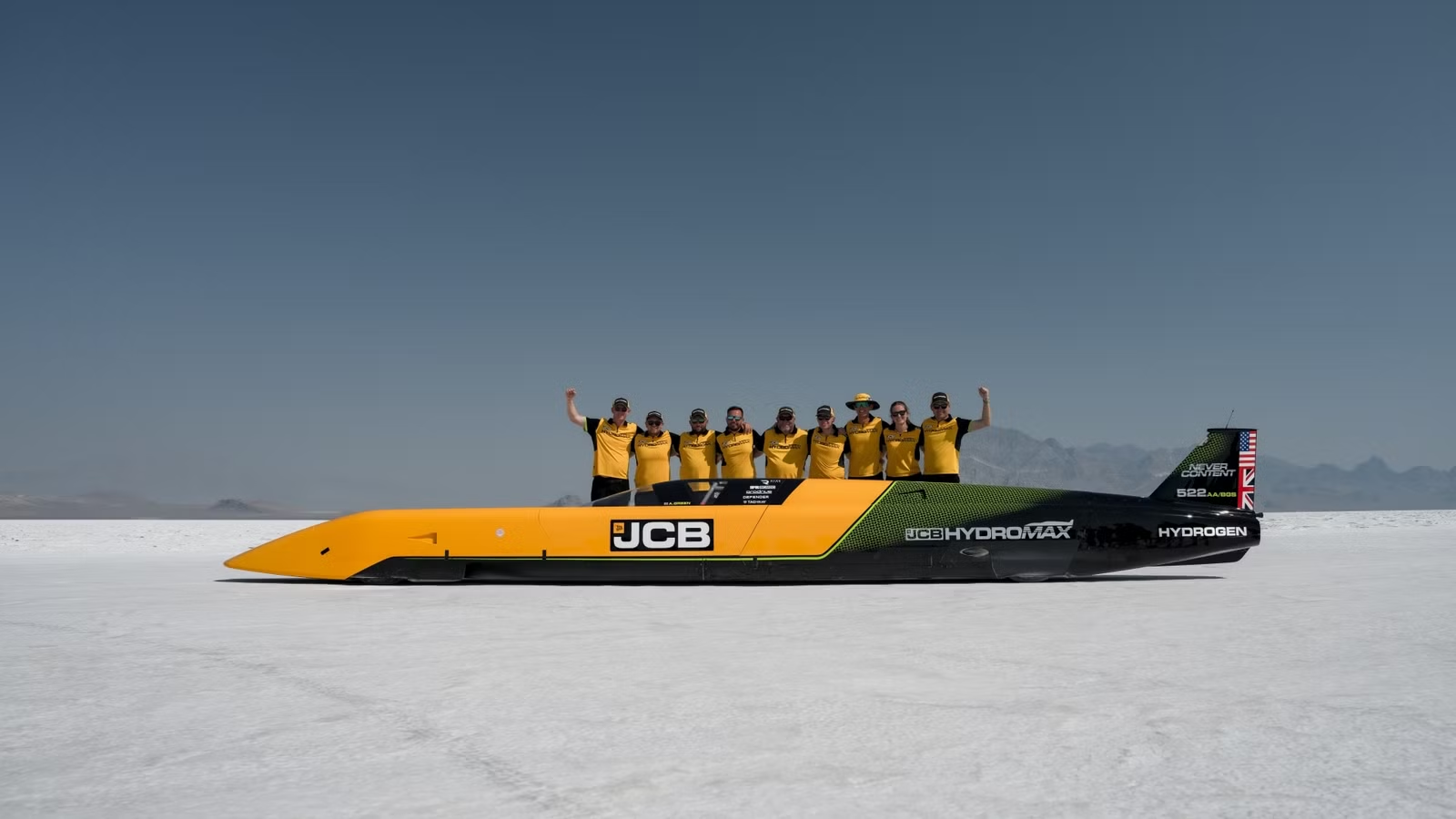
JCB has rewritten the hydrogen speed record books. On August 11, 2026, the British construction-equipment manufacturer’s JCB Hydromax streaked across the Bonneville Salt Flats at an average of 406.320 mph — making it the fastest hydrogen-powered vehicle of any kind ever recorded, and more than doubling the previous hydrogen internal combustion benchmark of 185.5 mph set by the BMW H2R back in 2004.
What makes the record genuinely remarkable isn’t just the number. The twin-engine, 32-foot streamliner ran on production-based hydrogen combustion engines — the same 1,600-bhp units now powering JCB diggers rolling off the company’s Foston, Derbyshire production line. This wasn’t a bespoke racing motor with no connection to the real world. It was a digger engine doing 406 mph.
How The Record Runs Unfolded
FIA land speed records require two timed runs in opposite directions within one hour, with the official speed calculated as the average. Driven by Wing Commander Andy Green OBE — the only human being to have broken the sound barrier on land, at 763.035 mph — the Hydromax posted 400.623 mph on its first morning run and 412.135 mph on the return, yielding the 406.320 mph average that now stands as the FIA World Flying Record Start Land Speed Record in Category A, Group XIV, Class 7.

The record is pending official ratification by the FIA, but the governing body’s president was already on record with his assessment. H.E. Mohammed Ben Sulayem called it “a truly historic milestone for motorsport showcasing how innovation, performance, speed, and sustainability can go hand in hand,” adding that the achievement “continues the tradition” of motorsport driving technological progress.
Green, who knows Bonneville better than almost anyone alive, was characteristically understated. “The car was terrific — stable, strong and fast,” he said. “Setting a world land speed record with hydrogen power, twenty years after Dieselmax, is a huge privilege.”
Why Hydrogen Combustion — Not Fuel Cell — Matters Here

It’s worth drawing a clear line between what JCB built and what the term “hydrogen vehicle” usually conjures. A hydrogen fuel cell vehicle — like a Toyota Mirai — generates electricity from hydrogen through a chemical reaction and drives an electric motor. The Hydromax uses hydrogen combustion: the fuel burns inside a modified internal combustion engine, much like petrol or diesel does, producing mechanical power directly and emitting water vapor rather than CO₂ at the tailpipe.
The previous hydrogen fuel cell land speed record stood at 303 mph. The Hydromax cleared that benchmark too, making it the outright fastest hydrogen vehicle regardless of propulsion method. JCB Engineering Director Ryan Ballard framed the achievement plainly: “This record belongs to the engineering team which took a hydrogen digger engine and made it the fastest of its kind on earth.”
For hydrogen combustion advocates, the significance is practical. Fuel cells require expensive platinum catalysts and complex stack management. A combustion engine is infrastructure that already exists — factories, supply chains, and mechanics who know how it works.
Beating Its Own 20-Year Diesel Record — With Zero Tailpipe Emissions
JCB’s history at Bonneville adds an extra layer to this story. In August 2006, the JCB Dieselmax — also driven by Green — set the FIA world diesel land speed record at 350.092 mph on the same salt. That record still stands. Now, exactly two decades later, JCB has returned to the same course and beaten its own benchmark by more than 56 mph, this time without a gram of CO₂ coming out the back.
JCB Chairman Lord Anthony Bamford, who personally championed the hydrogen programme and came up with the idea for the record attempt early last year, connected both achievements directly. “Twenty years ago we came to Bonneville with JCB Dieselmax and showed what British engineering could do with diesel power,” he said. “Today we have done it again — this time with engines powered by hydrogen. This record was set by production-based engines, the same engines powering JCB diggers right now. That is the point of JCB Hydromax: it shows hydrogen works, and it works today at the highest level with zero emissions.”
The hydrogen programme represents a £100 million investment for JCB, with a team of 150 engineers developing the purpose-built combustion engine. More than 150 hydrogen combustion engines have been produced so far, with machines already in production. The record comes as JCB prepares to open a new $500 million factory in San Antonio, Texas — a facility that will employ 1,500 people building machines for the US market.
JCB is no stranger to speed stunts — the JCB Fastrac became the world’s fastest tractor at 135.191 mph in 2019, and a backhoe loader hit 72.58 mph in 2014. But 406 mph with a production hydrogen engine is a different category of statement entirely. For anyone still skeptical that hydrogen combustion can scale beyond a novelty, Bonneville just provided a hard number to argue against.

Related posts


Latest Post


No Comments