
Chrysler’s Steel Race Hemi Got Carter Carburetors While Aluminum Cars Got Holleys
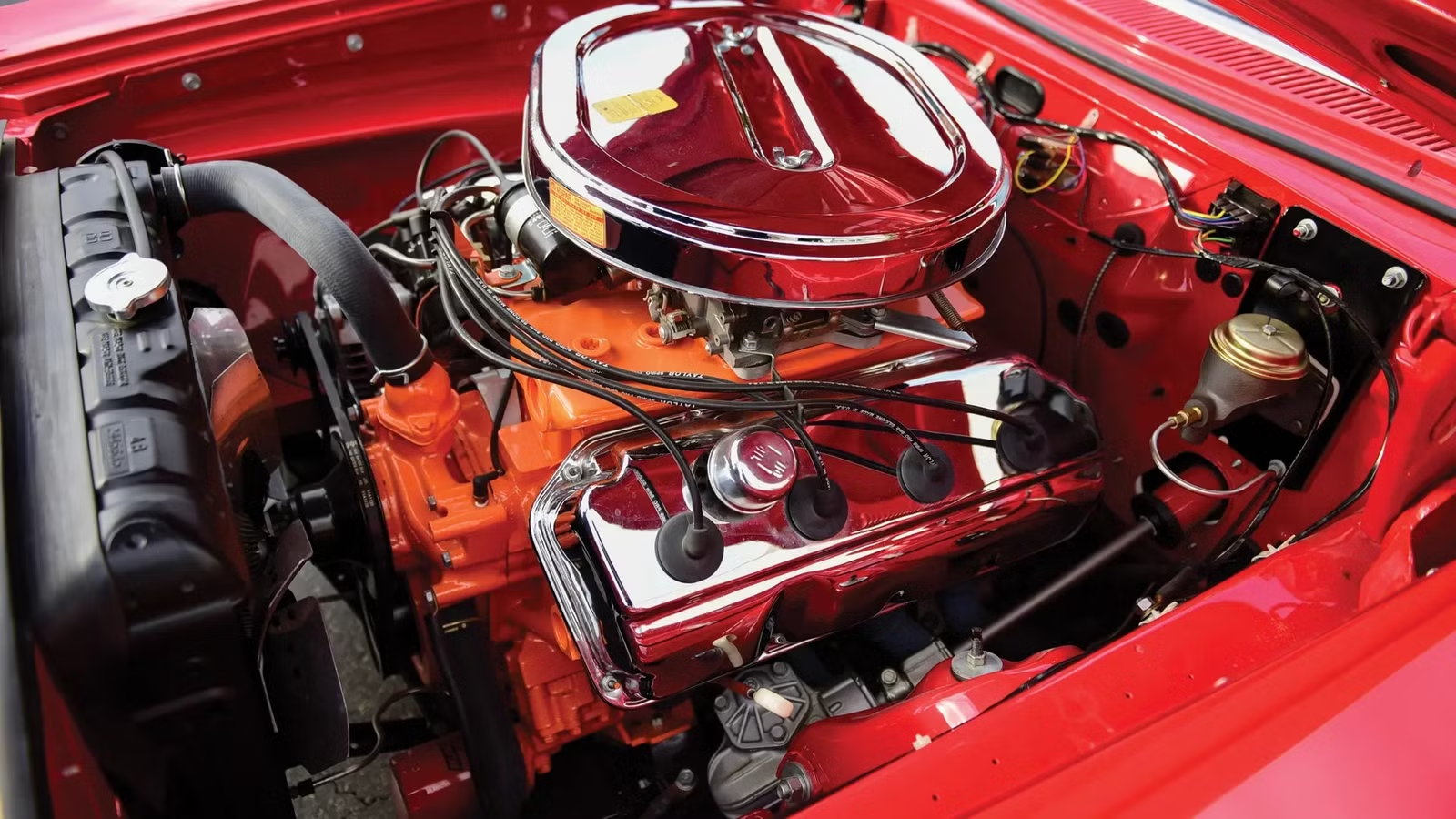
History rarely moves along in a straight line. Even a pivotal transition like Chrysler retiring its formidable Max Wedge V8 and ushering in the now-legendary 426 Hemi included a few peculiar decisions whose original rationale may have been lost to time.

Some early Hemi Plymouths came with steel front-end panels instead of lightweight aluminum, and they carried Carter carburetors instead of the Holleys fitted to the aluminum cars.
Now, more than 60 years later, nobody seems to agree on why.
Two Carburetors Point To Chrysler’s Changing Priorities

Both Carter and Holley were familiar names to American performance enthusiasts in the 1960s, each manufacturing the carburetors that regulated the air and fuel mixture entering the engines of the day. Chrysler used Carter AFB four-barrel carburetors on its Max Wedge engines, which were designed primarily to compete at the drag strip.
During early development of the 426 Race Hemi, Chrysler used modified Carter AFBs before adopting Holley four-barrels for the lightweight drag racing packages. The Holley 3116 became standard equipment for the lightweight drag cars, but the steel hardtops kept the Carter AFB 3861.
This wasn’t a case of Carter carburetors being inadequate for racing. Both designs were credible on serious competition engines, and the Carter-packing Hemi was hardly lacking in power. But Chrysler’s eventual adoption of Holleys suggests engineers saw an advantage in the newer setup.
Where things go from puzzling to interesting is that as Chrysler moved beyond the Max Wedge program, some of the new Hemi cars still carried carbs closely related to the ones on the outgoing engine.
Chrysler Was Replacing The Max Wedge With A NASCAR-Bred Hemi

By 1963, Chrysler’s Max Wedge V8 was putting out as much as 425 hp, and the beefy 426-cubic-inch engine had helped to solidify both Plymouth and Dodge as serious players in drag racing. But the company’s racing ambitions stretched longer than a quarter mile.
Chrysler had another target in mind: NASCAR. Engineering teams got to work on a new engine that combined the existing big-block architecture with hemispherical combustion chambers, in hopes that revisiting a design from the ’50s could help the newer cars go toe-to-toe with Ford and Chevrolet on the big oval.
It didn’t take long to make an impression. Plymouth took the top three spots in the 1964 Daytona 500, with Richard Petty leading in a Hemi-powered Plymouth. Petty led 184 out of 200 laps.
Chrysler had its new racing engine. The Max Wedge, however, didn’t disappear overnight. And according to one account of the changeover, neither did all the orders for it.
Just 35 Steel-Bodied Race Hemis Were Reportedly Built

Most of those first Race Hemi cars were destined for drag racing and leaned into lightweight construction that included aluminum panels on the front end. The steel-bodied Belvederes had conventional bodywork but still had the new competition engine underneath.
Production research identifies just 35 steel-bodied Plymouth Belvedere Race Hemi hardtops built in 1964, including 18 with automatic transmissions and 17 with manuals. Chrysler’s total Race Hemi production for the year is commonly reported as 271.
That combination of conventional steel bodywork, a competition Hemi paired in some cases with a push-button TorqueFlite automatic, and those puzzling Carter carburetors has made these cars catnip for Mopar-minded gearheads. But why did Chrysler build them this way when its lightweight Hemi drag cars were already available?
Two Theories Explain Chrysler’s Unusual Decision

One explanation for the steel-bodied Race Hemi cars ties back to NASCAR. Competition cars needed to comply with rules governing production-based bodywork, and building steel-bodied Hemi Belvederes may have helped establish a production basis for the configuration used in stock-car racing.
A second possible rationale is a simple matter of unfinished business. As Chrysler wound down Max Wedge production and began delivering cars with the new Race Hemi, there may have been outstanding customer orders for the older engine. Rather than canceling those orders, Chrysler may have swapped in the new Hemi, creating a small batch of uncommon cars that bridged the gap between the two eras and reflected bits from each.
Both explanations are plausible. Steel bodywork makes sense in the context of NASCAR racing, and the timing of the generational engine shift could have aligned with some awkwardly filled customer orders.
Neither, however, conclusively explains what was going on with the carburetors.
The Carter Carburetors Offer A Clue, Not An Answer

The Carter AFBs had been used on the Max Wedge, and the modified versions fitted to the steel-bodied Race Hemis were certainly related. So if Chrysler was swapping Max Wedges for Hemis on outstanding orders, the familiar Carter equipment might seem like another connection to the outgoing engine.
Then again, the Carters were also part of the Race Hemi’s own development history, before Holleys became standard on the lightweight drag cars. Their presence doesn’t necessarily tell us why Chrysler built the steel-bodied versions.
The carburetors throw some light on how the transition between the Max Wedge and the Race Hemi played out, even if NASCAR homologation was also part of the picture. It doesn’t feel like more time passing is going to create less confusion about what happened and when, but it’s clear that this is one example of the baton passing between automotive generations not being as clear-cut as we like to think.
Sources: Chrysler

Related posts






Latest Post




No Comments