
Jay Leno Crashed His Rare Indian Chief—The Rebuild Uncovered A Hidden Disaster
Most people would take a totaled vintage motorcycle as a sign to move on. Jay Leno saw it as an opportunity to make one of America’s most iconic motorcycles even better than it was when it rolled out of the factory.

In the latest episode of Jay Leno’s Garage, Leno shares the incredible story of his 1940 Indian Chief with a sidecar—a bike that once belonged to NFL legend Joe Montana—after a freak accident nearly wiped it off the map. What followed wasn’t just a restoration. It was a complete rebirth that uncovered decades of hidden problems and resulted in one of the finest Indian Chief rebuilds you’ll ever see.
A Freak Crash Revealed A Restoration Nightmare
The accident was as bizarre as it was unfortunate. While making a U-turn into a parking lot, Leno rode into an unmarked wire stretched across the entrance. The cable knocked him off the motorcycle, but the three-wheeled Indian kept going, crashing through bushes before slamming into a building.


The motorcycle was considered a total loss, but the damage wasn’t limited to the crash. Once the team began tearing it apart, they discovered the previous restoration had been hiding all kinds of shortcuts. There was excessive body filler, poor chrome work, weakened metal, and structural issues that could have caused major problems down the road.
Rather than patch it together, Leno called in the experts at Kiwi Indian, along with master fabricator Jimmy Hudson and mechanic George Swift, to rebuild the bike the right way.
Hand-Built Steel, A Fresh 1,300cc Engine, And Plenty Of Old-School Charm
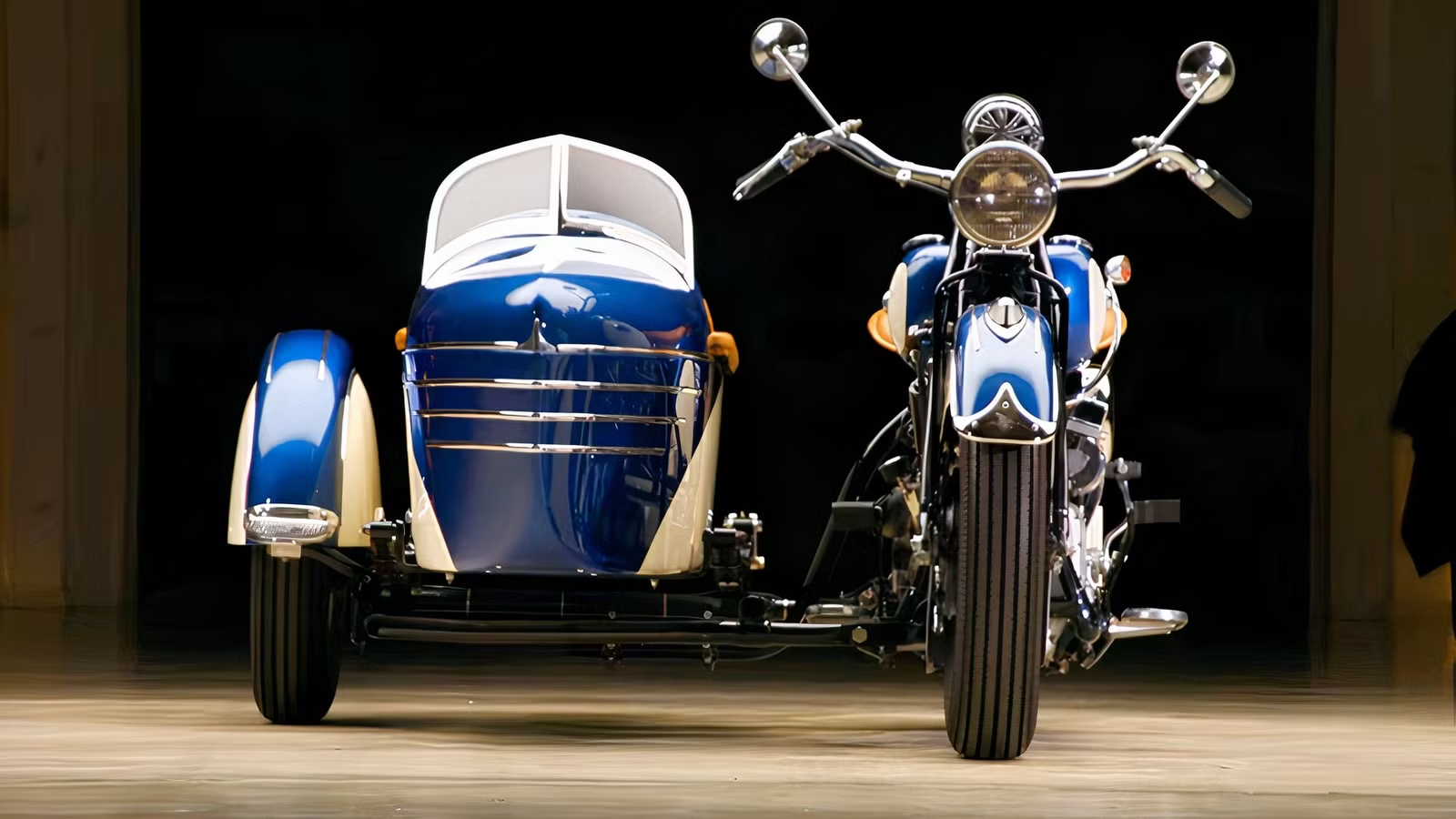
Almost every major component received attention. The mangled sidecar was too far gone to save, so Hudson fabricated an entirely new steel body by hand, recreating every curve and trim piece while trimming unnecessary weight. The rebuilt sidecar alone is a testament to old-school craftsmanship.
Mechanically, the bike is just as impressive. The massive 1,300cc flathead V-twin was completely rebuilt, along with the three-speed transmission. Even after running into clutch issues during testing, the team kept refining the bike until it shifted and rode exactly as it should.
The finished motorcycle wears a gorgeous blue-and-white paint scheme that looks period-correct while somehow appearing even cleaner than a factory-fresh Chief.
Of course, nobody is buying a 1940 Indian Chief for speed. With around 40 horsepower, it’s happiest cruising between 65 and 80 mph, letting the rider enjoy the scenery instead of chasing lap times. Between the hand-shift transmission, foot clutch, magneto ignition, and massive flathead engine, it’s the kind of riding experience modern motorcycles simply can’t replicate.
HotCars Take: Sometimes The Best Builds Start With A Total Loss

There’s something incredibly satisfying about watching a motorcycle get a second chance instead of becoming garage wall art. In an era obsessed with horsepower wars and touchscreen dashboards, this Indian Chief is a reminder that great motorcycles aren’t always about speed. Sometimes the best stories are told by machines that have survived crashes, bad restorations, and nearly a century of history—and somehow still fire up with one kick.

Related posts


Latest Post


No Comments