
2026 Civic Type R vs. Civic Hybrid: Two Wildly Different Answers To What Buyers Actually Want
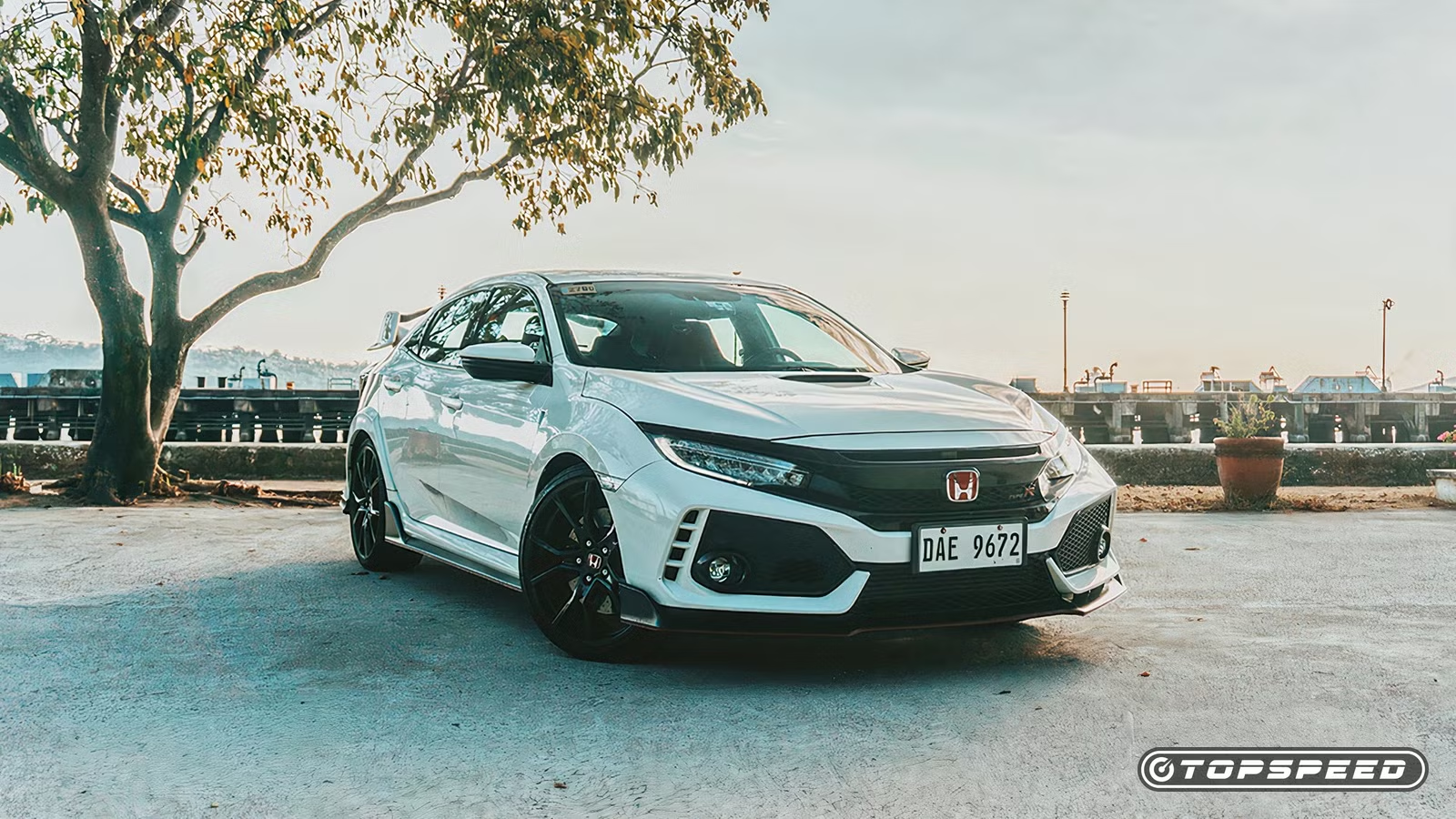
Honda is putting two versions of the Civic Hatchback on sale for 2026 that barely feel like they belong to the same nameplate. One is a 315-hp, manual-only track weapon built for drivers who row their own gears and chase apex speed. The other is a hybrid built to sip fuel on a commute and never ask the driver to think about it. Both wear a Civic badge. Neither is trying to be the other.

That’s the real story here. The Civic Type R and the Civic Hatchback Hybrid aren’t different trims separated by a few options and a spoiler. They’re opposite answers to the same question: what do hatchback buyers actually want in 2026? Honda’s bet is that the honest answer is “two different things,” and it’s building a car for each camp rather than trying to split the difference.
The Spec Sheet Gap Between Type R And Hybrid Is Enormous

The numbers alone tell you these cars have nothing in common beyond sheet metal proportions. The Civic Type R runs a 2.0-liter turbocharged four making 315 hp, paired exclusively with a six-speed manual transmission. There’s no automatic option, no CVT, no concession to convenience. Honda tuned the suspension, brakes, and limited-slip differential around lap times, not commute comfort, and pricing reflects that focus, landing well into premium hot-hatch territory.

The Civic Hatchback Hybrid sits at the opposite end of the spec sheet. It pairs a smaller gas engine with an electric motor and sends power through a CVT, the continuously variable transmission that prioritizes smooth, efficient cruising over shift excitement. There’s no manual option here either, but for the inverse reason: nobody buying this car wants to row gears on the way to work. Pricing starts meaningfully lower than the Type R, positioning it as the practical, budget-conscious pick in the lineup.
Performance Versus Efficiency, By The Numbers

The Type R’s 315 hp translates to genuinely quick acceleration for a front-wheel-drive hatchback, the kind of performance that puts it in the conversation with dedicated sports compacts rather than other family hatches. It’s tuned for track days, autocross, and drivers who care about how a car behaves at the limit.
The Hybrid isn’t chasing any of that. Its entire engineering brief is fuel economy, and the hybrid powertrain is there to stretch every gallon further for buyers doing daily commuting rather than weekend lapping. Neither car is trying to be a middle ground, and that’s the point. Honda isn’t offering a Civic that’s moderately quick and moderately efficient. It’s offering one car that’s extremely quick and one that’s extremely efficient, with nothing in between wearing the Hatchback badge.
What This Split Says About Where Hatchback Buyers Are Heading

Industry data on the current hatchback market backs up what Honda’s lineup implies: buyers have split into camps that don’t cross-shop each other. One group wants a hot hatch that behaves like a pocket sports car, chasing the same enthusiasm that’s kept the Civic Type R relevant since the earlier FK8 generation, including HPD’s factory-built Type R race cars sold to club racers. The other group wants a hatchback that functions like a small, efficient crossover alternative, and the industry has increasingly pointed to the standard Civic Hatchback, hybrid included, as the segment’s most complete all-around package.
That’s a meaningful shift from a decade ago, when a single mid-tier hatchback trim could plausibly satisfy both a budget commuter and a driving enthusiast who wanted a bit of punch. Building a manual-only 315-hp halo car alongside a CVT hybrid in the same model year isn’t Honda hedging its bets. It’s Honda acknowledging that the middle ground buyer has largely disappeared, and that stretching one nameplate across both extremes is now the more reliable way to capture hatchback shoppers than aiming for the center.
For shoppers, the takeaway is straightforward: figure out which camp you’re actually in before cross-shopping these two. The Type R and the Hybrid share a name and a body style, but they were engineered for buyers who want almost nothing in common from their hatchback.

Related posts



Latest Post


No Comments