
How The Yamaha 890cc Triple Can Make The 600cc Inline-Four Supersport Obsolete

For decades, the 600cc supersport was the obvious answer if you wanted a serious middleweight sport bike. Machines like the Yamaha YZF-R6 built their reputations on lightweight chassis, aggressive ergonomics, and screaming inline-four engines that saved their best work for the upper reaches of the tachometer. That formula still has plenty of appeal, but it makes less sense for riders who spend as much time on real roads as they do chasing lap times. Yamaha’s current supersport lineup suggests there’s another way forward.
The 600cc Supersport Formula Was Built Around One Very Specific Goal

The traditional 600 supersport was shaped heavily by racing, where displacement limits rewarded manufacturers that could squeeze enormous performance from relatively small engines. Honda, Kawasaki, Suzuki, and Yamaha spent years refining the concept, producing motorcycles that could carry tremendous corner speed while delivering power figures that once belonged to much larger machines. The result was a golden age of CBR600RRs, ZX-6Rs, GSX-R600s, and R6s that brought race-bike intensity to ordinary showrooms.
There was a catch, though. Extracting that much power from roughly 600cc without forced induction meant spinning the engine extremely fast. Manufacturers could tune their fours to breathe efficiently near redline, but displacement still dictated how much torque was available lower down. That wasn’t much of a problem on a circuit, where riders could keep the engine singing between corners. It mattered considerably more when the same bike was being ridden through traffic, back roads, or an everyday commute.
Peak Power Came At The Expense Of Everyday Torque

That high-rpm personality became part of the appeal. Drop a gear, chase the tach needle toward five figures, and a good 600 transforms from relatively docile to wonderfully frantic. The problem is that you’re constantly being asked to reach for that second personality. Meaningful acceleration often requires a downshift or two, and the speeds involved can get fairly serious before the engine is operating where it really wants to be.
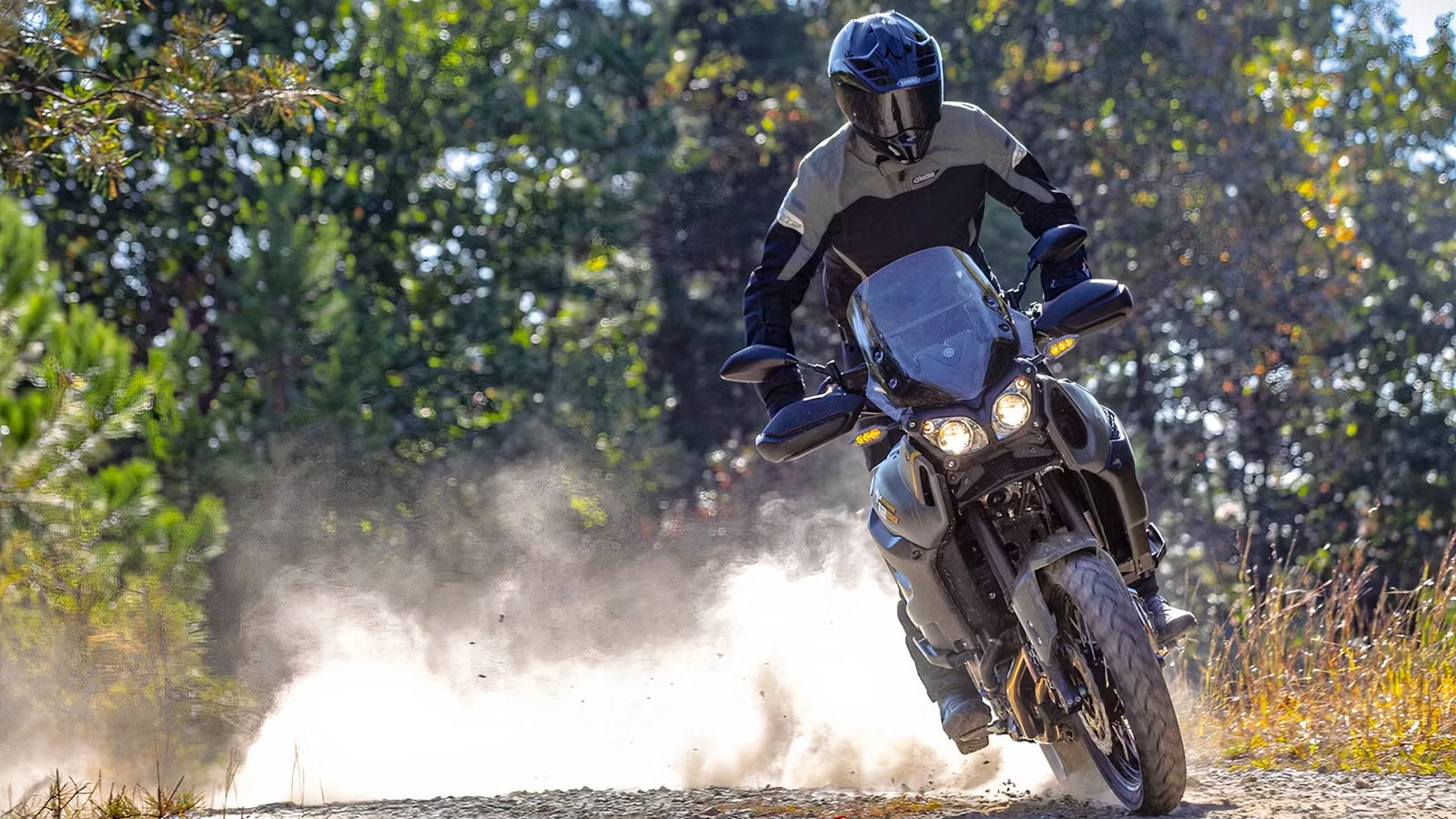
None of this makes the old formula bad. A screaming four-cylinder remains one of motorcycling’s great experiences. It does, however, make it specialized. Riders increasingly have alternatives that produce similar real-world pace without requiring 14,000rpm to make things interesting, and manufacturers have spent the last decade figuring out how to combine that easier performance with chassis that are every bit as serious as the engines they’re replacing.
Yamaha’s CP3 Platform Set The Stage For A New Kind Of Middleweight

Yamaha had already been testing a different answer for years. Its CP3 platform showed that an inline-triple could split the difference between the immediate shove of a twin and the rev-happy character riders associate with multi-cylinder sport bikes. As the engine grew into its current 890cc form, that balance became even more convincing. Instead of concentrating performance near redline, the triple delivers a thick midrange that makes overtakes, corner exits, and ordinary acceleration require far less planning.
More importantly, the CP3 proved that usable torque didn’t have to mean giving up excitement. The engine could still rev freely and support genuinely fast motorcycles, but it made more of that performance available at sane road speeds. That gave Yamaha a proven foundation for something more ambitious than another naked bike. Pair that character with sharper geometry, stronger brakes, sophisticated electronics, and a purpose-built supersport chassis, and suddenly the old 600cc formula starts looking less essential.
The Yamaha YZF-R9 Makes The Strongest Case Yet For The Triple
The clearest example is the Yamaha YZF-R9. Its 890cc CP3 inline-triple produces roughly 117 horsepower and 68.6 pound-feet of torque, with peak torque arriving at just 7,000rpm. Instead of asking the rider to chase redline for meaningful drive, the engine offers a broad spread of thrust through the middle of the rev range while still spinning hard enough to suit a genuine supersport. That’s exactly the compromise the old 600 formula struggled to make.
The R9 starts at $12,499 and weighs 430 pounds wet, with a 32.7-inch seat height and 55.9-inch wheelbase. Yamaha also equips it with an assist-and-slipper clutch and a third-generation quickshifter that handles clutchless upshifts and downshifts during acceleration or deceleration. For 2027, Yamaha has continued the model rather than treating its 2025 debut as a one-off experiment, reinforcing just how important the CP3-powered machine has become within the R-Series.
Yamaha Didn’t Just Put Fairings On An MT-09

Sharing an engine with the iconic and well-loved MT-09 could’ve made the R9 an easy parts-bin exercise, but Yamaha went much further. Its gravity-cast Deltabox aluminum chassis is a dedicated design, and at roughly 21.4 pounds, it’s the lightest aluminum frame Yamaha has fitted to a supersport. The bike also gets fully adjustable 43mm KYB forks with separate high- and low-speed compression adjustment, a similarly adjustable KYB rear shock, Brembo Stylema monobloc calipers, and a radial front master cylinder.
Its electronics are equally serious. An R1-derived six-axis IMU supports lean-sensitive traction control, slide control, lift control, brake control, engine-brake management, launch control, and selectable Yamaha Ride Control modes. There’s also cruise control, a variable speed limiter, ride-by-wire throttle, and a five-inch full-color TFT. Functional winglets contribute to what Yamaha calls its most aerodynamic production motorcycle design yet, while the riding position is intentionally less punishing than the old R6’s.
Yamaha’s Own R-Series Lineup Shows Where The R6 Used To Fit

The most convincing argument for what Yamaha thinks comes next isn’t buried in a technical document. It’s sitting directly in the company’s US supersport lineup. Yamaha currently lists the R3 at $5,499, the R7 at $9,399, the R9 at $12,499, the R1 at $19,199, and the R1M at $27,899. There isn’t a 600cc inline-four hiding between any of them, yet there also isn’t an obvious performance gap begging to be filled by one.
The R7 handles the approachable end of the middleweight category, while the R9 picks things up once riders want substantially more performance and premium hardware. Above that sit Yamaha’s liter-class machines. In other words, the R9 isn’t merely standing where the R6 used to stand. It’s doing the R6’s job through a completely different philosophy, trading some of the old bike’s manic top-end obsession for considerably more accessible torque without surrendering serious track-day capability.
The 600cc Inline-Four Isn’t Dead, But It May No Longer Be The Best Answer

There are still good reasons to want a traditional 600. Kawasaki continues to demonstrate the appeal of the formula with the ZX-6R, while Honda keeps the CBR600RR alive in several markets. Riders who love the precision, sound, and escalating rush of a small inline-four aren’t suddenly going to stop caring about those qualities. Racing categories also ensure that the classic layout retains relevance well beyond simple showroom comparisons.
But the R9 asks a more uncomfortable question: if you can have a proper supersport chassis, sophisticated electronics, excellent brakes, usable road ergonomics, and enough power for extremely fast track riding without sacrificing low- and midrange torque, what exactly is the 600cc four still solving? The biggest threat to the classic supersport may not be emissions rules or disappearing sales. It may simply be that motorcycles like this have found a better way to do the same job.
Source: Yamaha

Related posts

Latest Post


No Comments