
How The Charger SIXPACK Compares to the Original Icons
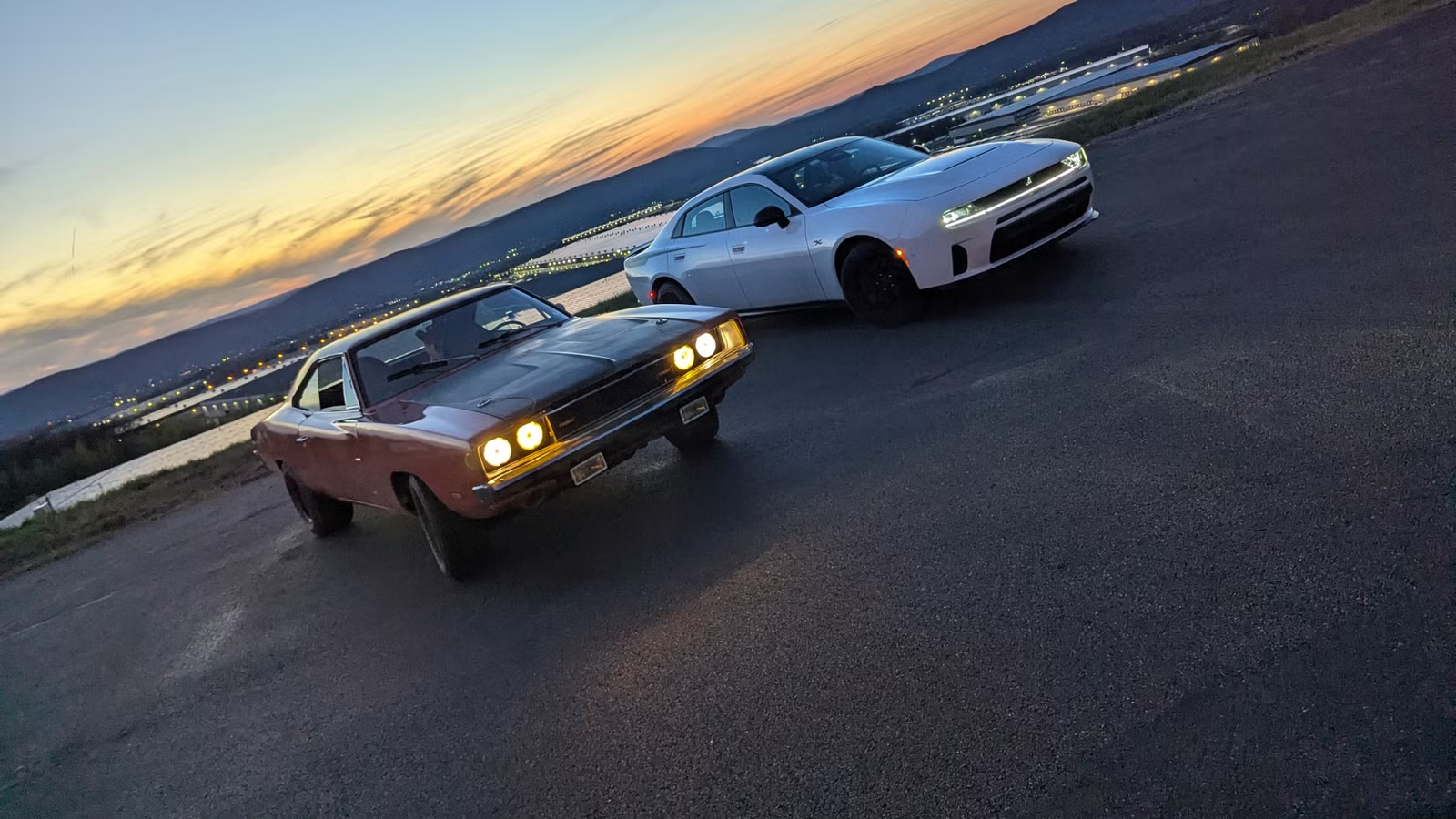
2026 marks the 60th anniversary of the Dodge Charger. It’s a name that’s synonymous with American muscle, with the baddest bodylines ever crafted, and the gnarliest engines ever dropped in a car. It’s shaped the industry for generations and has no signs of slowing. I’m among the millions of gearheads who’ve spent a lifetime worshiping these cars and one of few who has the pleasure of keeping one example on the road, half-a-century after it rolled off the assembly line.

My first car was my 1969 Dodge Charger, and it’s been my daily since I put it on the road nearly a decade ago. Over the years, I’ve driven it in many forms, from a 440-equipped street brawler to a pro-touring backroad bomber with a Gen-III Hemi under the hood. I’ve also had the privilege of getting behind the wheel of a perfectly restored ‘68 Charger R/T on something of a regular basis.
This past year, I had my first opportunity to spend some time with the latest generation in the form of a 2026 Dodge Charger SIXPACK R/T. It does its best to pay homage to its iconic predecessors. However, the lack of a V8 under the hood leaves muscle car purists asking, ” Does it really compare to the originals?”
The Styling Is Right

In terms of the exterior design of this car, the answer is yes. At least, to an extent. It’s not a one-to-one throwback as we saw with the Challenger revival of the late 2000s. While that car certainly set the standard for many Mopar muscle nuts, Dodge is still in the business of making new cars, and we realistically can’t expect the designers to only whip up throwbacks.
That said, the SIXPACK is a unique, late-model car that does a good job of paying tribute to the first and second generation Dodge Chargers. It has a wide, sweeping grille, a long roofline, and, most importantly, hips. For me, the back of the car is where the magic really happens. With the bar-style tail light extending from end to end, you get a mix of retro Dodge vibes that feels connected to all preceding Charger generations. Some hood and door scallops that call back to earlier model designs might have done well, but, overall, I think Dodge nailed it.

What Is A Scat Pack? History, Specs, And Trim Differences Explained
This iconic bee-badged performance trim offers a sweet spot between everyday usability and serious muscle car thrills.
The Practical Advantages Of Modern Times

I am the type of guy who prefers classic cars to a fault. I’ve been daily-driving my ‘69 Charger for years now, largely out of stubborn will. So, even if newer cars are more comfortable, accommodating, and practical, I’ll still go with the classics every time. To me, the limitations are simply part of the charm. However, that doesn’t mean the appeal of today’s cars is completely lost on me.
The SIXPACK Charger is a modern car through and through. While the exterior design makes that clear, nowhere is it more apparent than inside. A large display screen with digital gauges, various drive modes, wild accent lights, and an insane sound system separate it from the classics. All of which makes the driving experience as cushy and customizable as possible, completely alien to what I’m used to.
All of that said, the interior feature I like most, aside from the sound system, is the fold-down rear seats paired with the lifting hatch. This makes for a massive cargo area that I made use of to pick up some new bolstered seats for my ‘69 Charger. Ironically, this is a carry-over feature from the first-gen Chargers. Maybe not the most ‘modern’ feature, but it is a detail that makes the car more practical. That, paired with the all-wheel-drive system, make it the sort of car you can easily incorporate into any lifestyle, anywhere in the world.
Where Worlds Part: The Driving Experience

The Charger I had my hands on was equipped with a 420-horsepower Hurricane inline six-cylinder engine. In a car with a curb weight of roughly 5,000 pounds, it has enough juice to accelerate from 0-60 in 4.6 seconds, clearing the quarter-mile in 12.9 seconds. On paper, it’s a performer that commands the respect of muscle car enthusiasts.
2026 Dodge Charger SIXPACK R/T Specs
|
Engine |
Horsepower |
Torque |
0-60 MPH |
Quarter-Mile |
|
3.0-Liter Twin-Turbo I6 |
420 HP |
468 LB-FT |
4.6s |
12.9s |
Piloting the SIXPACK is still a culture shock, to say the least. The Charger I’m accustomed to is raw. Cabin drone, window rattles, and a vibrating gear lever, all while engine heat bakes the interior, are part of the experience. The pristine ‘68 I get to drive from time to time is more refined, with proper insulation and softer bushings, but it still offers a driving experience that all but permits detachment behind the wheel. It’s all a right here, right now sort of vibe.
The SIXPACK Charger separates itself from the classics in all the obvious ways. Modern amenities scattered throughout the cabin make it hard to mistake what’s in front of you for anything from the past. Dodge does throw in some goodies to help bring the car to life in a sea of soulless blobs, though. Various drive modes and the line lock paired with the ability to send power solely to the rear tires allow you to have fun with the muscular DNA of the car.
Are you getting that classic, raw, rip-your-head-off driving experience with the Charger SIXPACK? 90% of the time, the answer is no. However, this thing absolutely marches from a dig with the launch control feature. Even this lowest-performance variant mashes you back hard enough in the seat to put a smile on the face of even the staunchest Mopar purists.
The Hemi V8 Is The Missing Link

Speaking of launching, the missing Hemi is impossible to ignore when you’re hammering around with this car. I’ll be the first to admit that the Hurricane 3.0-liter twin-turbo I-6 is a cool engine with a lot of potential. The R/T version producing 420 horsepower, with the step-up to 550 horsepower, is nothing to scoff at.
When you get behind the wheel of a Dodge Charger, you’re expecting a V8. The Hurricane, as respectable as it is, simply isn’t at home here. It makes a lot of power, just not when and how you’re expecting it to. It’s clean, refined, and calculated, not trying to smash you into the seat every chance it gets.
There’s also the lack of sound. The Hurricane sounds great, honestly. It’s got a seriously sweet pitch that is very hard to turn your nose up at, until you remember you’re in a Dodge Charger. The rumble is a total mismatch for the body, and it doesn’t have the same effect as the bark not matching the bite, as you have with Tyson or Coleman.
Dodge Built A 425-HP Four-Door That Could Hit 60 MPH In Just Over 5 Seconds
The 425-HP four-door muscle car that defied the odds and brought raw HEMI power back to the streets.
But, Is It Really A Dodge Charger?

So, is it a Dodge Charger? There are a lot of jaded purists who flat-out reject this car, treating it like utter blasphemy, with a lot of the hate carrying over from the EV variant. Electrification is lost on me, but, I can’t say many bad things about this one. I do think it does well by the Charger nameplate in most ways.
There’s no mistaking that the SIXPACK is a product of the times. That’s not exactly a bad thing. That’s the case for all preceding models. If yesterday’s Dodge engineers and designers had access to the technology we have today, you can bet all of the features and amenities fitted to this car would have been crammed into the originals. The difference is, if you didn’t like that, you could buy a stripped-down version of the platform, like a Super Bee or Road Runner—I wish that were the case today.
It just needs the Hemi, though. Even if the SIXPACK is technically just as good on paper, it’s simply not the right fit for this car. It’s a Dodge Charger, and to truly be a muscle car, it needs a big V8 under the hood. Though that ship is turning around, with Dodge allegedly confirming the Hellcat version is on its way.
Sources: Dodge

Related posts


Latest Post


No Comments