
Harley’s Entry-Level Nightster Outclasses Indian’s Scout Sixty Bobber And Honda’s Rebel 1100
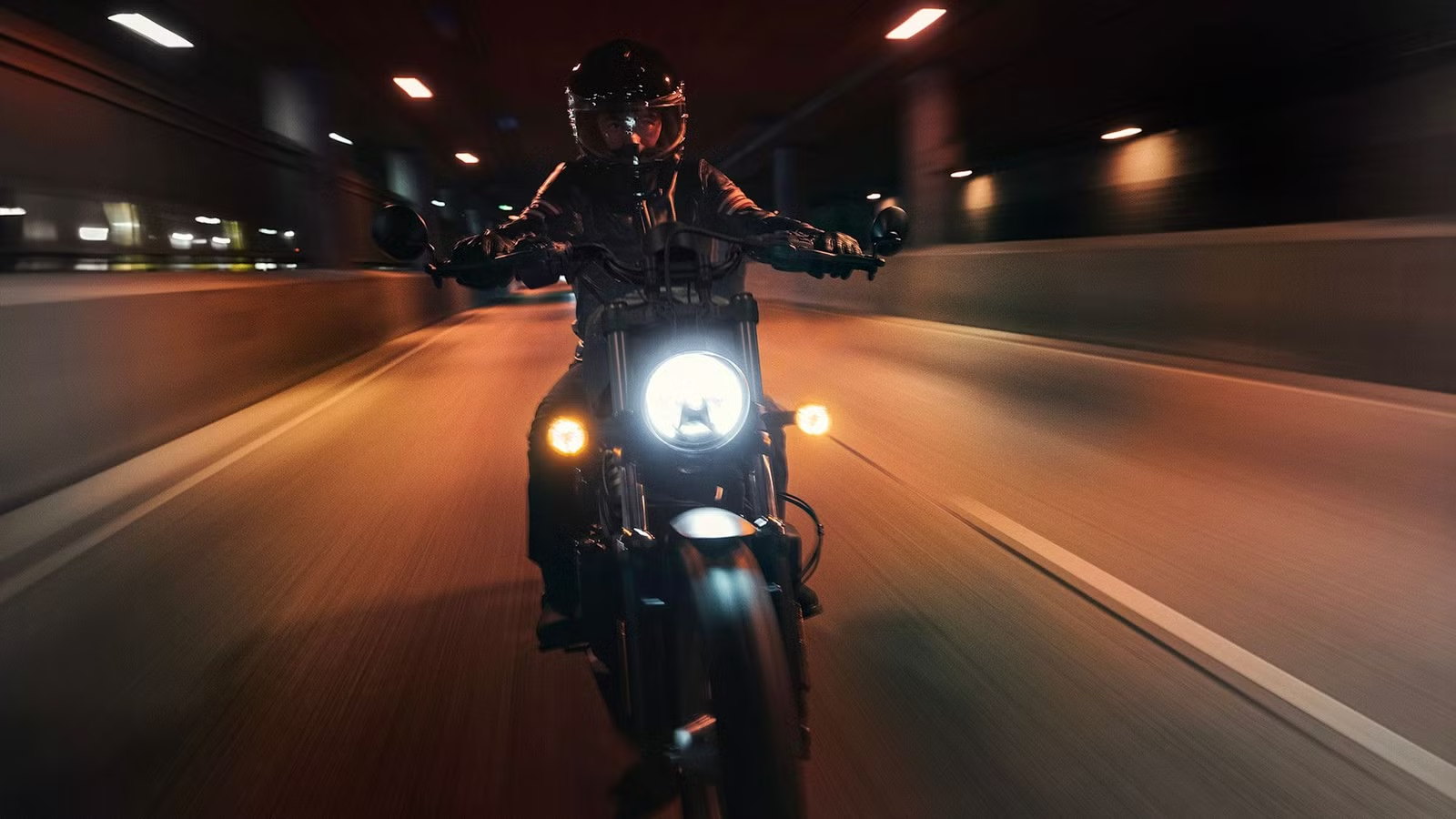
When you think about affordable cruisers, Harley-Davidson probably isn’t the first name that comes to mind. After all, Moto Corp has spent decades building premium heavyweight motorcycles that often come with a hefty price tag compared with competitors. Consequently, riders looking for value often turned to Japanese alternatives or Indian Motorcycle’s competitive lineup. However, Harley eventually took notice and adjusted its strategy. The result is an entry-level cruiser that now outclasses its challengers on paper.
How Harley’s Modern Entry-Level Cruisers Redefine Performance

Historically, since the introduction of the air-cooled Sportster lineup in 1957, it has served as Harley-Davidson’s gateway for more than six decades. Iconic models like the Forty-Eight, Iron 883, and the original XL1200N Nightster prioritized heritage and old-school iron heft over outright speed. As a result, they leaned toward a heavyweight feel and delivered modest power output. However, retiring that Evolution V-twin platform after 2022 opened the door for the liquid-cooled Revolution Max series era.
Shift To A More Competitive Strategy

That shift brought in modern cruisers that came with lighter chassis designs, high-revving DOHC powertrains, and electronic rider aids. Yet, retaining the classic cruiser formula and fundamentally redefining Harley’s entry-level performance dynamics. For instance, the modern Sportster S unleashes 121 horsepower alongside sharp handling, turning the Sport family into legitimate modern performers. Sharing similar attributes at a more accessible end, the Nightster challenges the traditional price-and-performance hierarchy.
The Harley-Davidson Nightster Makes Its Rivals Work Harder For The Money


After a decade-long absence, when Harley-Davidson revived the Nightster moniker with the Revolution Max platform, the goal was clear. Though intended mostly for new Harley owners, it offers compact dimensions, a lightweight design, and a low slug profile. You also get modern rider aids and safety tech at an accessible price without abandoning the brand’s identity. Meanwhile, the Nightster Special variant adds a pillion seat and extra features for an additional $2,500.
Harley’s $2,000 Price Cut Sweetens the Pot

Harley took the fight directly to its rivals when it slashed the Nightster’s $11,999 starting price by $2,000 to $9,999 in early 2025. That effectively positioned it as the brand’s most affordable model, bringing it to a sub-$10k price. As a result, it costs the same as the Scout Sixty Bobber and $300 above the Rebel 1100 with a starting price of $9,699. On paper, that might look like a fair fight between three equals at nearly the same price point. Yet the new pricing is only the start of the advantages.
The Nightster’s Revolution Max Muscle Outpaces Both Indian And Honda

Performance is where Harley’s smallest cruiser delivers one of its biggest surprises. Interestingly, its 975cc, 60-degree liquid-cooled V-twin has less displacement than both the Indian’s V-twin and Honda’s parallel-twin. Nevertheless, the Revolution Max 975T is a short-stroke engine featuring a 3.82-inch bore and 2.6-inch stroke, along with a relatively high 12:1 compression ratio. Also, with a claimed 52 mpg fuel efficiency and a 3.1-gallon fuel tank, you get 160 miles of real-world range.
Stronger Power And Torque Figures

The engine output numbers are where the Nightster steps up ahead, cranking out 91 horsepower at 7,500 rpm. That’s six horsepower extra over the Scout Sixty and four more than the Rebel. The real highlight, however, is the 72 pound-feet of torque coming in low down at 5,750 rpm for better tractability. Meanwhile, power flows through a belt final drive and a six-speed manual gearbox supported by Harley’s Drag-Torque Slip Control system.
The Nightster’s Lighter Weight Out-Slims The Rebel And Scout Sixty

Next, the Nightster’s lightweight steel trellis frame with the engine as a stressed member and an aluminum subframe gives it a weight advantage. At 481 pounds wet, it weighs 16 pounds lighter than the Rebel 1100, which sits at 497 pounds. It also sheds 55 pounds compared to the Scout Sixty Bobber, which weighs 536 pounds. The manageable mass, combined with a 60.8-inch wheelbase and a 30-degree rake angle, makes it easy to handle around tight spots. Likewise, the 27.1-inch seat height is approachable, although the Scout Sixty goes lower at 25.6 inches.
Sporty Underpinnings For Superior Agility

Further supporting the sporty character is a 41 mm Showa Dual Bending Valve conventional front fork and dual outboard rear shocks with preload adjustability. Then 4.5-inch front and 3-inch rear travel ensure comfort over bumps. Elsewhere, braking comes from a 320mm front disc and a 260mm rear disc, all backed by ABS. Finally, the Nightster rolls on a standard 19-inch front and 16-inch rear wheel setup for stable and predictable handling.
Why The Nightster Beats Indian And Honda On The Numbers

Aside from the heritage appeal, owning a Harley also means classic style and commanding road presence. In that respect, the Nightster delivers with a blacked-out bobber design, low stance, and minimalist aesthetics. At the same time, a four-inch round gauge offers an analog speedometer with a digital LCD. Then there’s a huge accessories catalog to customize. All in all, you get a premium cruiser at an unexpectedly competitive price that beats both Indian and Honda on power, weight, customization, and presence numbers.
Modern Tech Rounds Out The Package

Harley-Davidson also packs essential rider aids into the base price itself. You get three ride modes (Rain, Road, and Sport), traction control, dual-channel ABS, drag torque slip control, and TPMS as standard. Whereas the Indian Scout Sixty Bobber needs the Limited trim at a higher price to get similar features. Put it all together, the Nightster shows how the brand can challenge Indian and Honda on their own terms without abandoning what made a Harley recognizable in the first place.
Sources: Harley-Davidson, Indian Motorcycles, and Powersports Honda

Related posts

Latest Post


No Comments