
10 Most Bulletproof Motorcycle Engines Ever Made
Some motorcycles are built for outright performance, while others are designed to survive years of everyday abuse. A handful have managed to do both, earning a reputation for utter reliability with proper care and maintenance. From hardworking single-cylinder motors to sophisticated six-cylinder engines, these ten engines show how good engineering can stand the test of time.
10
Honda Gold Wing 1,832cc Flat-Six
Found in: Honda GL1800 Gold Wing (2001–2017)

The Gold Wing’s 1,832cc flat-six is an excellent example of Japanese engineering, designed for longevity rather than outright performance. Its horizontally opposed cylinders put out exceptionally smooth power, while its relaxed character suits the touring ergonomics. High-mileage Gold Wings are common, and the engine has earned a reputation for covering well over 100,000 miles when properly maintained. The rest of the motorcycle is somewhat complex, but the engine itself is a touring legend.
9
Suzuki 645cc V-Twin
Found in: Suzuki SV650 and V-Strom 650

Suzuki’s 645cc, 90-degree V-twin has powered everything from approachable naked bikes to long-distance ADVs. Its success comes from a straightforward build: useful torque, smooth power delivery, and an engine that doesn’t need to be highly stressed to be entertaining. In the SV650, it feels lively, while the V-Strom 650 shows its ability to handle sustained highway speed. Decades of development have made this one of the most dependable middleweight engines around.

8
Yamaha 689cc CP2 Parallel-Twin
Found in: Yamaha MT-07, XSR700, and Tenere 700

Yamaha’s CP2 parallel-twin has become a modern reliability favorite without sacrificing character. Its 270-degree crankshaft gives it an uneven firing rhythm reminiscent of a V-twin, while strong midrange makes it quite enjoyable without the need of redlining it. The engine also benefits from a relatively straightforward layout and easy service requirements. The Tenere 700 has demonstrated its versatility, while the MT-07 and XSR700 show how well the same basic motor adapts to everyday usage.
7
Honda 1,137cc Inline-Four
Found in: Honda CBR1100XX Super Blackbird

Honda’s Super Blackbird needed an engine capable of putting out enormous performance without being hotheaded. Its 1,137cc liquid-cooled inline-four, derived from the FireBlade’s engine architecture, combines strong output with smooth delivery and dual balancer shafts. Fuel injection arrived in 1999, but the basic engine remained remarkably similar throughout production. Well-maintained examples have accumulated substantial kilometers without major internal repairs. Age-related charging-system faults and cam-chain tensioner problems still deserve attention, but the engine’s durability is a major part of its appeal.
6
Kawasaki 651cc Single-Cylinder
Found in: Kawasaki KLR650

The KLR650’s 651cc liquid-cooled single-cylinder engine isn’t sophisticated, powerful, or particularly refined. That’s precisely why it has earned such a following among adventure junkies. Its relatively simple construction, accessible mechanical layout, and ability to operate far from specialist workshops make it a natural choice for long-distance explorers. However, the reputation comes with caveats: earlier models are known for the balancer-chain tensioner lever and spring issue commonly called the ‘doohickey,’ while some versions can consume oil. A properly maintained and appropriately updated KLR engine can be remarkably reliable.
5
BMW 740cc Inline-Triple
Found in: BMW K75

BMW’s K75 earned the nickname “Flying Brick” thanks to its unusual longitudinally mounted, horizontally oriented engine. Its 740cc liquid-cooled inline-three is fuel-injected and designed for smooth, dependable touring rather than outright speed. The K-series engines developed a reputation for exceptional longevity, with high-mileage examples surviving for decades. Some K-bike engines have reportedly covered 200,000 miles or more. That doesn’t mean the motorcycle is immune to age-related problems: transmission input-shaft splines need proper inspection and lubrication, and old seals and cooling components can require attention. Its spares are easy to find, though.
4
Honda 748cc V4
Found in: Honda VFR750F (1986–1997)

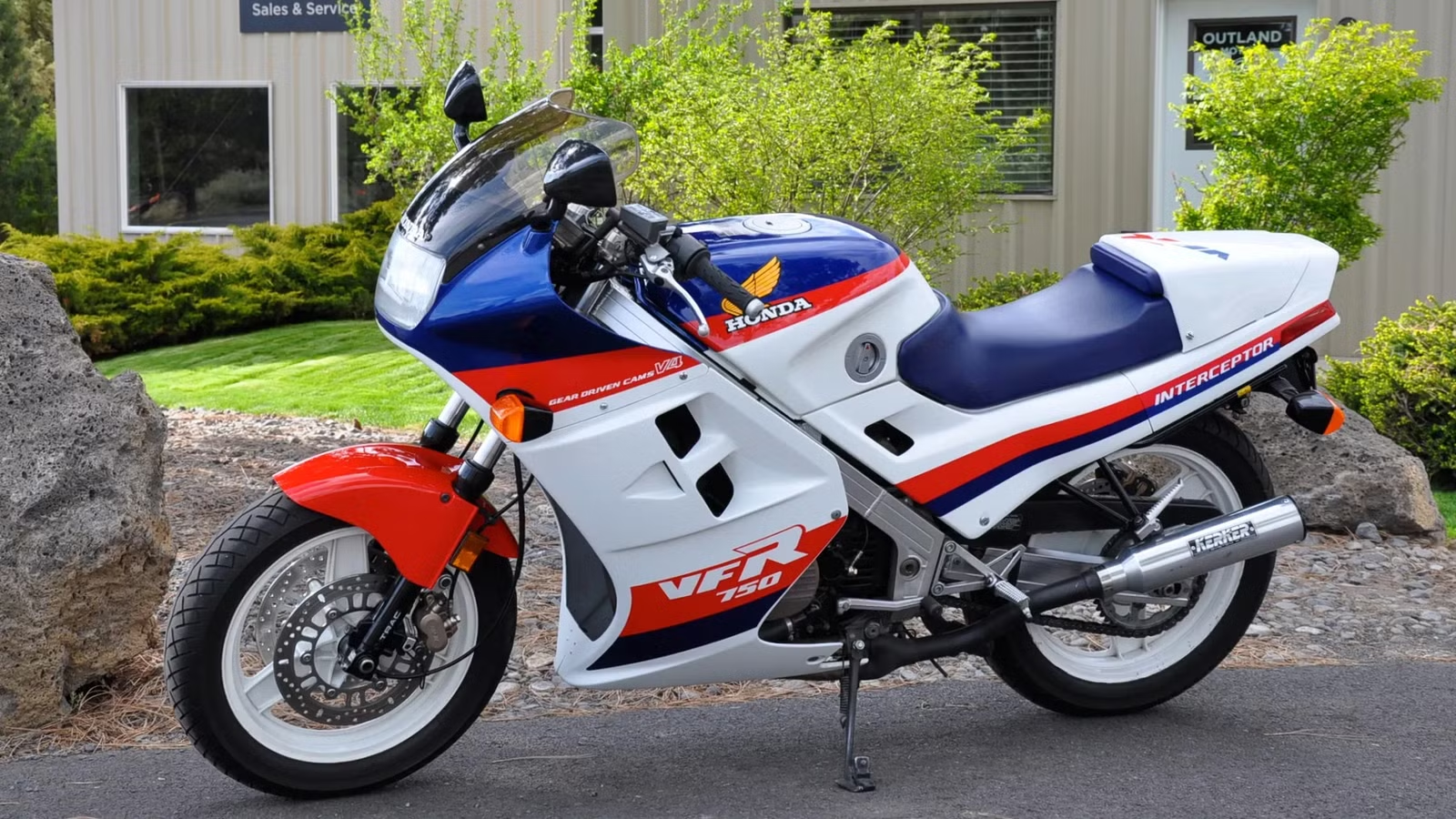
Honda’s VFR750F helped restore confidence in the brand’s V4 engines after problems with some earlier VF-series motorcycles. Its liquid-cooled 748cc V4 was extensively engineered, and the gear-driven camshafts used on these generations eliminated the need for conventional cam-chain drives. The result was a distinctive mechanical whine and an engine widely praised for combining performance with longevity. It could rev enthusiastically while remaining comfortable on long journeys. The VFR’s reputation wasn’t built on simplicity alone; it came from Honda’s will to get the engineering right.
3
Suzuki 644cc Air-Cooled Single
Found in: Suzuki DR650SE

The Suzuki DR650SE’s air-cooled single is proof that an engine doesn’t need liquid cooling or sophisticated electronics to last. Its 644cc powerplant delivers useful low- and midrange torque, uses a relatively straightforward design, and is well suited to remote riding where ease of repair matters. Owners and long-term testers have praised its durability, especially when the motorcycle remains close to stock and receives regular servicing. Early examples can suffer from cylinder-base gasket oil leaks, and heavily loaded touring can expose weaknesses elsewhere, but the engine remains the strongest link.
2
Yamaha 1,298cc Inline-Four
Found in: Yamaha FJR1300

The Yamaha FJR1300’s 1,298cc liquid-cooled inline-four was built to cover serious distances quickly and comfortably. It puts out good torque, has smooth highway performance, and enough power to carry a rider, passenger, and luggage without feeling strained. Yamaha refined the engine throughout the model’s production life, and its reputation for high-mileage reliability is one reason used examples remain attractive to sport-touring riders. Scheduled servicing is still essential, particularly valve-clearance checks. The FJR proves that a powerful engine can also be a dependable long-distance touring buddy.
1
Honda Super Cub Horizontal Single-Cylinder
Found in: Honda Super Cub 50, 90, and 110

Few motorcycle engine families have proved their worth as convincingly as the Honda Super Cub’s small four-stroke singles. The exact design and displacement have evolved across generations, but the basic priorities have remained the same: economical operation, easy maintenance, and being dependable. The Super Cub became a global phenomenon because it could handle years of abuse without demanding much from its owner. Honda’s production milestone of 100 million Super Cub-series motorcycles in 2017 speaks to the scale of that success. It might be the smallest engine family here, but its real-world legacy is enormous.

Related posts



Latest Post


No Comments