
Harley’s 1,868cc Street Bob Got Outclassed By A Lighter, Cheaper Triumph Bobber
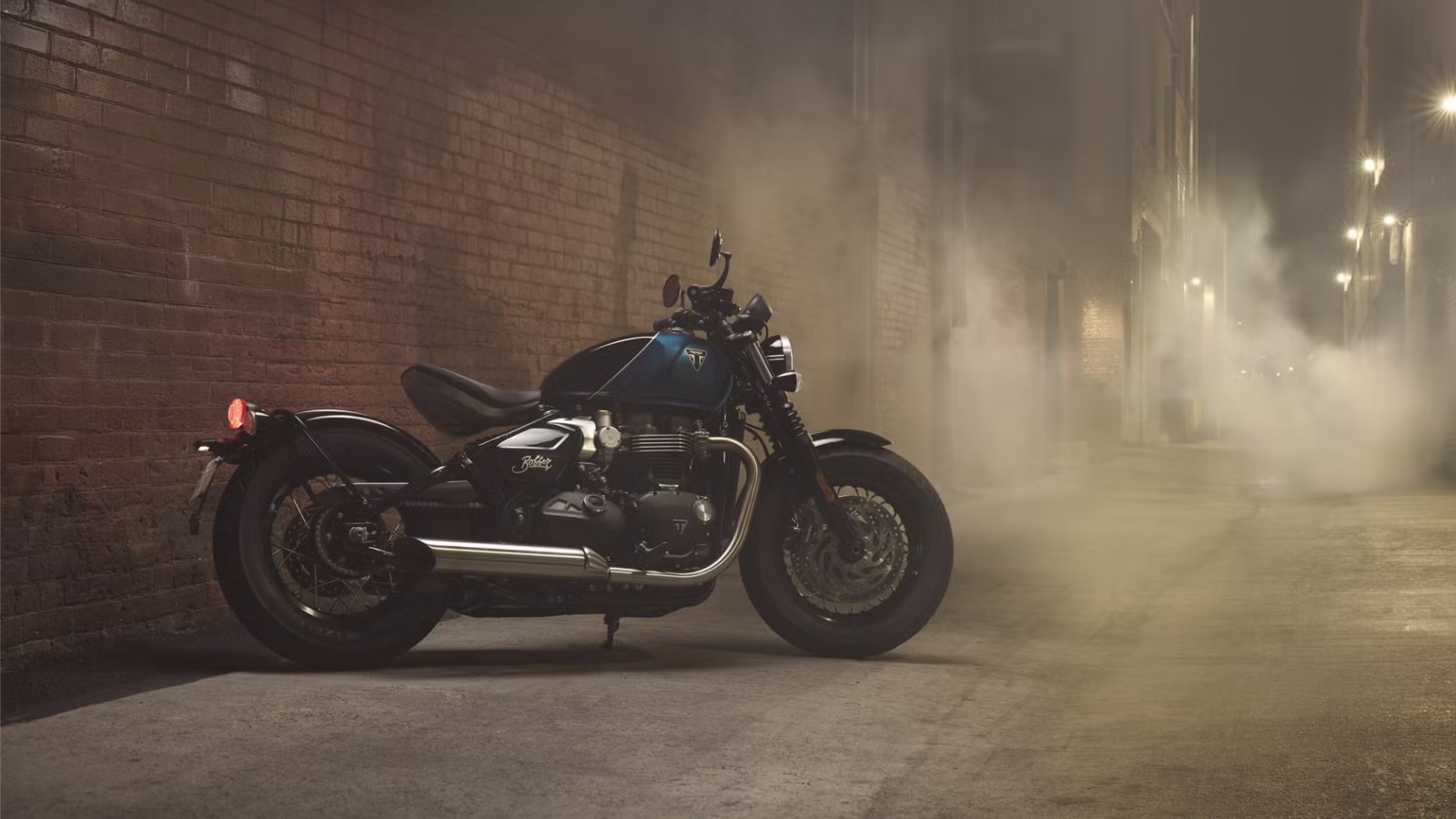
The performance measurement yardstick in the modern cruiser segment, for a long time, has been straight-up larger displacement. For example, you have the 2024 Harley-Davidson Street Bob 114, which packs a massive 1,868 cc Milwaukee-Eight V-twin pushing out 94 horsepower and 119 pound feet of torque. On paper, this nearly two liters of American muscle should dominate its class with ease. However, its British competitor changes the old-school muscle rules by ushering in high-efficiency engineering and modern chassis dynamics. The Triumph Bonneville Bobber, despite having a smaller 1,200 cc parallel-twin, and delivering 77 horsepower and 78 pound feet of torque, manages to outclass the larger-engined Street Bob, while coming at a lower price point.
Triumph Bonneville Bobber Vs. Harley-Davidson Street Bob 114: The Displacement Paradox

When comparing the Triumph Bonneville Bobber with the Harley Street Bob 114, you are bound to notice the massive engine capacity gap between the two, as well as their engine configurations. The Street Bob 114 uses its air/oil-cooled 1,868 cc Milwaukee Eight to deliver a deep, rumbling, low-end big V-twin pulse and feel. Yet, despite having a massive 668 cc advantage, the motor makes a modest 94 horsepower.
In comparison, the Triumph Bobber’s 1,200 cc liquid-cooled parallel-twin engine delivers 77 horsepower, or roughly 64.17 hp/ liter. In comparison, the Street Bob 114 delivers 50.32 hp/ liter. Even the current 2026 Street Bob 117, with its 1,923 cc V-twin engine, delivers 50.96 hp/liter.
By utilizing modern overhead cams and liquid cooling, the Triumph Bobber’s smaller engine pushes out more power per cubic centimeters, and directly challenges the assumption that bigger engines mean more performance. It also proves that better thermal management and more modern valvetrain help a lot to bridge massive dusplacement gaps, leaving traditional air/oil-cooled engines looking inefficient by modern standards.

The Triumph Bonneville Bobber Advantage: Lighter is faster

When it comes to real-world performance, weight becomes a defining factor. At 552 pounds, the Triumph Bonneville Bobber undercuts the 665-pound Street Bob 114 by more than 100 pounds. This significant weight advantage works massively in Triumph’s favor when it comes to straight-line acceleration.
Thanks to its weight advantage and strong mid-range, the Triumph Bobber can accelerate from 0 to 60 mph in around 3.6 seconds, and cross the quarter-mile trap in around 12.5 seconds. In comparison, despite the larger motor and low-end grunt, the Harley Street Bob 114 manages the 0-60 mph run in around 4.0 seconds while the quarter-mile run takes a longer 13.0 seconds.
The Triumph’s lighter chassis also translates to better dynamics on a twisty road. The Bobber delivers sharper cornering entry, reduced lean effort, more confident braking stability, and a stable high-speed ride, proving that lightweight engineering outshines brute mass especially when you factor in real-world handling capabilities.
Triumph Bonneville Bobber Vs. Harley-Davidson Street Bob 114: Value Engineering Vs. Brand Identity

Beyond its dynamic figures, the Triumph-Harley comparison also uncovers a stark difference in overall value and rider preferences. At a $14.795 price point, the Bonneville Bobber is more affordable than both the 2024 and 2024 Street Bob. Despite the low price, Triumph offers modern electronics, crisp ride-by-wire throttle response, a refined engine and superior build quality.
Interestingly, the 2026 Harley-Davidson Street Bob 117, despite featuring a large Milwaukee-Eight 117 engine, is priced at $14,999, which is significantly cheaper than the 2024 Street Bob 114 which retailed at $16,999. The Milwaukee cruiser does offer unmatched American heritage, a distinctive low-end rumble, and a proven history of high resale value.
Basically, you get to choose between paying a premium for traditional American muscle, or opting for sharp, modern performance. For uyers wanting engineering refinement, an agile chassis, and a VFM performance machine, the British Bobber presents a strongly persuasive case against classic American cruiser tradition.
Triumph Bonneville Bobber Vs. Harley-Davidson Street Bob 114: Two Distinct Personas For The Modern Cruiser Rider

Ultimately, this comparison between the Triumph Bonneville Bobber and Harley-Davidson Street Bob 1145 proves that the modern cruiser category can be categorized into two distinct rider profiles for the same Bobber segment. Traditionalists who value iconic American styling, heavy mechanical presence, and that raw, low-end torque, will continue to flock around the Milwaukee-Eight platform. These riders prioritize classic V-twin rumble, customizable aftermarket potential, and a deep-rooted brand heritage over raw performance metrics.
On the other hand, open-minded enthusiasts who value sophisticated engineering, crisp acceleration, and superior agility, will find the lighter Triumph impossible to ignore. It appeals to the pragmatic buyer who is looking for sharper cornering, superior power-to-weight ratios, and modern electronics, without paying an inflated price tag.
In today’s changing times, brand legacy and sheer engine size no longer dictate sales numbers, especially when clever engineering has entered the ring. Both the Bonneville Bobber and Street Bob offer strong personality and character, but the Triumph proves that modern design can successfully redifine what a middleweight Bobber is capable of when presented an open road.

Related posts

Latest Post


No Comments