
Harley-Davidson Blindsides MotoAmerica By Pulling Factory Team From King of the Baggers
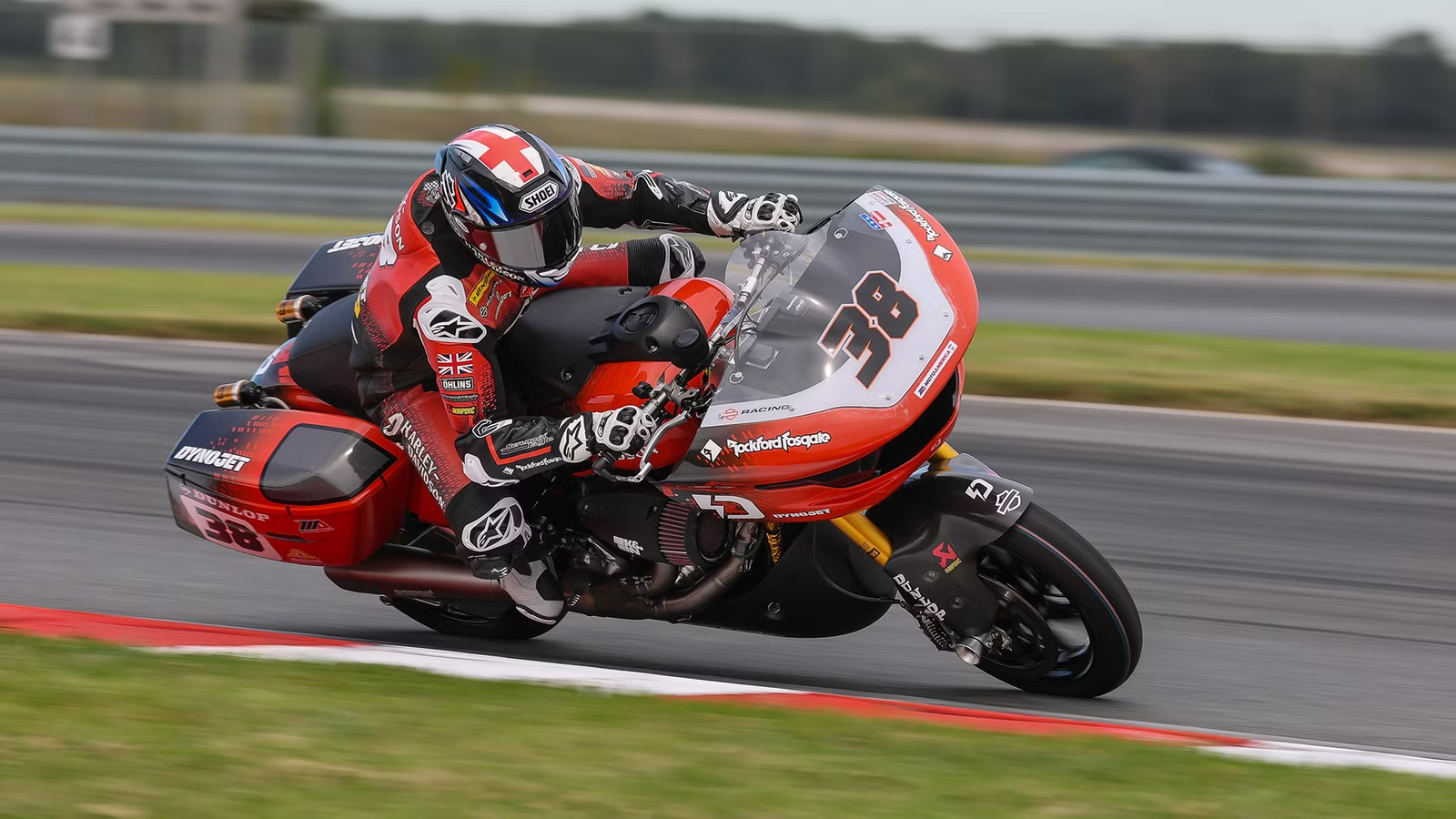
Harley-Davidson recently announced it was ending its factory racing program in King of the Baggers after the 2026 season — a decision that landed on MotoAmerica with roughly five months to spare before the 2027 season opener. The sanctioning body didn’t take it quietly.

MotoAmerica’s official statement acknowledged the blow directly: “We share in your disappointment with Harley-Davidson’s decision. Receiving this news at such a late stage presents challenges, but we are actively exploring all available options to continue supporting the class.” For a sanctioning body, that’s about as pointed a public rebuke as the format allows. The series Harley helped build from a single 2020 invitational at Laguna Seca into a full championship now faces its most uncertain off-season yet.
Six Years of Parity, Gone Overnight
King of the Baggers became a proper championship in 2021, and its appeal rested almost entirely on one thing: two fundamentally different American motorcycles, built by two rival manufacturers, trading titles year after year. Harley-Davidson and Indian split the six championships three apiece — Harley winning in 2021, 2023, and 2025; Indian taking 2022, 2024, and 2026. No other manufacturers ever entered the class.

The technical contrast between the two machines was part of the story. Harley ran a heavily modified Milwaukee-Eight V-twin — a pushrod engine displacing around 2,150 cc — while Indian’s Challenger used a liquid-cooled 60-degree V-twin with overhead cams and four valves per cylinder, displacing roughly 1,835 cc. MotoAmerica repeatedly balanced the two through rev limits, minimum weights, and approved parts to keep the racing close. That balancing act is now moot. Harley is walking away from it entirely.
Where Harley Is Going Instead

The destination is the FIM Harley-Davidson Bagger World Cup, a one-make spec series that debuted in 2026 as a support class at six MotoGP weekends. All competitors race Road Glide machinery, meaning the technical development arms race with Indian disappears — replaced by a platform where riders, setup, and teamwork are the differentiators. The inaugural season drew 16 riders, including King of the Baggers regulars Kyle Wyman, Bradley Smith, James Rispoli, and Max Flinders, alongside MotoGP-connected names like Andrea Iannone and Bradley Smith. Twenty-year-old Australian Archie McDonald of Joe Rascal Racing won the inaugural title with 202 points, nine ahead of Oscar Gutiérrez.
Harley CEO Artie Starrs framed the shift as putting “the fastest Harley-Davidson motorcycles on the biggest stage.” The global MotoGP audience dwarfs what MotoAmerica can offer, and a one-make series means Harley controls the narrative entirely. The company says the 2027 Bagger World Cup will expand with more teams, riders, and races, with the technical knowledge feeding back into future production motorcycles and Screamin’ Eagle performance parts.
Indian Stays, and Isn’t Hiding Its Frustration

Indian Motorcycle isn’t following Harley out of the MotoAmerica paddock. The brand has already confirmed Hayden Gillim and 2024 champion Troy Herfoss for 2027, with the Vance & Hines-run factory team targeting back-to-back titles. Gillim dominated the 2026 season — eight wins, a new single-season record, 10 victories for the team across 14 races — and clinched the championship two rounds before the finale at Circuit of the Americas.
Indian CEO Mike Kennedy made the company’s position clear: “We are disappointed that Harley-Davidson would quit American bagger racing and walk away from something that has unified so many American V-twin riders regardless of which brand of motorcycle they ride.” He added that rivalry — including the genuine possibility of losing — is what makes competition meaningful. The argument cuts both ways: Harley’s own team principal Jason Kehl acknowledged in his departure statement that having Indian as a “fierce” rival made Harley’s victories more meaningful. Kennedy is simply pointing out that the same logic applies to everyone left on the grid.
What the 2027 Grid Actually Looks Like

The honest answer is that nobody knows yet. Indian’s factory program is confirmed and well-resourced. Private teams running Road Glides could still enter — Harley’s machinery and the specialist knowledge built around it over six years don’t disappear — but whether privateer Harleys without factory development support can run competitively against Gillim and Herfoss is a real question.
For the riders most directly affected, the picture is murky. Kyle Wyman, the most successful rider in series history with 27 race wins and three titles, made cryptic comments at the New Jersey finale before the announcement was official. His future with Harley in the Bagger World Cup remains unconfirmed. Bradley Smith was more direct: “There’s an unfortunate situation that is unfolding, and it probably means I need to look elsewhere for next year.” MotoAmerica says it is “actively exploring all available options” — language that suggests the series format itself is under review, not just the entry list.
The irony is hard to miss. Harley-Davidson spent six years helping build King of the Baggers into one of the most compelling formats in American motorcycle racing, then walked away five months before the next season with a statement that thanked everyone involved. MotoAmerica and Indian are left to figure out what comes next. Whether a one-manufacturer grid can sustain the series — or whether KOB as fans know it is effectively finished — is the question that won’t be answered until MotoAmerica shares those promised updates.

Related posts

Latest Post


No Comments