
GM’s Gas Answer To The Duramax Was A 496-Cubic-Inch Big-Block
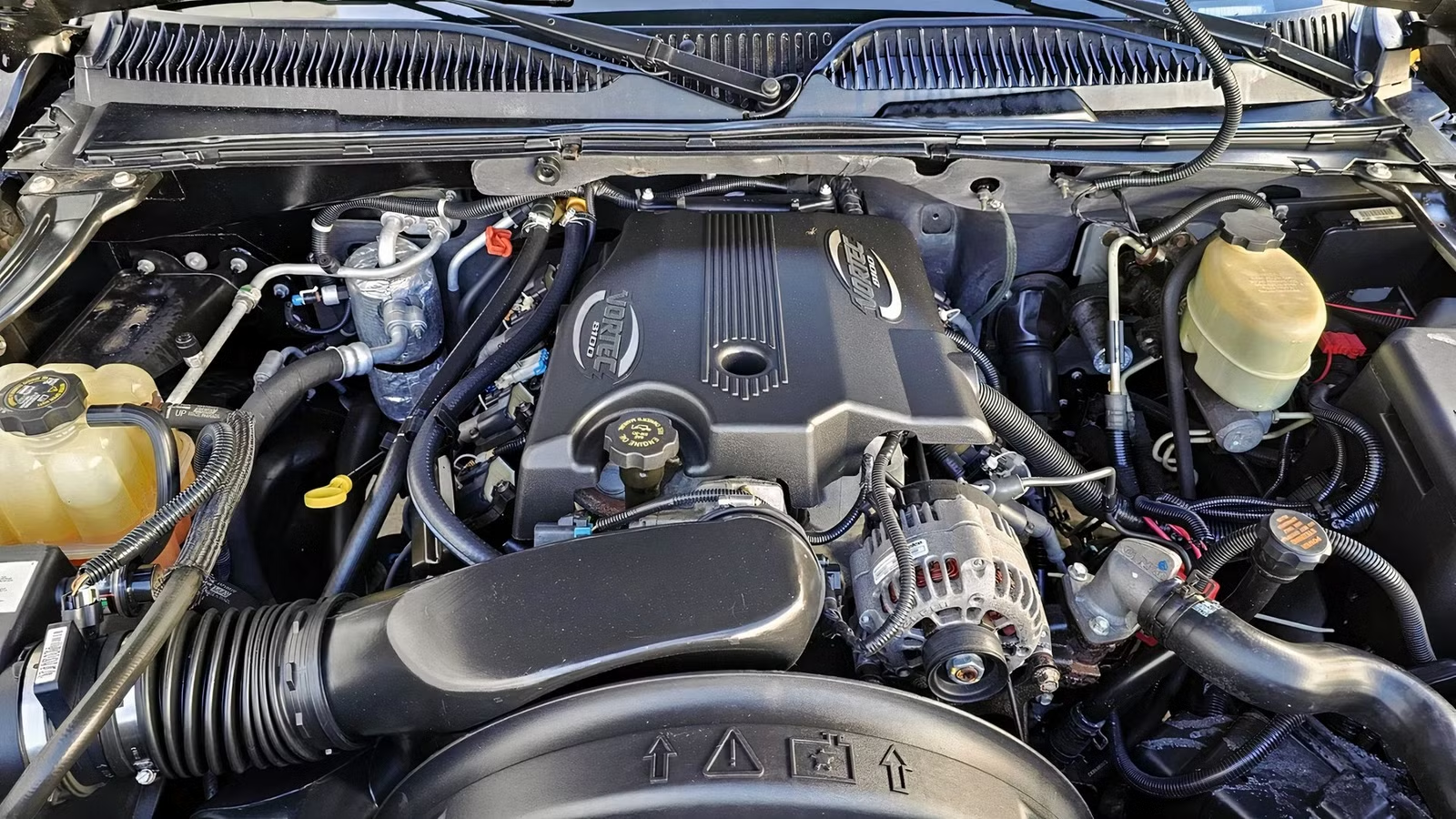
It’s a pretty crummy time to be a Duramax diesel driver right now, let alone any other diesel truck for that matter. We need not get into why, but it’s safe to say your wallet’s hurting right now. Even 25 years ago, GM prided itself on fielding a viable gas-powered alternative that could do almost everything the equivalent diesel could do, but with the relative market stability of a gas engine. It came from a lineage that stretches back to before the muscle car wars, and capped it off entirely after decades in production.
The Chevy Big Block: The Ultimate Manly Macho Engine

The Chevy big block V8 is one of those engines that stuck around by being so dang good at what it does, GM couldn’t help but keep it for decades. Over seven unique generations starting in 1958, the big block evolved from a meager 348 cubic inches into an iconic power plant for big pickup trucks and muscle cars as large as 454 cubic inches, or even 502 cubic inches if you count marine variants.
In muscle car form, the Chevy big block was a force on the streets, powering legendary machines like the Chevelle SS, the Corvette, and the Camaro to drag strip dominance. In its more utilitarian forms, it was the unkillable heart of medium-duty trucks, fire engines, ambulances, step vans, and even school buses. That pretty much set the rhythm for the big block even well past the years of the first muscle car era. After the two back-to-back oil crises and the EPA made big block muscle cars untenable, the big block carried on as a dedicated, uncompromising workhorse.
Stripped of its street-racing machismo, the Chevy big block found a long-term home under the hoods of 3/4-ton and 1-ton pickups, heavy-duty Suburbans, and commercial chassis cabs. Still, by the late 1990s and the turn of the millennium, the heavy-duty pickup market was undergoing a massive seismic shift. Diesel engines were rapidly transitioning from sluggish, noisy glorified tractor engines into turbocharged powerhouses. Ford’s Powerstroke, Dodge’s Cummins, and GM’s upcoming Duramax were reshaping how fleet operators and consumer haulers evaluated raw pulling power, and that meant the old big block had to do some changing.

Enter the Vortec: The Big Block All Grown Up

The diesel revolution of the ‘90s is still being felt today, but just like 2026, the price of admission was pretty hard to ignore. Diesel trucks were considerably more expensive than their gasoline counterparts, adding thousands of dollars to the sticker price right off the showroom floor. On top of that, specialized maintenance costs, expensive fuel filters, and the headaches of winter-weather preparation made the famous Cummins 5.9s and Powerstroke 7.3s a tough sell for traditionalists.
In short, there was still a massive market made of commercial operators, fleet managers, and RV owners who wanted the low-end torque of a high-displacement V8 but without the rigmarole that came from owning a diesel. As a direct response to these folks, GM initially looked to the existing architecture of the legendary big-block V8. By the 1990s, the engine had evolved through the transitional Gen V block into the Gen VI architecture. Via the street-legal 7.4-liter and the 502 marine and crate engine, GM brought the big displacement folks were looking for, but with a modern architecture optimized for multi-port fuel injection, emissions compliance, and factory hydraulic roller cams.

The 454-cubic-inch Vortec 7400 was a fine engine, with 290 horsepower and a healthy 410 lb-ft of torque to work with. Yet, as the 21st century rolled around, the Gen VI architecture was running out of developmental steam. The traditional internals, distributor-based ignition and finicky Bosch fuel injectors lagged behind the competition. Still, that didn’t mean the big block form factor had no room left to grow. If anything, it had roughly 700ccs more left in it, and one final internal revamp that brought the big block into the 21st century.
The Vortec 8100: 496 Cubic Inches of Pure Ruggedness

That clean-sheet solution for a modern gas-powered diesel alternative arrived for the 2001 model year, in the form of the Gen VII Vortec 8100 L18. To design the ultimate heavy-duty gas truck engine, GM engineers retained the classic 454’s 4.25-inch cylinder bore but stretched the stroke out to 4.37 inches inside a redesigned, taller deck block. The result was a staggering 8.1 liters of displacement, translating to a massive 496 cubic inches of power under the hood of 2500 and 3500-series trucks and SUVs.
Enthusiasts and tradespeople alike quickly embraced the Gen VII because it did away with legacy distributor setupsin favor of modern LS-series technology. GM integrated coil-near-plug ignition, sophisticated crank and cam position sensors, and the modern 1-8-7-2-6-5-4-3 firing order directly into the engine’s control architecture for a far smoother experience.
With roughly 325 to 340 horsepower and a healthy 440 to 455 lb-ft of torque depending on the model year, almost all of that torque came between 1,700 and 4,300 RPM. Aside from Silverados and Suburbans, the Votec 8100 was found under the hood of the odd-ball Avalanche 2500 half-truck half-SUV, a whole slew of heavy-duty trucks, buses, and RVs, and even armored police/military vehicles.
The End of an Era
Today, the Chevy big block survives, ironically as a performance crate engine far removed from what the Vortec L18 was built for. Yet, as a mainline heavy-duty truck engine, the big block’s story ended when its last variant slid off the factory floor in late 2009.
From then on, GM handed its heavy-duty gas towing duties to a new generation of high-output 6.0-liter, 6.2-liter, and 6.6-liter LS and LT-based small blocks. On the surface, these are great motors with stout bottom ends and plenty of power and torque. Still, in a straightforward anatomy-waving contest of pure displacement, the old 8.1 has the modern stuff beat.
Sources: Bring a Trailer, Chevrolet, chevytrucks.org

Related posts



Latest Post




No Comments