
Middleweight Adventure Motorcycles That Make Big-Bore ADVs Look Excessive
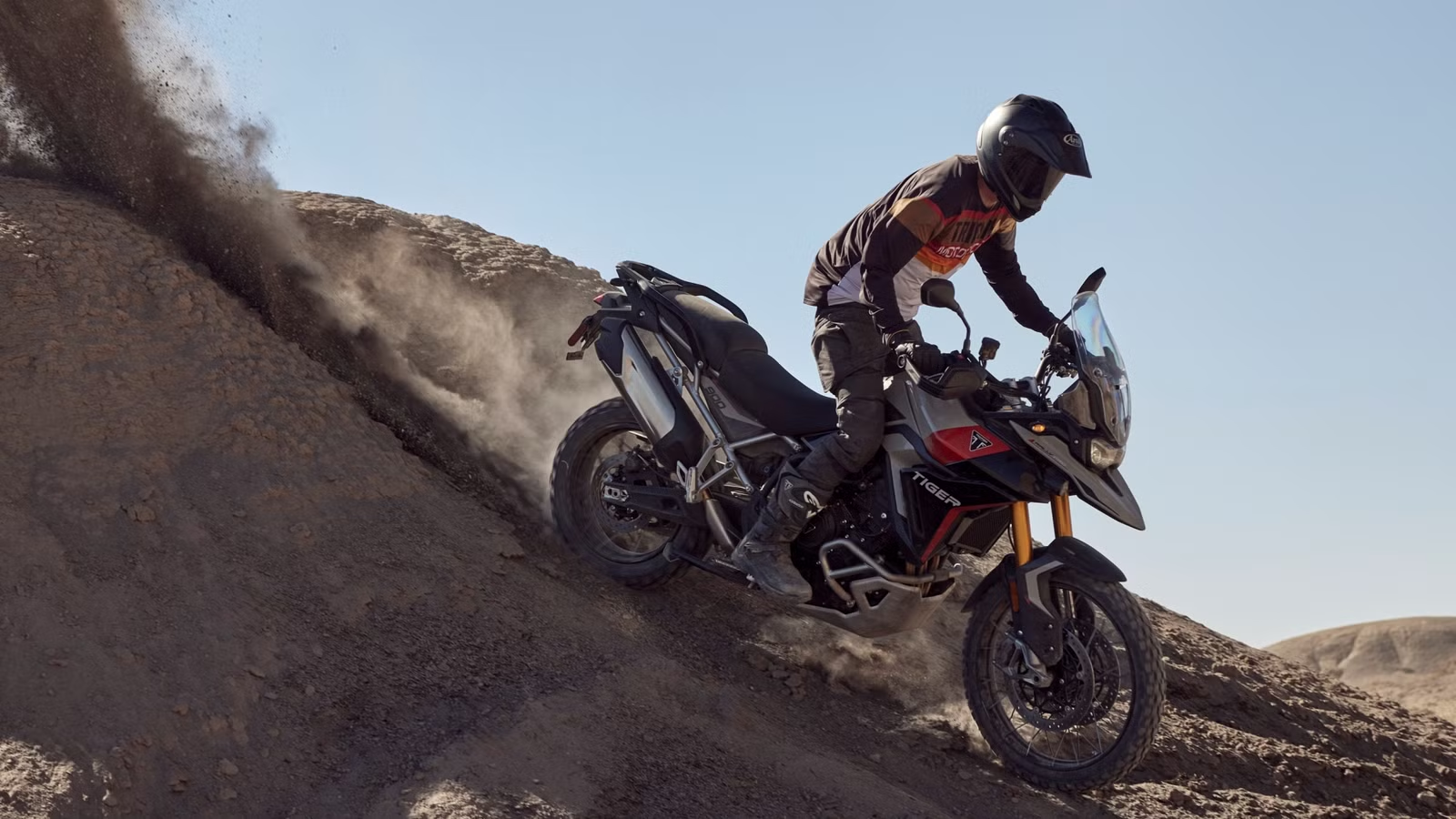
The latest middleweight adventure bikes can cover highways, gravel roads, rocky trails, and long-distance journeys without bringing the sheer mass and complexity of a liter-plus machine. The engines are large enough to provide useful highway performance, yet compact enough to keep the weight and handling manageable. This balance is especially important to riders who would rather explore than simply own the biggest motorcycle in the parking lot. From simple and rugged machines to highly sophisticated rally-inspired models, these motorcycles show just how much adventure bike riders can get without moving into big-bore territory.
CFMOTO Ibex 800 E
Price: $9,799

The CFMoto Ibex 800 E starts off our list, making the case that even middleweight bikes can be sufficient touring machines. The 799cc parallel-twin produces 94 horsepower and 56.8 pound-feet of torque, giving it enough muscle for sustained highway travel while retaining the manageable character expected for an ADV.

The equipment list is particularly generous for the money that you pay. A quickshifter, cruise control, heated grips, heated seat, center stand, aluminum skid plate, and integrated crash bars are all part of the standard package. The biggest highlight at this price? Radar-based blind-spot detection. Elsewhere, it gets fully adjustable KYB suspension, 19-inch front and 17-inch rear cross-spoke tubeless rims. There are six ride modes, switchable traction control, and cornering ABS.
Suzuki V-Strom 800DE
Price: $11,799


The Suzuki V-Strom 800DE uses a 776cc parallel-twin engine with a 270-degree crankshaft and its Cross Balancer system. The engine is designed for strong, controllable torque at low rpm, but it still retains the smooth chug for highway work. Suzuki has also given the 800DE a proper off-road chassis, with a 21-inch front wheel, 17-inch rear wheel, and 8.7 inches of travel at both ends. The bike also gets a 5.3-gallon fuel tank.

Reliability, though, is one of Suzuki’s biggest pros, and the V-Strom 800DE ensures that it sticks to that philosophy. There’s plenty of modern tech too, with adjustable ABS, a bidirectional quickshifter, a 5-inch TFT dash with connectivity, and Suzuki’s Intelligent Ride System that includes multiple traction control settings and a gravel mode.
Aprilia Tuareg 660
Price: $12,499

Aprilia’s Tuareg 660 has a 659cc parallel-twin that produces 80 horsepower at 9,250 rpm and 51.6 pound-feet of torque. Aprilia lists a weight of 449 pounds, making it considerably lighter than most other ADVs. Suspension is tuned for mixed work as well. A 43mm front fork and a rear monoshock from Kayaba provide about 9.4 inches of travel with plenty of adjustability for different riding conditions.

The equipment list is fancy, too, with four riding modes including an off-road mode, plus traction control, cruise control, engine-braking adjustment and configurable ABS. This combination of low mass, sporty engine, and tall suspension gives the Tuareg a broad resume, allowing you to tackle whatever comes your way.
Yamaha Ténéré 700 World Raid
Price: $12,999

The Yamaha Ténéré 700 World Raid takes an entirely different route to adventure-bike capability. The Ténéré name has a distinct history in rally racing and has been the face of Yamaha’s ADV range for a while. The World Raid adds to that formula with equipment that makes long-distance travel easier. Additionally, a 6.1-gallon fuel capacity gives the Tenere enormous range, especially when paired with its 54.7 miles-per-gallon fuel economy.

Compared to the base bike, Yamaha has added technology to the World Raid. A six-axis IMU manages lean-sensitive traction control, slide control, and selectable ABS; ride-by-wire brings just two power modes and cruise control. The CP2 engine already has a bulletproof reputation, and the World Raid can be expected to rack up tens of thousands of miles before any major work is required.
Moto Guzzi V85 TT Travel
Price: $14,390

The Moto Guzzi V85 TT Travel is one of the more unusual motorcycles in this group because it doesn’t really try to imitate a rally bike like the others on this list. Moto Guzzi’s characterful transverse V-twin displaces 853cc and produces 80 horsepower and 61.2 pound-feet of torque. This is then paired with a shaft final drive, creating a very different mechanical personality from the parallel-twins that dominate this category.

The V85 TT Travel’s appeal is less about chasing outright performance and more about making long journeys feel easy. It gets a 19-inch front and a 17-inch rear wheel and suspension with 6.6 inches of travel. Seat height measures 32.6 inches, and the bike weighs 535 pounds. The V85 is not the most performance-focused motorcycle on this list, but its V-twin gives it a mechanical identity that separates it cleanly from the crowd.
BMW F 900 GS Adventure
Price: $14,495

The BMW F 900 GS Adventure demonstrates how close a middleweight motorcycle can get to big-bike touring ability without actually crossing into the liter-class category. The 895cc liquid-cooled parallel-twin produces 105 horsepower and 68.6 pound-feet of torque. That gives it enough performance for loaded highway riding while keeping the engine substantially smaller than BMW’s boxer-powered R-series ADV machines.

Now, at 542 pounds, the F 900 GS is not a lightweight dirt bike, but it is a decent combination of equipment and off-road hardware. The front suspension uses a 43mm adjustable upside-down fork with 9.05 inches of travel, while the rear suspension provides 8.46 inches. The 21-inch front wheel and 17-inch rear wheel give it a little more credibility off-road. You’ll have to pay extra for some truly fancy bits, though.
Husqvarna Norden 901
Price: $15,349

The Husqvarna Norden 901 is another interesting ADV that bridges comfortable adventure touring with serious off-roading. The 889cc parallel-twin produces 105 horsepower and 73.8 pound-feet of torque, giving it considerable low- and mid-range muscle that its configuration might suggest. Its WP Apex 43 mm fork provides 8.6 inches of travel, and the rear shock offers 8.4 inches with adjustability.

The Norden weighs just 449 pounds without fuel, and the slim bodywork allows the rider to move around comfortably when standing, something that becomes important when the trails get tougher. Additionally, Husqvarna quotes a 9,300-mile service interval, which is extremely useful for riders who plan to put substantial mileage on their bikes.
KTM 890 Adventure R
Price: $16,299

Few motorcycles demonstrate the kind of capabilities the middleweight ADV category produces like the KTM 890 Adventure R. The 899cc parallel-twin develops 103.5 horsepower and 73.7 pound-feet of torque. KTM has tuned the engine for some serious off-road duty, and the chassis has been engineered to match that. 21-inch front and 18-inch rear tires are suspended from the frame and use WP XPLOR suspension at both ends with 9.4 inches of travel.

To solidify its adventure nature, the 890 Adventure R also comes with a 5.2-gallon fuel tank, multiple ride modes, traction control, and ABS managed through an IMU. ABS has off-road functionality as well, switching off at the rear while allowing the front wheel to spin under heavy braking.
Ducati DesertX V2
Price: $16,995

The Ducati Desert X V2 is another motorcycle that pushes the middleweight ADV segment into the performance end of the spectrum. The new 890cc 9-degree V-twin produces 110.3 horsepower and 67.8 pound-feet of torque, which peaks at 7,000 rpm. Ducati says the engine is tuned to deliver 70 percent of its maximum torque by 3,000 rpm. And Ducati also lists the Desert X V2’s wet weight as 461 pounds without fuel.

Suspension comes via a 46mm KYB fork up front with 9.1 inches of travel and a rear monoshock with 8.7 inches of travel. The DesertX gets six riding modes, including Enduro and Rally, and riders can adjust traction control, engine braking, wheelie control, and ABS to suit the riding conditions.
Triumph Tiger 900 Rally Pro
Price: $17,595

The Triumph Tiger 900 Rally Pro is the most expensive on this list, but it is also one of the motorcycles most associated with adventure touring. Unlike most of the bikes on this list, the Tiger is a large motorcycle. At its heart lies an 888cc inline-triple that produces 106 horsepower and 66.4 pound-feet of torque. The numbers themselves aren’t all that different, but the configuration combines a strong midrange punch with the willingness to rev.

Suspension comes via a fully adjustable 45mm front fork and a rear monoshock with 9.1 inches and 8.7 inches of travel, respectively. Additionally, the Tiger 900’s 5.2-gallon fuel tank and tech pack with connectivity make it well-suited to touring. However, Triumph also says that service intervals are required every 6,000 miles, which is a little on the low side, especially when you’re planning some serious mileage.
Sources: Various manufacturers

Related posts

Latest Post


No Comments