
GMC Built A 630-LB-FT V12 Using More Than 50 Parts From Its V6
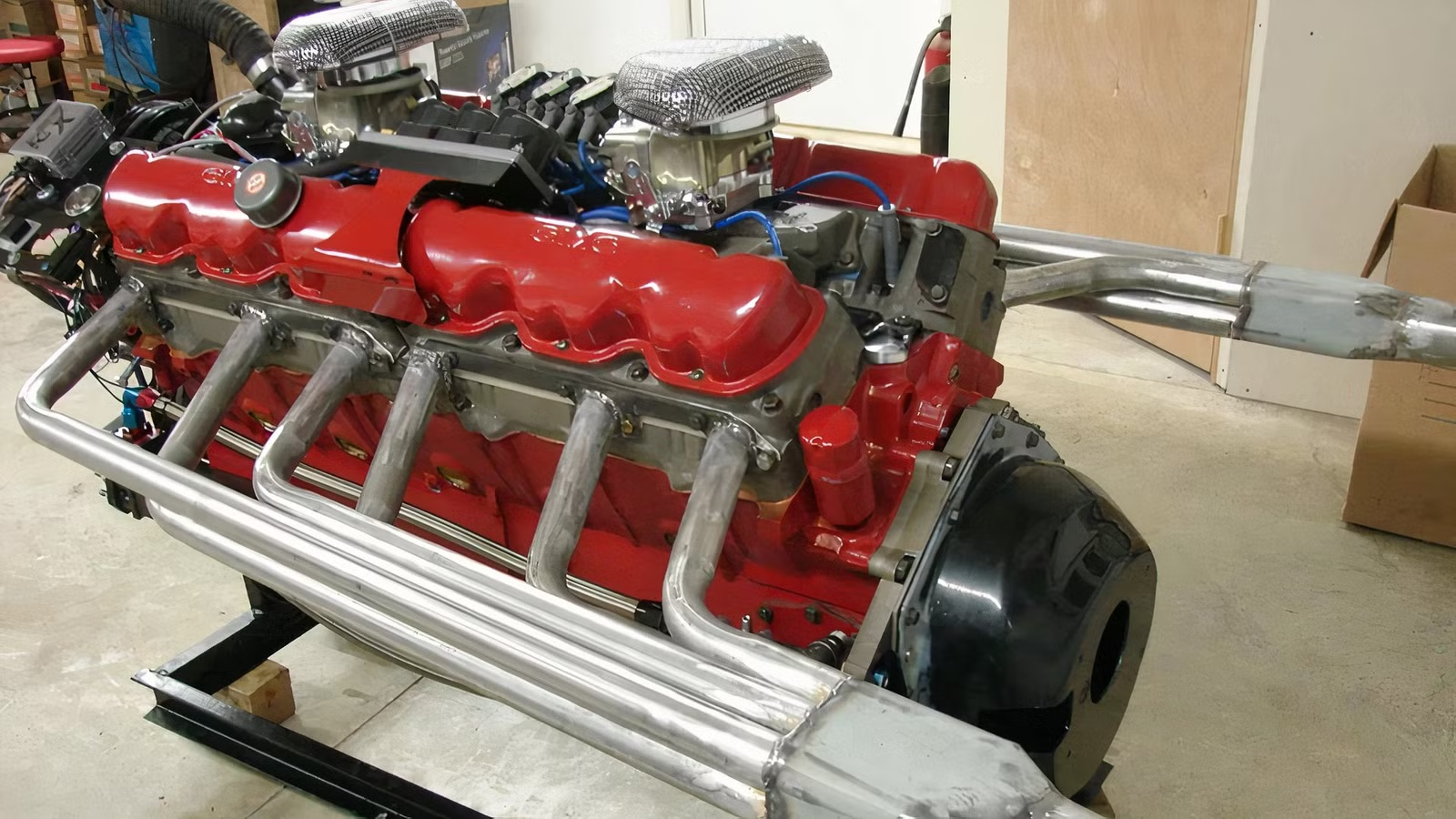
The American auto industry has produced some extraordinary engines, but few are as unusual as the enormous V12 General Motors developed during the 1960s. With enough displacement to embarrass modern supercars, this mechanical giant favored brute strength over high-speed thrills. Its engineering also challenged the idea that building a 12-cylinder engine required starting from scratch. By borrowing heavily from an existing six-cylinder design, GMC created something remarkably ambitious.
America’s Heavy Trucks Needed More Than Ordinary Gasoline Engines

During the late 1950s and early 1960s, America’s trucking industry needed engines capable of hauling enormous loads, climbing steep grades, and operating continuously without mechanical trouble. Large gasoline engines remained common, but growing commercial demands exposed their limitations. Heavy trucks needed dependable pulling power, especially when carrying substantial cargo over long distances.
Low-rpm torque mattered far more than impressive horsepower figures. Truck drivers needed enough muscle to move heavy trailers without constantly shifting gears or pushing engines to their limits. Meanwhile, diesel engines were gaining popularity because they offered excellent low-speed pulling power and substantially better fuel economy. Gasoline engine manufacturers needed a convincing response.
A V12 Built For Pulling Power Rather Than Exotic Performance


Mention a V12 engine to most enthusiasts, and Ferrari probably comes to mind. By the 1950s, the Italian manufacturer had established the configuration as a hallmark of its racing cars and sophisticated grand tourers. Jaguar later reinforced that association when it introduced its road-going V12 in 1971. These engines offered smooth performance, distinctive sounds, and the excitement enthusiasts expected from exotic machinery.
However, the same configuration could serve an entirely different purpose. Twelve cylinders provided frequent power strokes and smooth operation, but the engine’s design determined whether that smoothness supported high-speed performance or sustained hauling. A large V12 tuned for low-rpm torque could make an excellent heavy-duty engine, even if it never approached the engine speeds of an exotic sports car.
The GMC Twin Six Was An 11.5-Liter V12 Built From V6 Engineering
GMC introduced the Twin Six in 1960, developing the massive gasoline V12 for heavy-duty trucks and industrial applications, and production generally continued through 1965. Its 702.4-cubic-inch (11.5-liter) displacement made it one of America’s largest commercial gasoline engines, with a 60-degree cylinder-bank angle and a single-piece cast-iron block.
Despite its enormous displacement, the Twin Six produced just 275 horsepower at 2,400 rpm. That figure seems almost laughable today. However, its 630 lb-ft of torque arrived at just 1,600 rpm, exactly where a hard-working truck needed it. The engine favored pulling heavy loads with minimal revs.
The Twin Six also weighed approximately 1,485 pounds and carried 16 quarts of oil, with complete cooling systems holding around 18 gallons, depending on installation. Those enormous capacities reflected its industrial purpose. GMC wanted an engine that could handle punishing workloads rather than impress anyone with its power-to-weight ratio.
A common misconception suggests GMC created the Twin Six by welding two V6 engines together. It actually developed a dedicated, single-piece cast-iron V12 block and crankcase with a unique crankshaft. The engine borrowed its basic architecture from GMC’s existing 351-cubic-inch V6, rather than combining two complete engines.

GMC reused approximately 54 to 56 interchangeable components, with period literature identifying 56 major shared parts. These included cylinder heads, valvetrain hardware, and intake and exhaust components. The Twin Six’s four cylinder heads were particularly interesting. Each covered three cylinders, effectively doubling the two-head arrangement found on the original V6.
Beneath those familiar components sat a forged-steel crankshaft measuring roughly four feet long and weighing around 180 to 190 pounds. Seven main bearings supported this massive component, helping it withstand the forces generated by 12 large pistons. Shared parts reduced development complexity and simplified maintenance, while the dedicated bottom end provided the strength.

The Twin Six’s substantial oil and coolant capacities were more than engineering excess. Heavy loads generate enormous heat, especially in a large gasoline engine operating continuously. GMC equipped the V12 with three thermostats and a high-capacity water pump reportedly capable of circulating approximately 118 gallons per minute. Additional space between cylinder bores also helped manage temperatures.
A high-volume oil pump circulated roughly 17 gallons per minute, while hydraulic lifters reduced valve-adjustment requirements. GMC claimed the engine could operate for 200,000 miles before a major overhaul. Historical accounts also reference advertised service intervals reaching 15,000 miles.
How GM’s Forgotten V12 Became A Mad Max Hot Rod Engine
The Twin Six had one weakness that even 630 lb-ft of torque couldn’t overcome: fuel consumption. Reports commonly suggest around 2 to 3 mpg in heavy-truck applications. Production ended in the mid-1960s, with estimates suggesting GMC built roughly 5,000 engines, possibly fewer. Widely remembered as GM’s last production V12, it eventually attracted hot-rod builders looking for something unconventional.
Australian enthusiast Ian “Elvis” Davis created one particularly outrageous example by installing a 702-cubic-inch GMC V12 into an extended 1932 Ford three-window coupe. The enormous industrial engine made the comparatively tiny hot rod look like it had swallowed a locomotive. Davis’s creation later inspired the vehicle nicknamed “Elvis” in Mad Max: Fury Road. The movie version underwent substantial modifications, and production accounts indicate that a smaller Chevrolet V8 eventually replaced the damaged V12 beneath a replica engine cover.
Specialists such as Thunder V12 continue supporting custom applications with parts and conversion equipment, helping preserve interest in these unusual engines.
GMC’s Last V12 Deserves More Recognition

European manufacturers made V12 engines famous through racing victories and exotic grand tourers. GMC approached the configuration from an entirely different direction. Its Twin Six delivered 630 lb-ft at just 1,600 rpm while sharing more than 50 components with an established V6 family. The dedicated V12 block and strengthened internal components demonstrated considerable engineering ambition.
Ultimately, enormous gasoline consumption made the Twin Six difficult to justify as diesel technology improved. Its short production life reflected changing commercial priorities rather than poor engineering. Ferrari built V12s to chase speed, while GMC built one to move mountains of cargo. That achievement deserves recognition of its own.
Source: GM, GMC

Related posts




Latest Post


No Comments