
Forgotten Supercar: Toyota’s 500-Horsepower All-Wheel-Drive Celica
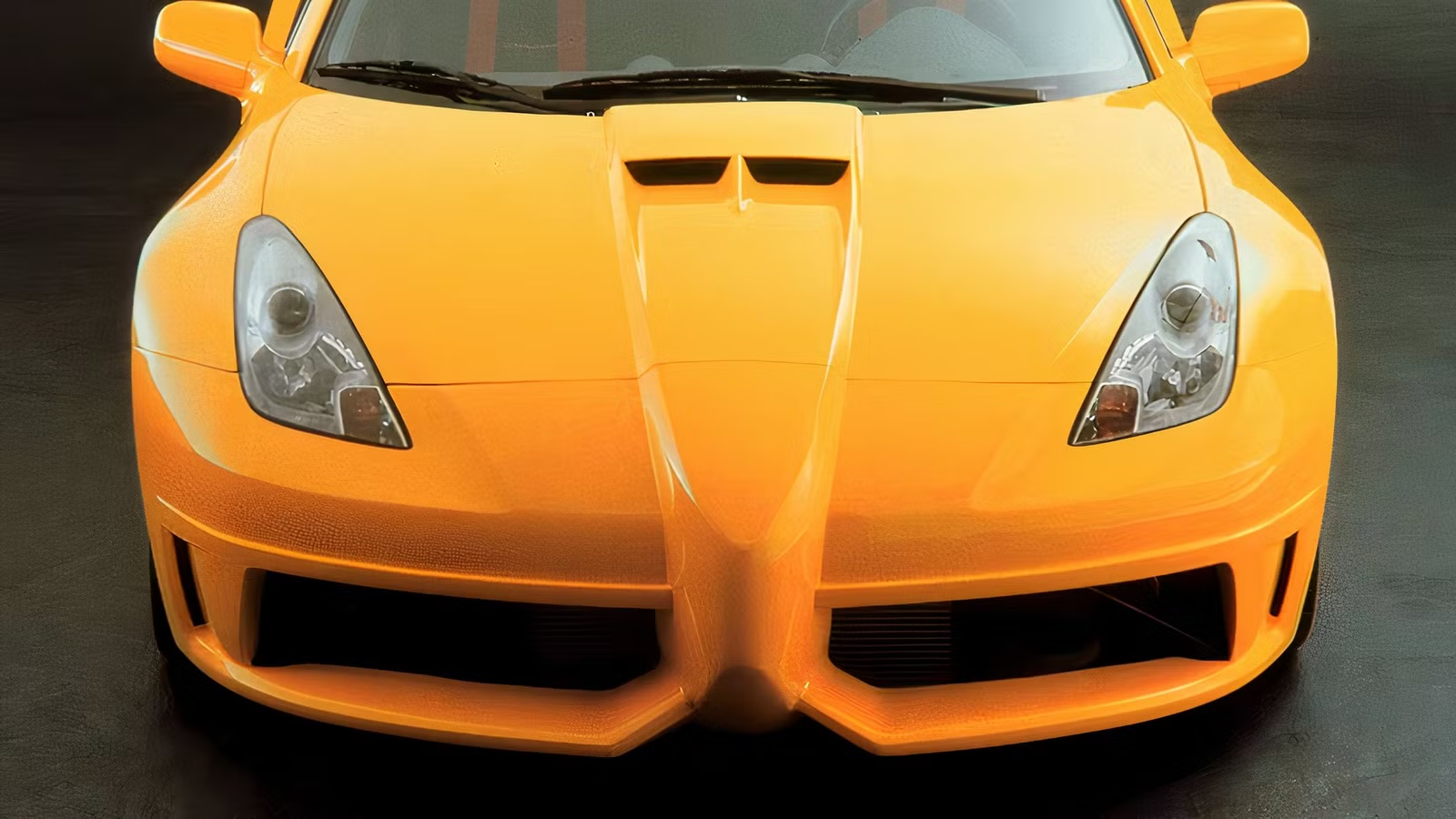
Few sports coupes have inspired as much passion — or as much debate — as the Toyota Celica. When the seventh-generation car arrived, enthusiasts pored over every detail, celebrating its sharper styling and lighter curb weight while quietly asking one uncomfortable question: where’s the fire-breathing halo model? That question led Toyota down a fascinating rabbit hole, and what came out the other end was one of the most audacious concept builds in the brand’s history.

The previous three Celica generations had the GT-4 halo model. These all-wheel-drive turbocharged cars were stalwarts of the JDM turbocharged, all-wheel-drive rally-car-for-the-road tribe. There is a reason manufacturers invest millions in creating range-topping performance models and taking them rallying — and it’s not because they enjoy getting muddy on weekends. These cars remind buyers of the motorsport heritage running through their daily driver and also give the model a ton of go-faster kudos.
The seventh generation didn’t have a quick all-wheel-drive rally replica sitting in the showroom alongside the cooking models, enticing buyers and filling magazine column inches. It was just a capable and reliable sports coupe. Sensing that fans felt Toyota had shortchanged the new Celica’s motorsport credentials, the carmaker set about fixing it.
The Ultimate Celica Is A Mini AWD Supercar

In Toyota’s own words, when the seventh Celica launched, “fans of the car may have thought the manufacturer had neglected the car’s rich motor sport heritage.” For a model that had leaned so heavily in the past on its rally success, notably with Carlos Sainz at the wheel, the new Celica didn’t have much to excite the dedicated followers. The Celica wasn’t exactly slow — the GT-S model packed 180 horsepower, enough to reach 60 mph in 6.6 seconds. But Toyota wanted something that would resonate with the motorsport crowd, and so they assembled a band of motorsport brothers to create a crowd-pleaser.
The Ultimate Celica Lived Up To Its Name
Dubbed the Ultimate Celica, the supercar concept you see here was developed by three enthusiasts over at Toyota. The trio consisted of Toyota USA executives: Jim Press, senior executive vice president; Yale Gieszl, vice chairman; and Bryan Bergsteinsson, group vice president and general manager of the company’s Lexus division. “We knew from the beginning that we wanted to build a 500-horsepower Celica,” said Bergsteinsson. “Of course, with that much power, we knew it would be built as an all-wheel drive car. At that point, we sat down with Rod Millen and began detailed discussions and development of the ultimate Celica.”
Toyota Went All In For The Ultimate Celica

This clearly wasn’t going to be a chip-tune and body-kit job. Toyota USA turned to Rod Millen Motorsports and Toyota Racing Development (TRD) to create the Ultimate Celica: a 500-horsepower, all-wheel-drive powerhouse that would make even the GT-4 seem tame by comparison. Rod Millen, who hails from New Zealand, was responsible for the Pikes Peak-winning 1998 Toyota Tacoma Race Truck, which runs a 1,000-horsepower 2.1-liter turbocharged engine. That truck’s staggering 1.6-second sprint to 60 mph made it the perfect inspiration for the Ultimate Celica.
Toyota Wanted To Showcase Its Motorsport Success With The Ultimate Celica

As a starting point, TRD took a four-cylinder production powerplant previously used in Toyota’s championship-winning IMSA GTP race cars of the early ’90s, and in Rod Millen’s record-setting Pikes Peak Hill Climb runners. Toyota also supplied a brand-new Celica GT-S body. The team increased the bore, added Mahle forged pistons, titanium connecting rods, and a billet crankshaft, along with a custom-built set of headers and a stainless steel exhaust exiting through the diffuser. The turbocharger is an electronic-waste-gate-controlled Garrett T04 ball-bearing unit feeding the engine at 22 psi.
Race-Bred But Designed For The Roads
The Celica was then fitted with the all-wheel-drive system from the previous GT4 (also known as the All-Trac Turbo), with a viscous coupling in the center and a Torsen differential at the rear. This was essential given that the Ultimate Celica produces 500 horsepower at 8,000 rpm and 340 lb-ft of torque at 5,500 rpm — sticking with front-wheel drive was never on the cards. “Toyota has a great reputation for all-wheel drive technology,” said Bergsteinsson. “We drew on our knowledge from years of successful world rally competition and engineered a strong powertrain with five-speed manual transmission for use in the Ultimate Celica.” Power is channeled through a five-speed gearbox sourced from the GT4 rally car.
The team then modified the Bilstein struts and springs to handle the extra weight from the powertrain, while also improving stopping power with racing-inspired oversized brakes. Rod Millen Motorsports fabricated a custom roll cage for safety and to improve chassis rigidity. The front tubes of the cage are welded to existing bodywork and hidden behind the interior panels, while part of the roll cage remains visible behind the front seats. The interior wasn’t changed as radically as the rest of the car, aside from the addition of custom Recaro sports seats equipped with four-point racing harnesses.
The Ultimate Celica Was Styled Like A Champ Car
The look of the Ultimate Celica was created at Calty, Toyota’s U.S. design center in Newport Beach, California. The production car already used Champ Car design cues, so the team simply turned the dial to eleven. “When Calty styled the Celica production vehicle, we used Champ Car design influences,” said Dave Hackett, Calty executive director. “We simply took the theme a step further for the Ultimate Celica by designing a box-shaped rear wing and a unique front fascia that mimics a formula car-styled nose and front suspension.” The Ultimate Celica is 3.8 inches wider at the front and 3.2 inches wider at the rear compared to the standard car. The 19-inch BBS magnesium racing wheels (with knockoffs) are wrapped in 245/35 Michelin Pilot performance tires.
Here’s How Quick The Ultimate Celica Is
The Ultimate Celica was designed to be more than a show pony. The car was lent out to various magazines to test its capabilities. One test found that the engine had substantial turbo lag, followed by “explosive violence”, making it tricky to get off the line cleanly. That said, the Ultimate Celica still managed to hit 60 mph in just 4.9 seconds and cover the quarter mile in 13.3 seconds at 108 mph. The reviewers noted that once it got going the Celica was incredibly quick, blasting from 60 to 100 mph in 6.7 seconds — roughly on par with a Porsche 996 Turbo.
Can I Buy An Ultimate Celica?

Sadly not. The car apparently ended up at the Toyota USA Automobile Museum in California, but after the attraction closed, it is assumed to remain in the company’s possession. Toyota didn’t use the car as a testbed for an all-wheel-drive production version of the T230, either, resisting the temptation to create a true halo model.
There was a TRD Toyota Celica GT-S, which aimed to sharpen the sports car with stiffer springs and larger anti-roll bars. The seventh-gen Celica may not have had the rally-bred DNA of the previous models, but it remains a lightweight and usable sports machine. Used examples are affordable on the collector market. You could also consider a previous-generation GT-4, which remains one of the best JDM used deals around.
Sources: Toyota, Classic.com.

Related posts

Latest Post


No Comments