
Czinger’s $2.75M 21C Spyder Generates More Downforce Than Any Open-Top Road Car
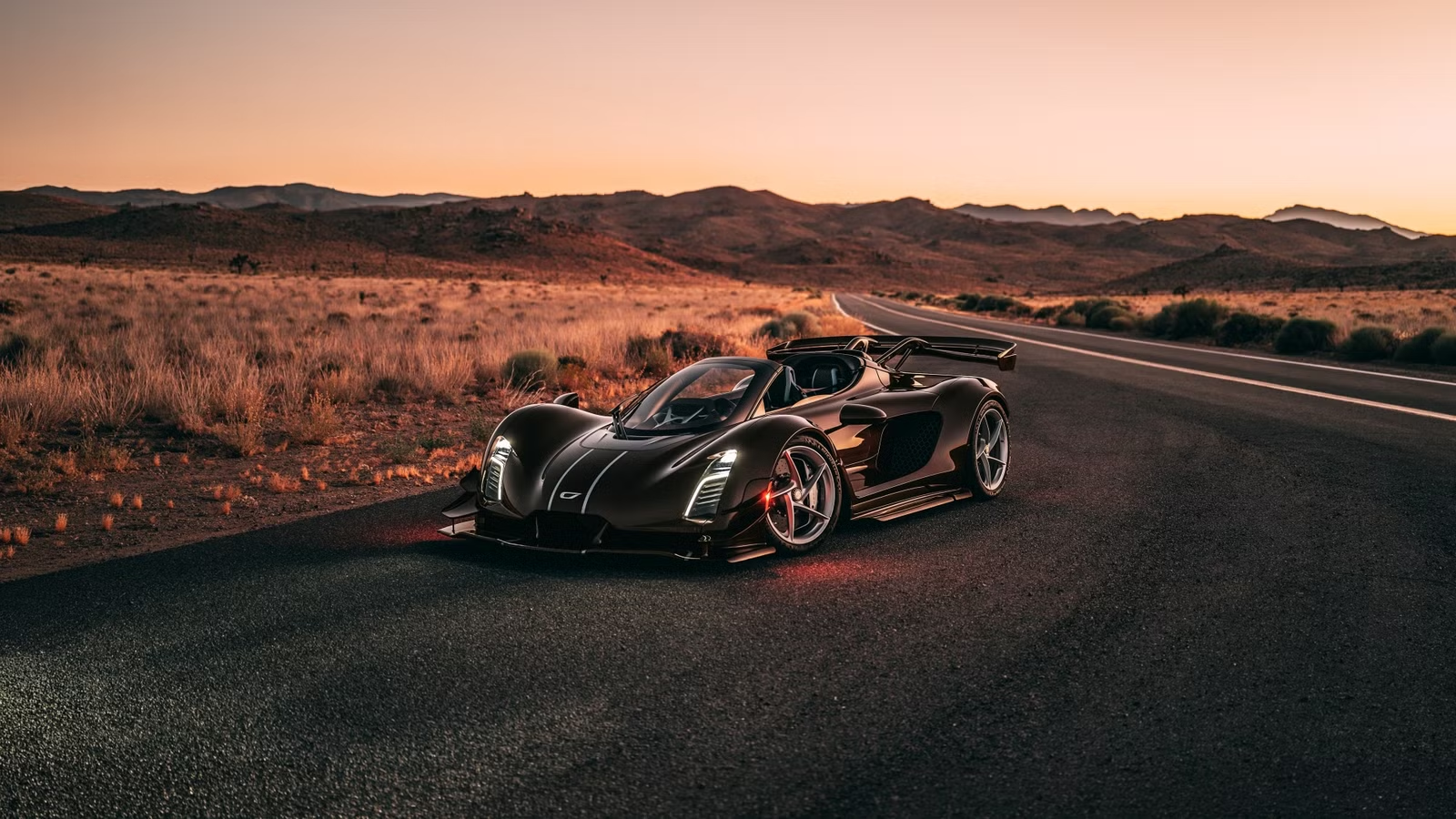
Czinger has unveiled the 21C Spyder, the first open-top variant of its BioLogic™-engineered hypercar platform, with a global debut set for August 14, 2026. Limited to 30 hand-assembled examples at $2.75 million each, the Spyder pairs a 1,250-hp hybrid powertrain with a roof-off downforce figure — 3,267 lbs at 150 mph — that Czinger says surpasses every other open-top road car on the planet.

The 21C Spyder joins the existing 21C HDF and 21C VMax as the third variant of the platform, and it brings two world-first technologies along with it: BrakeNode™, a fully integrated additively manufactured brake assembly, and the NeuralNode cockpit control center. Both are standard on the Spyder and available as retrofits on previously delivered 21C variants.
BrakeNode™ Reimagines The Brake Assembly From The Ground Up
BrakeNode™ is the headline engineering debut. Rather than mounting a caliper to a separate suspension upright and routing hydraulic lines externally, Czinger has consolidated the brake caliper, suspension upright, and hydraulic fluid passages into a single topology-optimized, additively manufactured structure — built from the company’s proprietary Z301 aluminum alloy.

The results are measurable. BrakeNode™ reduces unsprung mass by 1.5 lbs per corner (6 lbs total across the vehicle) and increases structural stiffness by up to 30% compared to the 21C’s already class-leading prior setup. Stopping distance drops by up to 15%, and the integrated hydraulic passages eliminate an external brake line failure point entirely. The front calipers use titanium pistons — a Formula 1-derived choice — which keep hydraulic fluid 15% cooler under sustained high-performance use compared to stainless steel. Rear calipers use aluminum pistons to save weight. Carbon-ceramic rotors measure 16.1 inches front and 15.3 inches rear. BrakeNode™ has been pressure-tested to 500 bars — eight times the car’s normal operating pressure.
NeuralNode Consolidates The Cockpit Into A Single Integrated Structure

The NeuralNode replaces a conventional multi-piece dashboard with one exoskeletal structure that houses the instrument panel, HVAC system, steering wheel mount, and drive mode and climate controls — all within reach of the centrally seated driver. Air from the HVAC unit flows through hollow channels built into the NeuralNode itself before reaching forward-facing vents, a design specifically tuned for open-top comfort.
The steering wheel is redesigned with a fully upholstered rim, and the door-mounted controls — mirrors, windows, infotainment — are now finished in machined metal to match. Audio comes from a bespoke 650-watt Morel Hi-Fi system with eight speakers, carbon fiber cones, and real-time Digital Signal Processing. Full wireless Apple CarPlay is standard.
1,250 Horsepower, An 11,000-RPM Redline, And Four Drive Modes

The powertrain is carried over from the 21C platform: a bespoke 2.88-liter twin-turbo flat-plane V8 producing 750 hp on 91-octane fuel, paired with two permanent-magnet synchronous electric motors on the front axle and a Motor Generator Unit on the crankshaft. Combined output is 1,250 hp and 691 lb-ft of torque. The 0–60 mph run takes 1.9 seconds; the quarter mile falls in 8.7 seconds; top speed with the roof closed is 205 mph.
Four drive modes shape how that power is delivered. Street mode runs on front electric motors only below 60 mph, with the combustion engine cycling as needed to maintain battery charge. Sport unlocks full all-wheel drive at all speeds. Track mode releases the full 1,250 hp and holds gears to the 11,000-rpm redline from second gear up. Track+ drops ride height 25mm and stiffens the dampers 50%, maximizing ground-effect aerodynamics for circuit use — Czinger specifies it should not be used on public roads.
The Removable Roof And The Fighter-Jet Seating Layout

The 21C Spyder’s carbon fiber hardtop weighs just 22 lbs and detaches via two interior latches. When removed, it stores on a dedicated BioLogic™ Roof Mount — included with every car — built from additively manufactured aluminum and carbon fiber. A soft top is also provided for unexpected weather.
The in-line central seating arrangement, shared with the HDF and VMax, places the driver on the car’s centerline with the passenger seated directly behind — a configuration borrowed from fighter jet cockpits. It narrows the frontal area, improves aerodynamic efficiency, and enables the full-length channeled side splitters that contribute to the Spyder’s downforce numbers. With the roof off, the passenger sits directly below the roof-mounted air intake, making the V8’s induction note a prominent part of the experience.
30 Units, Hand-Assembled In Los Angeles, With Limitless Personalization
Every 21C Spyder is hand-assembled at Area 21, Czinger’s production facility in Los Angeles, and the car is fully homologated for all 50 U.S. states — including California CARB compliance, which Czinger describes as the most complex certification process for a vehicle at this performance level. The 30-unit production limit makes the Spyder rarer than most of its hypercar peers at launch.
Czinger’s bespoke specification program extends further than most: buyers can specify the color of individual additively manufactured components, from the BioLogic™ Chassis structure to pedals and speaker grilles. Exterior colors can be developed from scratch, carbon fiber elements can be tinted, and interior upholstery, stitching, and seat perforations are fully configurable. Lukas Czinger framed the car’s purpose plainly at the reveal: “The 21C Spyder delivers a drive with no equal.”

Related posts




Latest Post


No Comments