
You Can Buy a BMW M8 for the Price of a New 3 Series in 2026
Article Summary
- Used BMW M8 prices have fallen into the $50,000-to-$60,000 range, overlapping with a new BMW 3 Series or M340i.
- The M8 offers up to 617 horsepower, M xDrive, three body styles, and a claimed 3.0-second sprint to 60 mph.
- Depreciation has made the M8 a compelling performance bargain, but maintenance, tires, brakes, and vehicle history still matter.
The BMW 3 Series is, really, nothing short of iconic. Its been a standard bearer for both its brand and segment for generations. While we love it primarily for its balanced driving dynamics, there’s another great reason people shop for a 3 Series: value. It’s an unlikely characteristic in the luxury car segment, but if there was ever a case for it, the 3 Series makes it. But what happens if you follow that “value” thread as far as you can? Specifically, what options arise when you prize performance above all else and are still willing to part with the $50,000 or $60,000 that could buy you a brand new BMW 3 Series today? Well, you’d find yourself shopping for one of the most exclusive, dramatic, and high-performing BMW models of the modern era: the BMW M8. That’s right folks: you can snag an M8 for around the cost of a new 3 Series, and prices are only getting better — for now.
A Used BMW M8 Is Still a Serious Performance Car

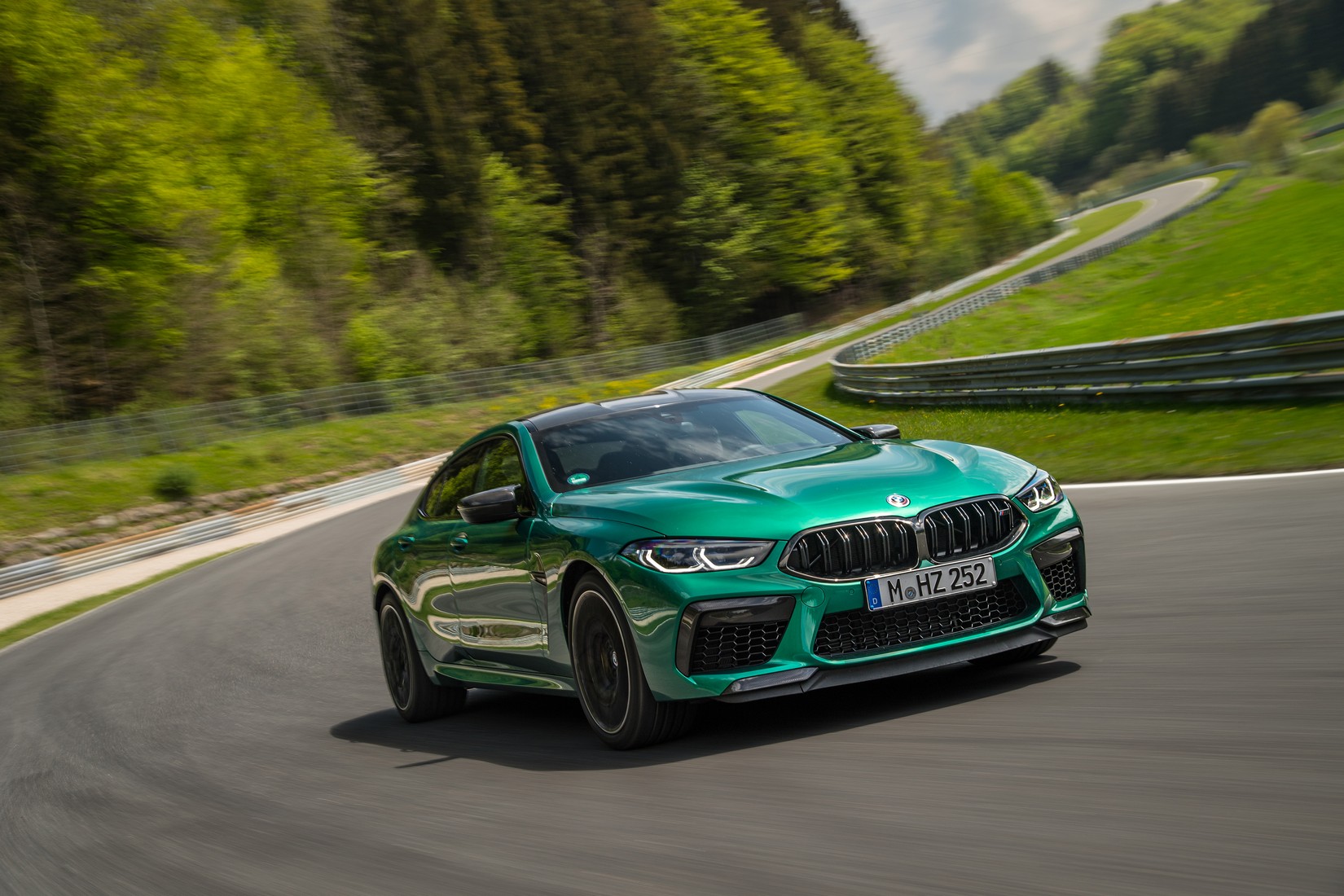
The BMW M8 is essentially a supercar powertrain wrapped in a large, luxurious grand tourer. Under the hood sits BMW M’s familiar 4.4-liter twin-turbocharged V8, paired with an eight-speed automatic transmission and M xDrive all-wheel drive. No hybridization or electrification here, friends. Early standard models produced 600 horsepower, while the M8 Competition raised output to 617 horsepower and 553 lb-ft of torque. BMW claimed a 3.0-second sprint from zero to 60 mph for the Competition Coupe and Gran Coupe, with the slightly heavier Convertible requiring only a fraction longer.
Buyers also had their choice of three distinct body styles. The Coupe is the most traditional and arguably the best-looking, while the Convertible adds open-air grand-touring appeal. The four-door Gran Coupe is the practical choice, offering easier rear-seat access without sacrificing much of the M8’s dramatic profile. Either way, three available body styles give the 8 Series an appeal unmatched by the mechanically almost identical contemporary M5. BMW gave the lineup a modest Life Cycle Impulse, or mid-lifecycle refresh, for the 2023 model year. The M8 became Competition-only in the United States and received darkened M Shadowline headlights, additional paint choices, optional carbon bucket seats, and a larger 12.3-inch central display. The changes were not transformative, but they made later cars feel slightly fresher inside and out.
The M8 Has the Right Rivals and the Right Heritage
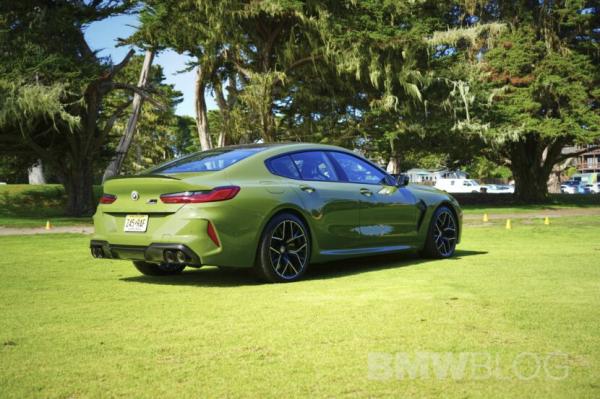

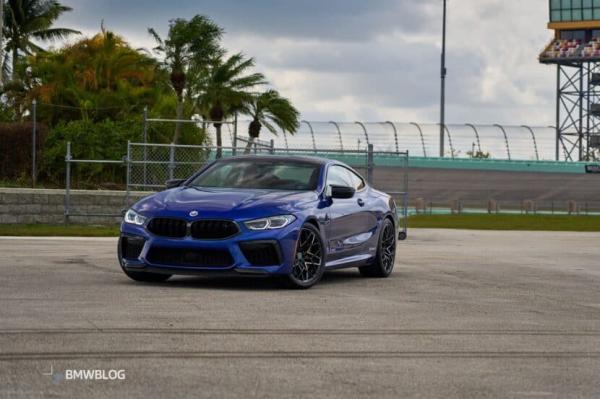
Depending on the body style, the M8 competed with several different high-performance luxury cars. The M8 Gran Coupe was BMW’s closest answer to the Audi RS7, combining four usable doors with enormous straight-line performance. The M8 Convertible occupied similar territory to the Mercedes-AMG SL 63, although the BMW offered a slightly more substantial and traditionally grand-touring character. The Porsche 911 also overlapped with the M8 on price when both were new, but the similarities largely ended there. The Porsche is smaller, lighter, and more overtly sports-car focused.
The M8’s more important connection is to BMW’s own history. The original E31 8 Series established the formula in the 1990s: dramatic styling, a luxurious cabin, and effortless high-speed performance. BMW even developed a secret 640-horsepower E31 M8 prototype, although it never reached production. The closest showroom equivalent was the 850CSi. Its 5.6-liter V12 was developed by BMW M, while its brakes, suspension, steering, bodywork, and six-speed manual transmission separated it from the regular 8 Series. With only around 1,500 built, including just 225 U.S.-market cars, the 850CSi has effectively become known as the old M8 — the production car that came closest to realizing BMW’s original vision. The last M8 Competition rolled off the assembly line at this point well over a year ago. So the real M8, too, is relegated to the pages of history. And, perhaps more importantly, the secondhand market.
Used BMW M8 Prices Have Fallen Below $60,000
The M8 was enormously expensive when new — cresting $130,000 with ease — but depreciation has completely changed the value proposition. Around $60,000 is now enough to start shopping for a usable early example, placing the M8 in the same general price range as a new, well-equipped BMW 3 Series or an M340i. Considering the performance, equipment, and original six-figure price, that is a remarkable amount of car for the money.
There are catches. Most M8s near $60,000 will be 2020 models with moderate mileage, multiple previous owners, or an imperfect history. Competition models, low-mileage cars, desirable colors, and examples sold through BMW dealers generally remain more expensive. Buyers should also budget for the operating costs of a 600-horsepower flagship, not those of a new 330i. Tires, brakes, insurance, and out-of-warranty repairs can quickly erase some of the purchase-price savings. Patient shoppers can even find M8s around $50,000. Current nationwide listings reach into the mid-$40,000 range, although the cheapest examples tend to have 70,000 miles or other compromises. Around $60,000 appears to be the more realistic entry point for an okay car, while spending into the mid-$60,000s provides a healthier selection of Competition models and cleaner histories. Of course, an immediate gotcha here is that you might be able to find a similar F90 M5 bargain for even less.
Finally, there’s a similar allure to cars like the last generation BMW M6 or even the one before that, which touted the mighty S85 V10 engine. After all, there’s just as much (or more, in the latter case) drama here at a fraction of the cost. Of course, these older cars will almost invariably need more TLC than an M8. After all, the oldest M8s are still just six, maybe seven, years old. Regardless, the M8 and M8 Competition are already aging gracefully into the sub-six figure range. As these cars approach the bottom of their depreciation curve in the next few years, there might be some incredible bargains for performance junkies that appreciate the finer things in life.

Related posts





Latest Post


No Comments