
The Bagger That Was Made For Long Holiday Weekends
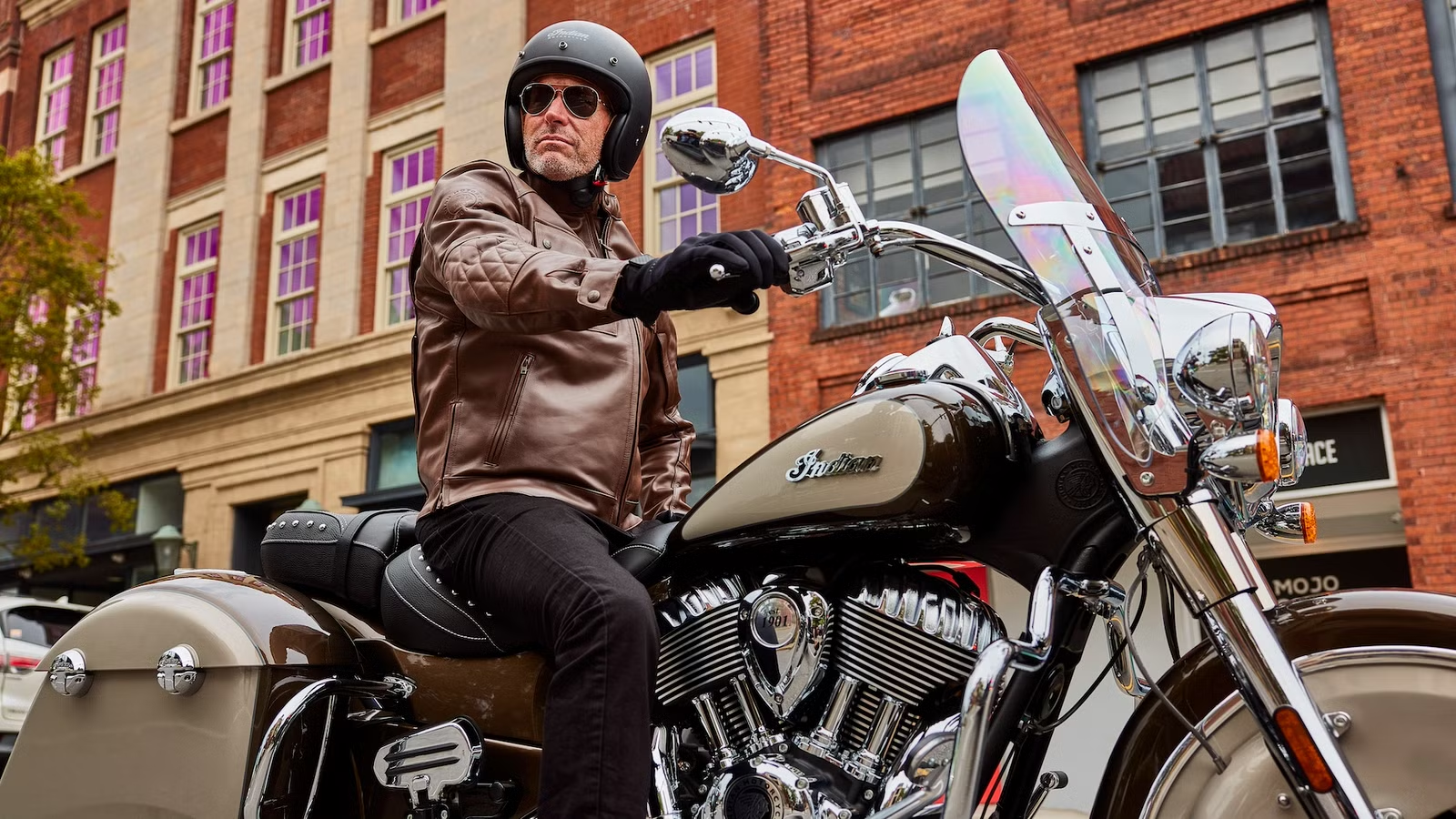
Imagine you’ve got a cruiser motorcycle, the long weekend is here, and you’re in the mood to finally hit the open road. A three-day weekend hands you a bit more than seventy hours, but for a motorcycle tour, you’re probably spending the first eight just packing. There’s a lot to add to the list of essentials and a lot of repacking once the whole list of must-haves starts to overflow the luggage capacity. And that’s if you have some to begin with, or you’ll be spending time thinking between hard and soft luggage and hunting for bungee cords to hang them with. If you can relate to this, then the solution is to get a bagger.
A Stripped-Back Bagger Answers That Call Perfectly

We get you, and you’re right, but a bagger covers a wide range. What you’re thinking of is the top-of-the-line full dresser, one which a lot of riders find really hard to let go of. This is fit for purpose, yes, but a bit much for a shorter getaway. That’s where a stripped-back bagger comes in, blending the best of both worlds.

For any rider turning a national holiday into a long-weekend trip about two or three times a year, while running the cruiser for commutes and the urban jungle, a stripped-back bagger is the right pick. The extra weight of a tourer will quickly get annoying in the cityscape, while its loaded features, luggage, et al. will rarely get used in such an environment.

For those two- or three-long weekend runs, a good-looking albeit functional machine is what you’re looking for. One that offers a factory-fitted storage solution, so it looks seamless and part of the bike rather than an afterthought. A windshield would be great too, for cutting down on wind fatigue, and an agile enough chassis to keep things fun. Most of all, for all the time you won’t need all this added touring gear, it’d help if it was easily removable. And this is where a certain Indian appears more thoughtful than pure luxury-focused.
The Indian Springfield Does Cruising And Touring Effortlessly

The Indian Springfield ticks just the right boxes. It shares its aluminum frame with the Chieftain and Roadmaster, and is styled properly retro, wearing valance fenders and a lit headdress ornament, in traditional pre-war styling of Indian Motorcycles. Powered by the torquey Thunderstroke 116 V-twin, the Springfield shows the same unhurried character that has defined Indian’s heavy cruisers for over a decade. At $23,999, it isn’t cheap, but the versatility afforded by the included touring essentials makes it a cruiser that’s ready for the daily as well as weekend jaunts.
Thunderstroke V-Twin Power Built For The Long Haul

The Thunderstroke 116 is a very reliable engine, and an apt choice for this platform too. The laid-back nature of its power delivery is ideally suited to the character of the Springfield. It displaces 1,890cc and makes 126 lb-ft, all of which is available at as low as 2,900 rpm. Passing a slow-moving RV on a two-lane is then just a light twist of the throttle away, most of the time without even calling for a downshift.

Add a passenger and brimmed panniers, and that freight-train-like low-end grunt barely notices the extra weight, also courtesy of the big V-twin’s unstressed engine architecture and its power delivery style. A six-speed gearbox with a wet, multi-plate assist clutch keeps the shifts light when you’ll use more of it in the city.
Ergonomics That Hold Up Over The Duration Of The Ride

A 26-inch seat height puts most riders flat-footed at a stop, affording the confidence to a rider handling all of the Indian Springfield’s 827 lbs wet weight. Moreover, the floorboards let you shift your foot position every few hours instead of locking into one peg placement for the whole ride. It’s minor details like this that keep small aches and discomforts from compounding by the third day.

Suspension travel is a modest 4.7 inches up front from the 46mm fork and 4.5 inches at the rear from a single air-adjustable shock, and the adjustability lets a rider dial in preload for a passenger or a loaded set of saddlebags. The windshield also helps keep fatigue at bay, cutting the wind load off the chest and shoulders effectively while deflecting the bugs that will unwillingly join your ride.
A Windshield And Saddlebags Up The Touring Credentials

Unlike the Chief Vintage, the Springfield is equipped from the factory with both a windshield and hard-case saddlebags. The windshield has a quick-release mechanism, and the pair of hard saddlebags are remote-locking, good for roughly 17 gallons combined, so there’s immense practicality that has been thought through for a rider opting for this machine.
The quick-release hardware is similar to the Super Chief’s and is incredibly convenient to use, being tool-less. The hard cases are weather-resistant, so your valuables are shielded from the elements. However, the biggest convenience is the ability to strip both the windshield and bags off so that the Springfield works the daily commute and city traffic like a regular cruiser minus the touring bulk that looks like overkill in the urban space. You can further improve the package via a long list of official Indian accessories.
The Springfield Against Its Closest Touring-Cruiser Rival

Harley-Davidson’s Heritage Classic not just makes cross-state trips feel easy, but it also sits $4,000 below the Springfield and comes with its own detachable windscreen and leather saddlebags as standard. The Milwaukee-Eight 117 Classic makes 98 hp at 4,600 rpm and 120 lb-ft at 2,500 rpm, so power output is similar, and at 719 lbs, it’s over a hundred pounds lighter. Harley also throws in cornering ABS and cornering traction control as standard, electronics that the Springfield doesn’t have to offer.

However, the case for the Springfield comes down to what a rider actually does with the bike between long weekends. The Heritage Classic undercuts it on price, but that’s because it’s based on Harley’s cruiser platform, unlike the Springfield’s touring-drawn frame. The actual rival from Harley here used to be the Road King, which is no longer on sale. So in a way, the Indian currently stands uncompeted. Thus, overall, for a rider commuting on it all week and loading it up on long weekends, the Springfield makes for an easier, more convenient choice that’s the most affordable in Indian’s Touring lineup.
Source: Indian Motorcycle

Related posts


Latest Post


No Comments