
Citroën ë-C3 Urban Range review 2026
Make and model: Citroën ë-C3 Urban Range
Description: Small electric hatchback
Price range: from £19,995
Summary: The Citroën ë-C3 Urban Range makes the ë-C3 cheaper to buy, but the smaller battery and limited rapid charging mean it only makes sense for the right kind of driver.

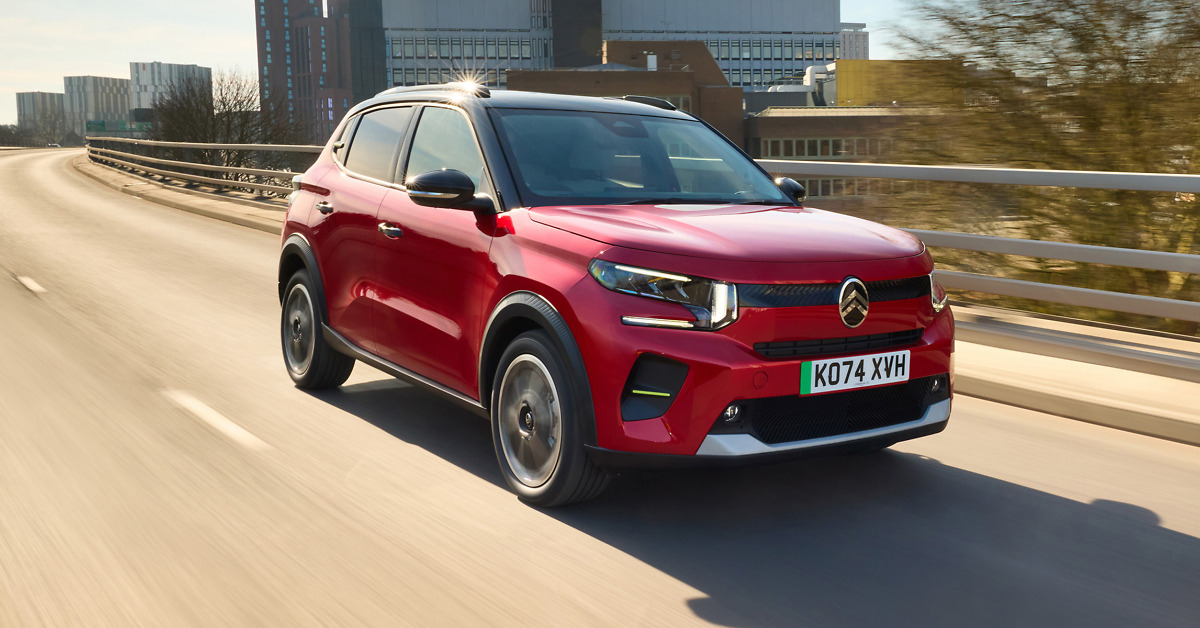
The Citroën ë-C3 was already one of the UK’s more affordable small electric cars, but the company has now added this new Urban Range version, with a smaller battery to bring the starting price down even further.
Instead of the 44kWh battery used in the Standard Range model, the Urban Range gets a 30kWh battery with a quoted driving range of up to 130 miles. The basic idea is simple: less battery, less range and a lower price.
That makes sense for some buyers, especially if the car will mostly be used for short local trips and can be charged at home. But it also means the Urban Range is a much more limited car than the standard ë-C3, particularly if you regularly drive on motorways or rely on public charging.

We’ve already reviewed the Citroën ë-C3 in more detail, so this first drive focuses on what the smaller-battery Urban Range version changes, and whether the lower price is enough to make it the best choice in the range.
Price and equipment
The Citroën ë-C3 Urban Range starts from £20K, or £18.5K after the current £1,500 Electric Car Grant is applied. That makes it one of the cheapest new electric cars on sale in the UK, sitting close to budget EVs such as the BYD Dolphin Surf, Dacia Spring and Leapmotor T03.
However, the larger-battery ë-C3 Standard Range starts from £22.7K before the grant, which means the Urban Range saves £2,720 on the list price. That is a meaningful difference if you are buying outright, although finance customers should compare monthly payments carefully because deposit levels, interest rates and guaranteed future values can make the gap significantly smaller than the headline price suggests.
This is the key decision for buyers. The Urban Range gives you the basic ë-C3 package at the lowest possible price, but the Standard Range gives you a much longer quoted range and much faster rapid charging. For many drivers, that extra flexibility will be worth the additional cost.
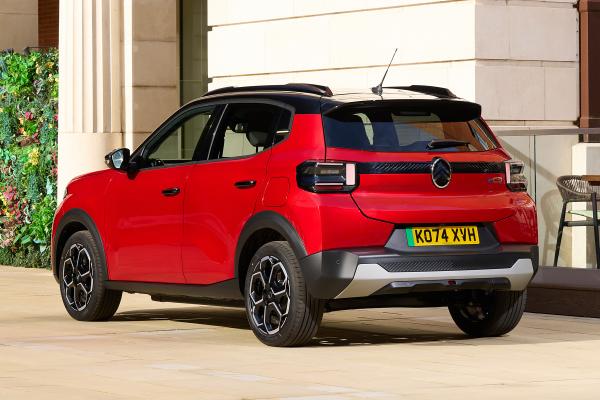
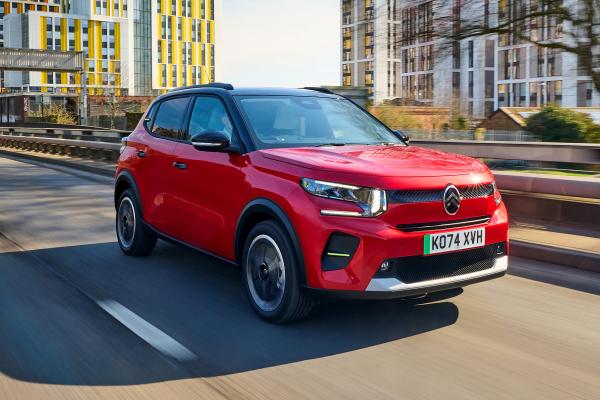
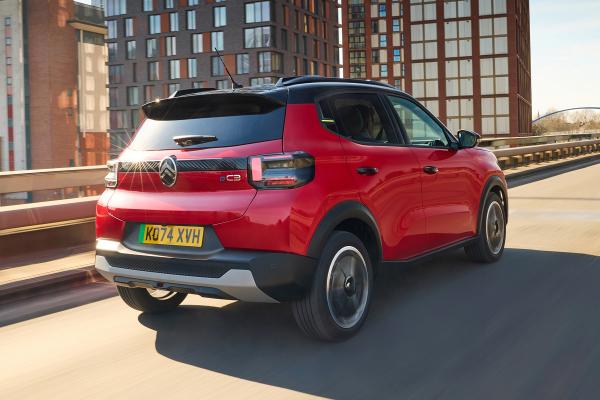
Equipment is broadly in keeping with the ë-C3’s budget positioning. The cabin does not feel luxurious, and there are plenty of hard plastics, but the car does not feel as bare or cheap as some low-cost rivals. Citroën has focused more on comfort and simplicity than on trying to make the dashboard look expensive.
Inside the car
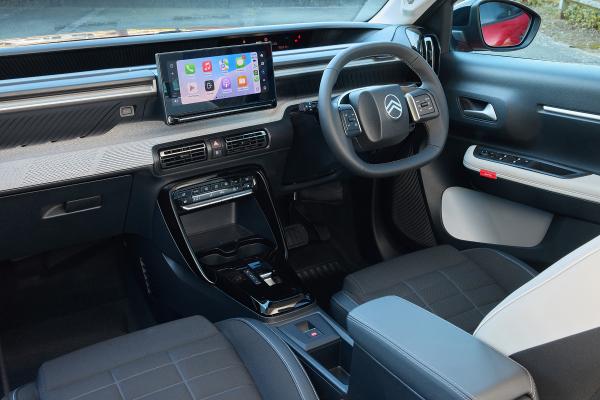
The Urban Range version feels very familiar inside because the basic cabin is the same as the standard ë-C3. That is a good thing, because one of the ë-C3’s strengths is that it feels like a proper small car rather than a stripped-back urban runabout.
There is decent space for a car of this size, with enough headroom for taller drivers and a seating position that feels more upright than in many small hatchbacks. The dashboard is simple, and the central touchscreen does what it needs to do without becoming the whole focus of the interior.
Material quality is mixed, which is not surprising at this price. The plastics are mostly hard and there are cheaper finishes if you start prodding around, but the cabin feels sturdier and more grown-up than the Dacia Spring. It is not as polished as some more expensive small EVs, but it does not feel like a car that has been cut to the bone.
Driving range and charging
The biggest change for the Urban Range is the smaller 30kWh battery, which cuts the quoted driving range to 130 miles. That is enough for many local journeys, school runs and commuting, but it needs to be understood as a short-range EV rather than a small electric car for every occasion.
On our test route in France, the ë-C3 Urban Range returned 4.5 miles per kWh, which suggests a real-world range of about 135 miles in favourable conditions. At motorway speeds, efficiency dropped to 3.3 miles per kWh, which would mean a range of just under 100 miles.
That makes the Urban Range much better suited to town and suburban driving than regular long journeys. It is the sort of car that works best if you can charge at home, use it for predictable daily mileage and only occasionally need to travel further afield.
Charging is another important difference between this car and the larger-battery ë-C3. The Standard Range version can rapid charge at up to 100kW, while rapid charging on the Urban Range is limited to just 30kW and is an optional extra rather than standard equipment.
Citroën quotes a 20% to 80% rapid charge time of 36 minutes with the optional rapid-charging capability fitted. A 7kW home wallbox charge from 20% to 80% takes about two hours and 50 minutes, which is reasonable because the battery is small.
The charging picture reinforces the same point as the range figure. The Urban Range is fine if you mostly charge at home and drive locally, but it is much less convincing if you depend on public charging or regularly cover longer distances.
On the road
The ë-C3 Urban Range uses the same 113hp electric motor as the larger-battery version, driving the front wheels through a single-speed automatic transmission. Performance is modest, but it feels lively enough around town because electric motors deliver their power quickly at low speeds.
Citroën quotes a 0-62mph time of just over ten seconds and a top speed of 82mph. Those numbers are not exciting, but they are perfectly adequate for the sort of driving this car is designed to do.
Around town, the ë-C3 Urban Range feels easy-going and responsive. It is simple to place on the road, visibility is decent and the car is more comfortable than many small EVs, which is consistent with the standard ë-C3 we have already tested.
It is less convincing at higher speeds. The small battery means motorway range falls away quickly, and the electric motor becomes more noticeable when the car is working harder. The Urban Range can cope with occasional faster-road use, but that is not where it feels happiest.
Verdict
The Citroën ë-C3 Urban Range succeeds in making the ë-C3 cheaper, but it also makes the car much more limited. For buyers who mainly drive locally, can charge at home and want a comfortable small electric car at the lowest possible price, it could make sense.
For everyone else, the larger-battery ë-C3 Standard Range is likely to be the better buy. The headline price may be higher, but the resale value in three or for years’ time is also likely to be much stronger, which will mean that your monthly payments won’t be much higher. Plus, the extra range and much faster rapid charging will make it easier to live with, especially if the car will be used for longer journeys.
The Urban Range also faces strong competition from other low-cost electric cars. The BYD Dolphin Surf offers a compelling package for similar money, while the Dacia Spring is cheaper still, although less substantial. The Citroën’s strength is that it feels more like a conventional small car than some of the cheapest alternatives.
The lower price is welcome, and the ë-C3’s comfort and practicality still count in its favour. But the smaller battery and limited rapid charging mean this version needs to fit your driving pattern very closely. If it does not, the saving over the Standard Range may quickly feel like a false economy.
We like:
- Comfortable ride
- Low starting price
- Decent interior space
- Easy to drive around town
- Feels more substantial than some budget EVs
We don’t like:
- Short driving range
- Rapid charging is optional and limited to 30kW
- Standard Range version is more versatile
- Some rivals offer stronger value for similar money
Similar cars
BYD Dolphin | Dacia Spring | Fiat Grande Panda Electric | GWM Ora 03 | Leapmotor T03 | Mini Cooper Electric | Nissan Micra | Peugeot e-208 | Renault 5 | Vauxhall Corsa Electric
Key specifications
Model tested: Citroën ë-C3 Urban Range
Price as tested: £19,995
Powertrain: Single electric motor, front-wheel drive
Gearbox: Auto
Power: 110 hp
Torque: 120 Nm
Top speed: 82 mph
0-62mph: 10.4 seconds
Range: 130 miles (WLTP)
CO2 emissions: 0 g/km
Euro NCAP safety rating: Not yet rated (as of June 2026)
TCE Expert rating: Not yet rated (as of July 2025)
Buy a Citroën ë-C3
If you’re looking to buy a new or used Citroën ë-C3, The Car Expert’s partners can help you find the right car.

Related posts




Latest Post


No Comments