
Chevy’s Most Overpriced Muscle Car Used Borrowed Brakes and A 375-HP 396
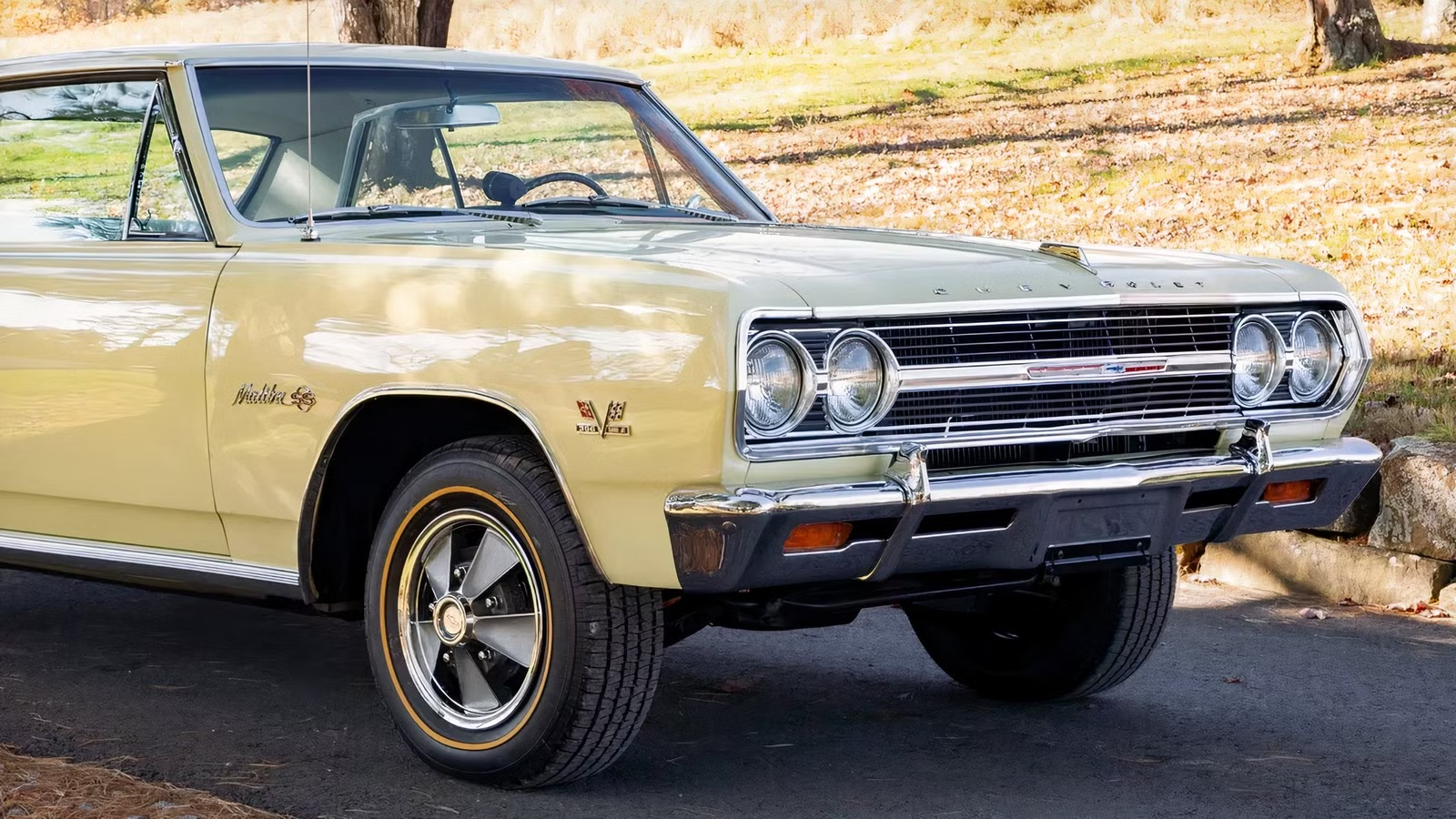
A Malibu carrying a reported $4,586 price in 1965 sounds like somebody got lost in the Chevrolet showroom. That was Corvette territory, yet this Chevelle packed a 375-hp 396 beneath familiar bodywork and taillights that looked almost too plain for the money. Unlike Gas Monkey’s wild Synister Chevelle, this one didn’t need to shout.
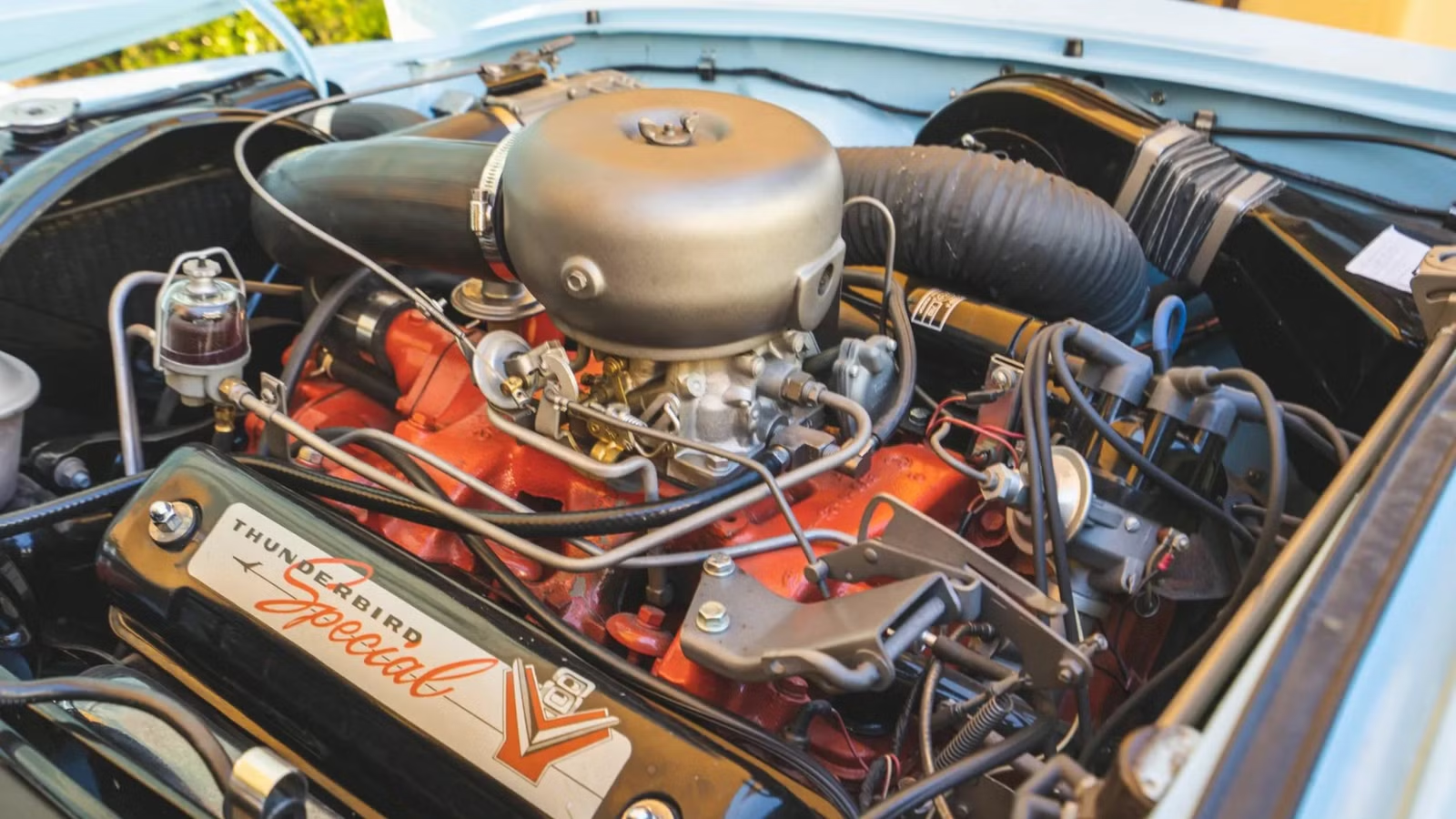
So where did all that money go? Chevrolet buried the expensive stuff underneath, and that’s where this seemingly ordinary Malibu starts getting seriously interesting.
Plain Malibu Bodywork Hid A Very Different Muscle Car
Walk around the back and Chevrolet starts playing a little game of spot-the-difference. Instead of the brighter taillight treatment found on ordinary Malibu models, this car wore plain, untrimmed 300-series lamps set into a special black-and-chrome tail panel. The Malibu SS badges also migrated from the rear quarters to the front fenders, where crossed-flag Turbo-Jet emblems offered another clue that something bigger was going on. Like Ford’s taxi-looking Fairlane 500, this was serious muscle hiding in a shape that was easy to underestimate.

Buyers got just three exterior colors: Tuxedo Black, Regal Red, or Crocus Yellow, with a black vinyl roof available if they wanted it. Dale McIntosh’s ChevelleWorld documentation lists those restricted colors alongside the mandatory equipment. Chevrolet swapped the usual 120-mph speedometer for a 160-mph unit, added a 6,000-rpm tachometer, and made an AM/FM Multiplex stereo standard.
The Corvette Money Bought More Than A Bigger Engine

Start underneath the car, because that’s where Chevrolet spent the serious money. The hardtop sat on the stronger boxed frame normally reserved for convertibles, while the rear used a narrowed axle from the full-size Impala. Impala-derived brake hardware and heavy-duty suspension came with it. Chevy’s big-car parts also found their way into machines like its big-block Kingswood wagons, but fitting this hardware into a midsize Chevelle was a different job. Chevrolet’s specifications list 11-inch drums at all four corners. Big drums, yes. Proof of a particular stopping distance, no.

Bring a Trailer
Then there was the new Mark IV 396 big-block. This was the L37, rated at 375 gross horsepower and fitted with hydraulic lifters, which automatically take up valve clearance and require less routine adjustment than solid lifters. That distinguished it from the 425-hp solid-lifter L78 offered in the 1965 Corvette. And don’t mix it up with the 375-hp L78 that arrived in the 1966 Chevelle; that was another engine specification. These were period gross horsepower ratings, not today’s net figures. A Muncie wide-ratio four-speed manual was mandatory, with no automatic offered. An archived September 1965 road test ran the quarter-mile in 14.9 seconds at 98 mph.
Now the $4,586 figure makes more sense. That was the reported price of the test car, putting it above the 1965 Corvette coupe’s $4,321 base price, although the two weren’t equipped alike. The often-quoted roughly $1,500 premium also needs explaining: $1,501.05 was the option surcharge over a standard V8 Malibu SS, not simply the difference between $4,586 and the price of a bare Malibu.
The Z16 Was The Unexpected Prequel To The 1966 SS396

Now the disguise comes off. That Corvette-priced Malibu was the 1965 Chevelle Z16, Chevrolet’s midyear Special Equipment Option—and suddenly all the strange details make sense. The boxed frame, Impala hardware, 375-hp 396, 160-mph speedometer, and four-speed weren’t random excess. Chevrolet had built a factory pilot for what would become the SS396. The commonly quoted total is just 201 cars: 200 Kansas City-built hardtops plus one Baltimore-built prototype. Chevrolet’s own June 26, 1965 summary called it a “fore-runner of a new model for 1966.” Of those Kansas City cars, 175 were sold to customers across Chevrolet’s sales regions, and 25 went to public relations for press driving in 12 cities. Dealers were encouraged to arrange local press drives and put cars in the hands of influential people. This wasn’t merely a rare Chevelle. Chevrolet was quietly putting its next big muscle-car idea on the street before the production SS396 arrived, setting up the identity that would help define its 1966–1970 muscle-car years and still inspires modern Chevelle SS renderings.

Bring a Trailer
Mecum’s catalog describes the convertible frame’s cost-driven removal from the 1966 SS396 hardtop, while its brake drums shrank from 11 inches to 9.5.
An archived February 1966 road test confirms the smaller brakes and additional rear frame reinforcement. That doesn’t mean the 1966 SS396 was simply a regular Chevelle with a big engine, and convertibles continued using convertible frames. The comparison here is specifically between the two hardtop coupes. But on two expensive pieces of hardware—the boxed frame and those larger brakes—the prototype was better equipped than the production car that followed. It doesn’t prove the Z16 would win every braking or handling test. It shows exactly where Chevrolet reduced the original package.
That inverts the usual muscle-car story. The legendary SS396 was the cheaper sequel. Chevrolet took an elaborate, costly pilot, kept the big-block attraction, and trimmed some of the expensive supporting hardware and compulsory equipment so the idea could reach a much wider market. That made commercial sense: Corvette money for a Malibu was always going to limit the audience.
Today’s Collector Prices Reward The Overbuilt Prequel

With only 201 commonly counted from the start, the Z16 belongs in the rarity conversation alongside homologation-grade factory specials such as the Boss 429 Mustang. That comparison doesn’t mean Chevrolet built the Z16 to satisfy a racing-homologation requirement. Even the survivor count remains unsettled: published estimates range from 65 to 77 accounted-for cars, with no single verified current census. Registry keeper Jeff Helms was quoted identifying 77 in 2019, while a 2014 club newsletter put the number near 65. A separate mule reportedly built for Chevrolet division head Semon “Bunkie” Knudsen is understood to have been destroyed. It isn’t the Baltimore prototype, and any claimed surviving “Z16 convertible” requires convincing documentation before it can be authenticated.

The auction numbers are easier to pin down. The Chevelle club’s 2026 auction results show two $203,500 sales at Kissimmee in January and a $244,750 sale at Indianapolis in May. The May car, however, carried the same VIN as one of those January sales. That means three transactions involving two cars, not three Z16s suddenly emerging from hiding. The $244,750 result wasn’t a new record either; earlier Z16 sales have gone higher. Still, those prices put serious money behind the complete factory package. They do not tell us how much of that value comes from the boxed frame, the brakes, the engine, rarity, condition, restoration quality, or provenance individually.

The frame, engine identity, axle, brake hardware, trim, and paperwork all need to agree. A 160-mph speedometer and the correct emblems are clues, not a birth certificate. A replacement engine or re-created body can change what you’re buying even when the finished car looks convincing, and condition, restoration history, and provenance all matter once six figures are involved.
What Chevrolet sacrificed to turn its expensive pilot into a showroom legend was underneath it: the boxed coupe frame and the big Impala brakes.
Sources: ChevelleWorld, Corvette Action Center, Over-Drive Magazine Archive, Mecum Auctions, 65Chevelle.org, ClassicCars Journal, Piedmont Classic Chevy Club.

Related posts


Latest Post


No Comments