
Chevy Promised A 460-HP Corvette In 1970 And Delivered 12 Detuned Ones In 1971
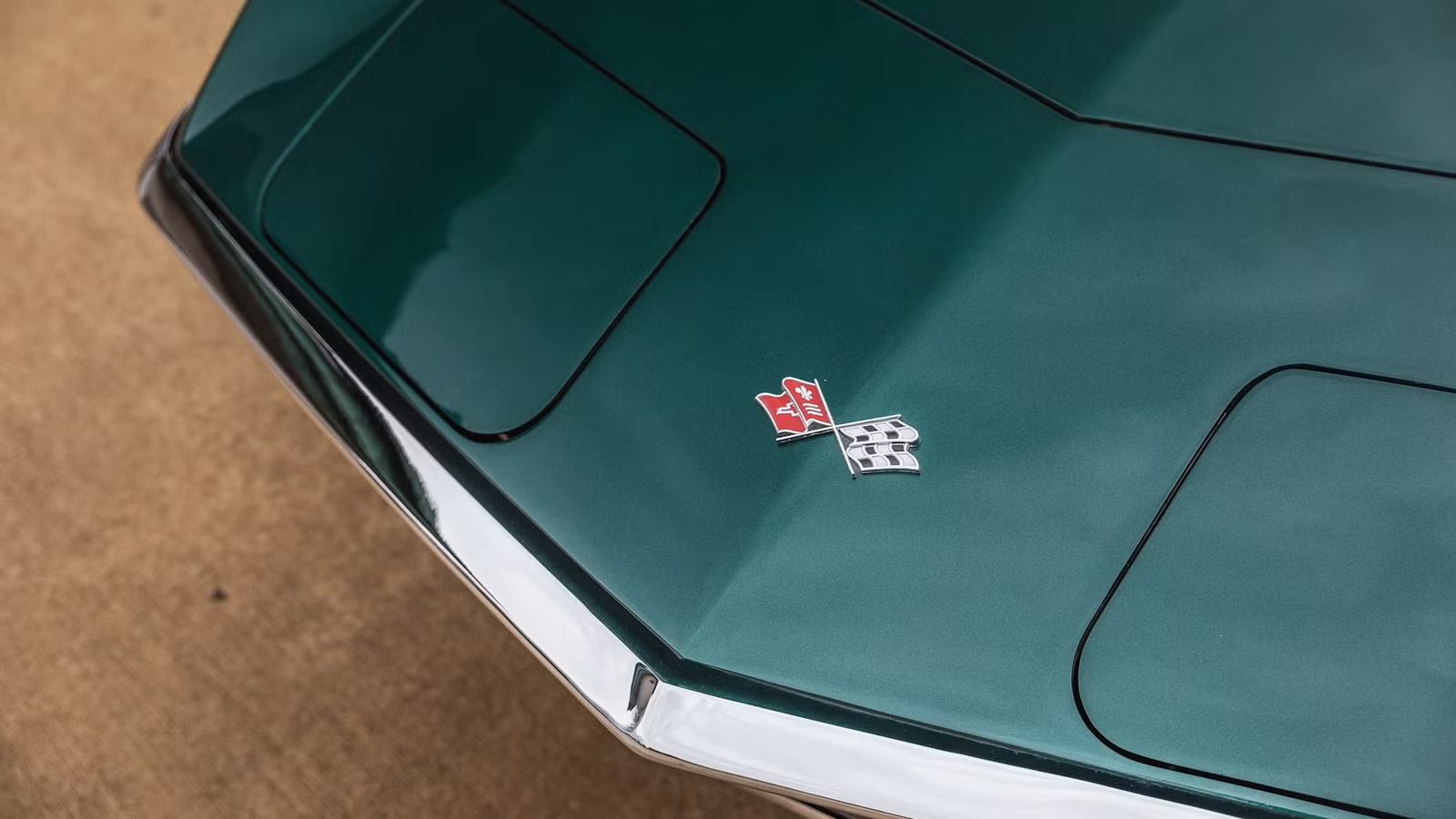
A few Chevrolet fans suffered from broken hearts after they were duped by false advertising in the early 1970s. There was a lot of excitement buzzing around an upcoming Chevy Corvette model with 460 hp. It was heavily featured in magazines and commercials. Unfortunately, the potent high-performance racing model never arrived due to delays and other serious problems. But those who bought one of these rare models are probably extremely happy today, because collectors are paying extraordinary sums for survivors.
Chevrolet Wanted To Build One Last Racer Before Emissions Struck

Toward the end of the 1960s, muscle car culture was under attack. Rising insurance premiums targeted muscle car owners, making the cost of ownership skyrocket. The price of big-block cars was also increasing as emission standards were beginning to tighten. Also, gas prices were gradually increasing.
Chevrolet decided to build a racing-oriented Corvette as one last hurrah before federal standards ruined the party. They started building a counterpart to the small-block ZR1 model that would bring big-block power to the racetrack. This phantom build was being designed to push the Corvette’s limits.
The Corvette project was so serious that professional racer Zora Arkus-Duntov and Chevrolet planned to deliver hardcore racing hardware with the special models to ensure that the sports car got the perfect send-off. You know things meant business with the father of the Corvette involved. But unfortunately, things didn’t go as planned.
The Special 1970 Chevy Corvette Was Heavily Advertised

No time was wasted getting started on the 1970 Chevy Corvette ZR-2. This race car was supposed to have the 454 cubic-inch (7.4-liter) Mark IV V8 engine with 460 hp and 490 lb-ft of torque. The engine gained aluminum cylinder heads and high-compression race hardware. Similar setups were sold as crate engines for race cars.
It was designed around the ZR setup with a heavy-duty manual transmission, so the engine was paired with a Muncie M22 four-speed and twin-disc clutch. The Corvette ZR-2 project featured a robust aluminum radiator designed to handle high-speed stress with enhanced cooling and heavy-duty brakes. Suspension upgrades include beefier springs, shock absorbers, and front and rear stabilizer bars.
The heavy-duty chassis was tailored to reduce its weight. Plus, the Corvette was totally stripped down to lighten the load. Creature comforts such as the radio, air conditioning, heat, wheel covers, power locks, power windows, and the rear-window defogger were deleted to boost track performance.
The 1970 Chevy Corvette ZR-2 was advertised as an upcoming model, with its stout power specs featured in plenty of brochures, magazines, and sales literature. It also caught the attention of muscle car enthusiasts and professionals and was discussed in specialty magazines ahead of its planned production. But the 1970 Chevy Corvette ZR-2 name only appeared in literature for 1970.
But The Corvette Project Ran Into Problems

Unfortunately, the Chevy Corvette ZR-2 faced the perfect storm and never made it to production. There was a massive United Auto Workers (UAW) labor strike in 1969. It lasted 139 days, making it the longest strike in General Motors’ history, and it was very disruptive. Models for 1970 like the standard Corvette, Monte Carlo, and Chevelle were delayed.
When things were settled, Chevy focused on filling backorders from 1969 instead of building new cars. This left less time in the schedule to produce specialty cars. As a result, 1969 Corvette production was completely stopped from April 10 until June 8. The 1970 Corvette didn’t even enter production until February 1970.
Plus, Chevrolet and General Motors were pushing for the elimination of rare, track-focused models in favor of more affordable options. On top of that, General Motors decided to cancel the LS6 engine and offered it only as a crate engine. Then Chevrolet agreed to General Motors’ upcoming 91-octane mandate.

The mandate required all engines built in 1971 to run on 91-octane so they could run on unleaded or low-leaded fuels ahead of the increasingly strict federal emission standards. As a result, the phantom car received a detuned engine with a lower compression ratio. Then other automakers followed its lead, creating a trend of muscle cars being built with less power.
Only A Few Models Arrived in 1971

The 1971 Chevy Corvette ZR2 is an ultra-rare model that was released instead of the ZR-2. Only 10 coupes and two convertibles were made, bringing the total to 12. It’s one of the rarest Corvette models to hunt for. Also, it didn’t last long as it couldn’t meet increasing emission standards for 1972.
Instead of the LS7, it featured the LS6 454 cubic-inch (7.4-liter) V8 engine with a factory-rated 425 hp and 475 lb-ft of torque. Some historians believe its actual output is really over 460 hp. Also, it has a 9.0:1 compression ratio, an aluminum intake manifold, and a Holley four-barrel carburetor.
The engine was paired with the Muncie M22 “Rock Crusher” four-speed manual transmission, heavy-duty brakes, an F41 heavy-duty suspension, a high-capacity aluminum radiator, and a Positraction limited-slip rear axle. Also, comfort and convenience features such as air conditioning were deleted.

This wasn’t the Corvette people were promised, but buyers would probably be really happy if they held onto the rare build. Documented survivors cross the auction block for between $400,000 and $1,000,000. A convertible model sold for $863,500 in 2023, while another model sold for $sold for $962,500 in 2022. They make an appearance only once or twice a year, if at all.
Source: Hagerty, Corv Sport

Related posts

Latest Post


No Comments