
9 Underrated Muscle Cars Most Collectors Overlook Every Year
Collector car culture has always had its royalty. The usual headliners pull the crowds, command the poster space, and soak up auction money like a big-block soaks up premium fuel—think Dodge Chargers, Ford Mustangs, Chevy Camaros. That attention makes sense because the legends earned it. But fame creates a real problem for buyers who still want something exciting without needing a second mortgage. Season after season, collectors chase the same household names while genuinely worthy machines sit a few rows over, priced far more like smart buys than blue-chip trophies. muscle car That blind spot is worth exploring, and the gap it creates is bigger than most people realize. Some of the most-overlooked muscle cars came from odd years, some wore the wrong badge at the wrong time, and some got buried by emissions-era jokes, front-wheel-drive snobbery, or the simple crime of being newer than people’s nostalgia allows. Yet these cars still deliver strong performance stories, real enthusiast appeal, and average values that feel far more sane than the market’s usual darlings. A few may still look like sleepers on paper, but that is exactly the point. Overlooked cars often become tomorrow’s “How did nobody buy these sooner?” stories.
1994-1996 Chevrolet Impala SS
Average Price: $25,919
 93 autotech Engine |
Power |
Torque |
 84 autotech 0-60 MPH |
Top Speed |
|
5.7-liter V8 |
260 hp |
330 lb/ft |
7.0 seconds |
142 mph |
The 1994–1996 Impala SS arrived with concept-car swagger, and the production version stayed remarkably close to the 1992 Detroit show car that sparked the whole idea. Underneath, Chevrolet leaned hard on the Caprice 9C1 police package, which contributed upgraded suspension, improved cooling, dual exhaust, and larger brakes. Then GM dropped in a 260-horsepower LT1 V8 with 330 lb-ft of torque. The result was simple and glorious: a full-size, body-on-frame sedan that could haul adults, luggage, and an unreasonable amount of attitude in one trip.

Collectors still undersell it because older Impala SS cars steal the romance, and newer buyers often miss what this one represents. This was one of the last American muscle formulas done the old way—rear-drive, V8 power, big footprint, and zero apologies. The car’s stout chassis hardware, 17-inch tires, and large disc brakes help explain why it feels more serious than its size suggests. The market has noticed, but not enough. Compared with many 1960s icons, the 1994–1996 car still looks surprisingly reachable.
1981-1988 Chevrolet Monte Carlo
Average Price: $22,137

|
Engine |
Power |
Torque |
0-60 MPH |
Top Speed |
|
5.0-liter V8 |
180 hp |
225 lb/ft |
8.7 seconds |
127 mph |
The fourth-generation Monte Carlo does not flex with giant horsepower numbers, and that is part of why collectors keep walking past it. Chevy launched this generation in 1981 with sharper, leaner styling and a greater emphasis on V6 engines over old-school V8s. Then, in 1983, the SS badge returned after a twelve-year absence and gave the Monte some of its swagger back. By 1984, the SS carried 180 horsepower—not heroic even then, but the car had presence. It sat right, looked mean, and played a bigger role in the NASCAR image game than most people remember. The Aero Coupe spin-off, built to help Chevrolet on the oval, turned the Monte into one of the strangest and coolest homologation cars of the 1980s.

That racing angle explains why the generation matters beyond nostalgia. Chevrolet built only 200 Aero Coupes for 1986 and another 6,052 for 1987, giving the Monte real collector intrigue. Still, the standard SS and other fourth-gen cars remain affordable because the market divides its attention. Some buyers want the 1970–1972 cars, and others only want the rare oval-window oddballs. That leaves a lot of good-looking G-body metal underappreciated. The appeal here is not raw speed—it is context. This generation showed how Detroit kept the muscle-car idea alive when the era had gone soft.
1982-1986 Ford Mustang GT
Average Price: $17,675

|
Engine |
Power |
Torque |
0-60 MPH |
Top Speed |
|
5.0-liter V8 |
200 hp |
285 lb/ft |
6.4 seconds |
135 mph |
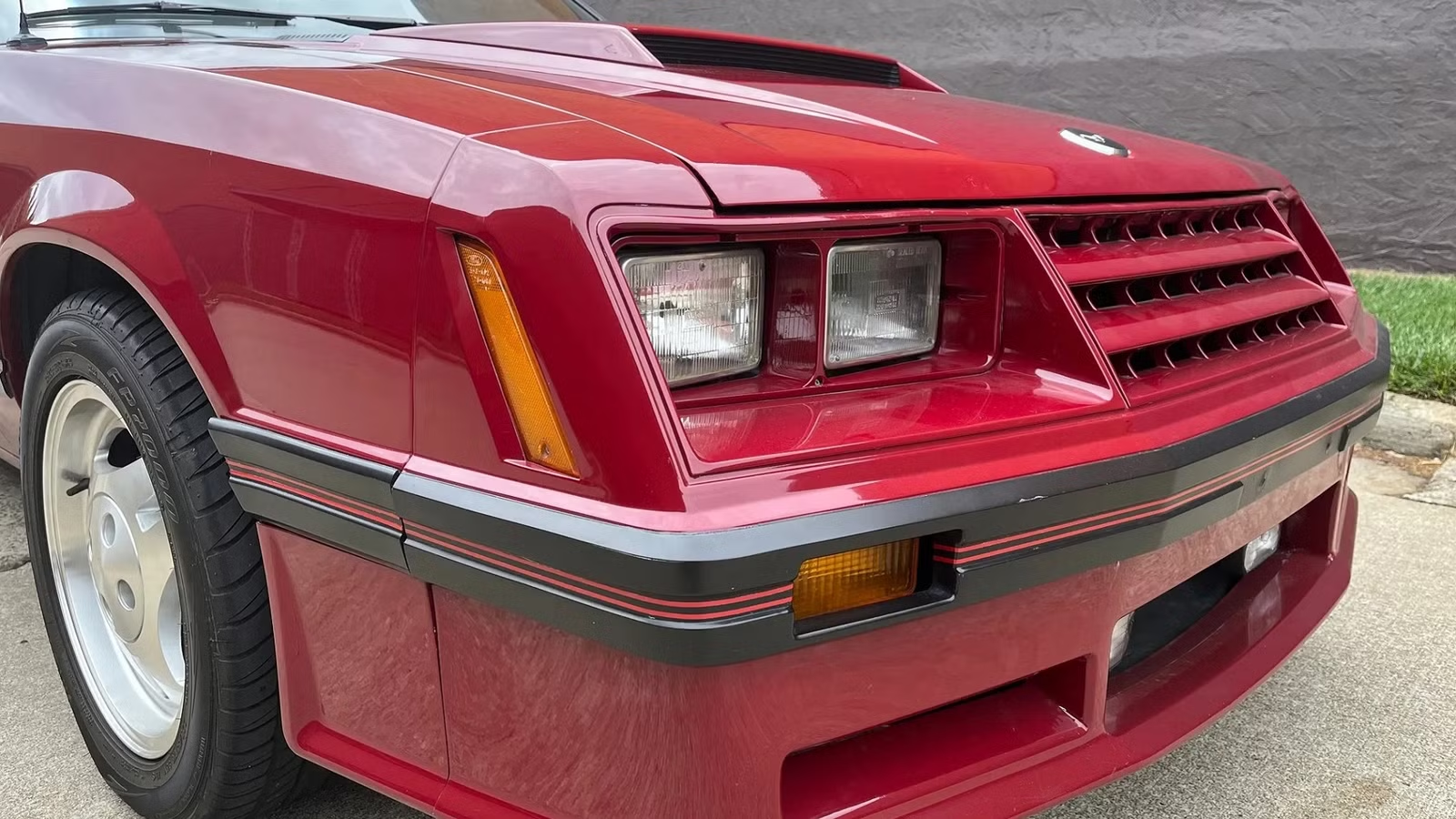
The 1982 Mustang GT deserves more respect because it marked the moment when Ford stopped fooling around and gave the Fox body a real performance identity. The GT badge returned after a long hiatus, and Ford even pushed the “Boss is Back” tagline because it knew the car mattered. More importantly, the 5.0 came back with a high-performance cam, a Holley two-barrel carb, a double-roller timing chain, and 157 horsepower with 240 lb-ft of torque. Those numbers do not sound wild today, but the lighter Fox platform made the package genuinely lively. By 1982, the GT was actually quicker than the Camaro Z28.

Collectors still lean harder toward the 1987–1993 fuel-injected 5.0 cars, especially the LX notchbacks and later GTs. That keeps the earlier 1982–1986 cars in a sweet spot. They carry the same Fox body simplicity, the same tunable small-block DNA, and a rawer personality that later cars softened somewhat. The four-headlight nose also gives them a sharper look, even if some people needed a few decades to come around to it. That is the trick with underrated cars—the traits that once worked against them often become the what makes them memorable. And the early Fox GT was the reboot that got the whole 5.0 legend rolling.
1979-1980 Oldsmobile Hurst/Olds
Average Price: $17,313

|
Engine |
Power |
Torque |
0-60 MPH |
Top Speed |
|
5.7-liter V8 |
170 hp |
275 lb/ft |
8.9 seconds |
119 mph |
Few cars suffer more from calendar prejudice than the 1979–1980 Hurst/Olds. The moment many collectors see “1979,” they picture weak engines, smog pumps, and performance with all the drama of cold oatmeal. The Hurst/Olds was still a real collaboration between Oldsmobile and Hurst Performance. It arrived with distinctive paint, bold striping, and the kind of swagger that told everyone it was not just another Cutlass. Under the hood sat a 350-cubic-inch Olds V8 rated at 170 horsepower, fed by a Rochester Quadrajet. It was the only GM A-body to use a 350 that year, which makes it a neat piece of late-era GM trivia all by itself.

The better reason to care is that this car shows how performance survived during a rough stretch rather than simply disappearing. In period testing, that 170-horsepower Hurst/Olds could still hold its own better than the joke books suggest. The collector market still judges too many cars by decade instead of by character, and the 1979–1980 Hurst/Olds has the latter in spades. It also offers one of the most affordable ways into a legitimate Hurst/Olds badge, and that alone makes it worth a closer look.
1971-1974 AMC Javelin
Average Price: $16,900

|
Engine |
Power |
Torque |
0-60 MPH |
Top Speed |
|
5.9-liter V8 |
245 hp |
365 lb/ft |
7.7 seconds |
123 mph |
The second-generation AMC Javelin already looks like it came from a parallel universe where Detroit let the sketch artists stay up too late and somehow got a better result. The base model may not carry the AMX badge, but it still gets the sharp Dick Teague design, a long-hood pony-car stance, and the kind of AMC oddball appeal that bigger brands simply cannot offer. More importantly, the Javelin line built real motorsports credibility, winning Trans-Am titles in both 1971 and 1972. AMC even offered a “Trans Am Victory” package in 1973 to capitalize on that success.

That is why the base Javelin feels like such a sneaky buy. It delivers the shape and the outsider story without asking AMX money. AMC also carries a genuinely compelling underdog vibe that many gearheads love. Nobody buys a Javelin because it is the obvious pick, and that makes the car feel more personal—which typically ages well.
1993-2002 Chevrolet Camaro Z28
Average Price: $15,652

|
Engine |
Power |
Torque |
0-60 MPH |
Top Speed |
|
5.7-liter V8 |
275 hp |
325 lb/ft |
5.4 seconds |
156 mph |
The fourth-gen Camaro Z28 may be one of the best muscle-car bargains on this list, and the reason is painfully simple. Too many people still talk about the ugly catfish looks before they talk about the engine. That is backward. The 1993 Z28 launched with a Corvette-derived LT1 V8 making 275 horsepower, giving it roughly a 40-horsepower edge over the Mustang GT at the time. Then Chevrolet tightened the screw further in 1998 by fitting the Z28 with the LS1, pushing output to 305 horsepower. Those are the kind of numbers that make a car quick in any decade, especially given that the 1993 car could reach 60 mph in 5.3 seconds and run the quarter mile in around 14 seconds flat.

The market still has not caught up because fourth-gen F-bodies spent years living as used-car heroes rather than collector darlings. That helped their reputation with drivers but hurt them with status chasers. Yet the recipe remains strong and proven: V8 power, rear-drive, manual gearboxes, massive aftermarket support, and real-world speed that embarrasses plenty of more expensive classics. What more could you ask for?
1978-1979 Dodge Magnum
Average Price: $15,350

|
Engine |
Power |
Torque |
0-60 MPH |
Top Speed |
|
6.6-liter V8 |
195 hp |
305 lb/ft |
11.6 seconds |
119 mph |
The 1978–1979 Dodge Magnum looks like it should have its own TV theme song and a trunk full of aviator sunglasses—and that is a compliment. Dodge built the Magnum on the long-running B platform and offered it in XE and GT form with available 318, 360, and 400-cubic-inch V8s. The styling was pure late-1970s swagger, right down to the plush personal-luxury attitude. But the Magnum was more than a style exercise. Dodge also used it in a bid to stay competitive in NASCAR and keep Richard Petty interested in the brand. The race effort never became a fairy tale, but it gave the Magnum real purpose beyond showroom theater.

Collectors tend to miss the Magnum because it does not fit the typical Mopar mold. It is not a ’60s or early ’70s icon. It was born in an era many enthusiasts still treat like a punchline, and that is precisely why it matters. The car came with front and rear anti-sway bars as standard equipment, so it handled better than its bulk might suggest. Dodge built more than 73,000 Magnums across just two model years, which means survivors still exist but have not been swarmed by speculators. That combination can be gold for buyers who appreciate oddballs with genuine history. It has the kind of weird charm that keeps growing with age—like a mustache from 1978, it should not work this well, but it absolutely does.
1969-1970 Mercury Marauder
Average Price: $14,050

|
Engine |
Power |
Torque |
0-60 MPH |
Top Speed |
|
7.0-liter V8 |
360 hp |
480 lb/ft |
7.8 seconds |
126 mph |
The 1969-1970 Mercury Marauder is one of those cars that makes no sense on paper but makes perfect sense in person. It was enormous, dramatic, and just a little bit sinister. The 1969–1970 car was a two-door hardtop on a full-size chassis. The X-100 version rode on a 121-inch wheelbase and packed a 429-cubic-inch V8 with a four-barrel carb rated at 360 horsepower. Mercury then wrapped the whole thing in a fastback roofline, hidden headlights, and just enough blacked-out trim to make it look like a mobster’s speedboat.
That full-size insanity is exactly what keeps the Marauder affordable. Many collectors still want the familiar midsize template because it fits the classic script, but the Marauder writes its own. It is part luxury coupe, part bruiser, part rolling billboard for late-1960s excess. 1970 production dropped to 3,397 standard Marauders and 2,646 Marauder X-100s, meaning rarity already sits on its side of the argument. Low price, big engine, sharp styling, and low production numbers usually add up to more attention sooner or later. The market just has not fully connected the dots yet.
1984-1993 Dodge Daytona
Average Price: $9,457

|
Engine |
Power |
Torque |
0-60 MPH |
Top Speed |
|
2.2-liter turbocharged I4 |
224 hp |
217 lb/ft |
6.2 seconds |
147 mph |
The Dodge Daytona sits at the edge of the muscle-car conversation because it breaks so many old rules. The 1984 Daytona Turbo launched with a 142-horsepower turbocharged four-cylinder, and Car and Driver later described it as America’s first legitimate front-wheel-drive muscle car. That claim sounds wild, but the details back it up. This was a sharp-edged hatchback with boost, attitude, and real performance at a time when Detroit still looked shaky in that department. By 1992, the Daytona IROC R/T packed a 224-horsepower turbo four with a Lotus-developed cylinder head, turning the car into a genuine 1990s oddball weapon.

Collectors still sleep on the Daytona because it is not a traditional muscle-car icon. No V8, no rear-drive, no drag-strip folklore wrapped in stripes and shaker scoops. What it does have, however, is something just as important: proof that American performance adapted instead of dying. The Daytona brought turbocharging, hatchback practicality, Shelby-linked variants, and genuine speed into the same conversation. The market still treats these cars like curiosities, which is why prices remain so low. That may change once more collectors stop grading every performance car against a 1970 answer key.
Source: Classic.com, Hemmings, Car and Driver

Related posts



Latest Post


No Comments