
BMW steps up H2 plans with hydrogen-combustion lorries
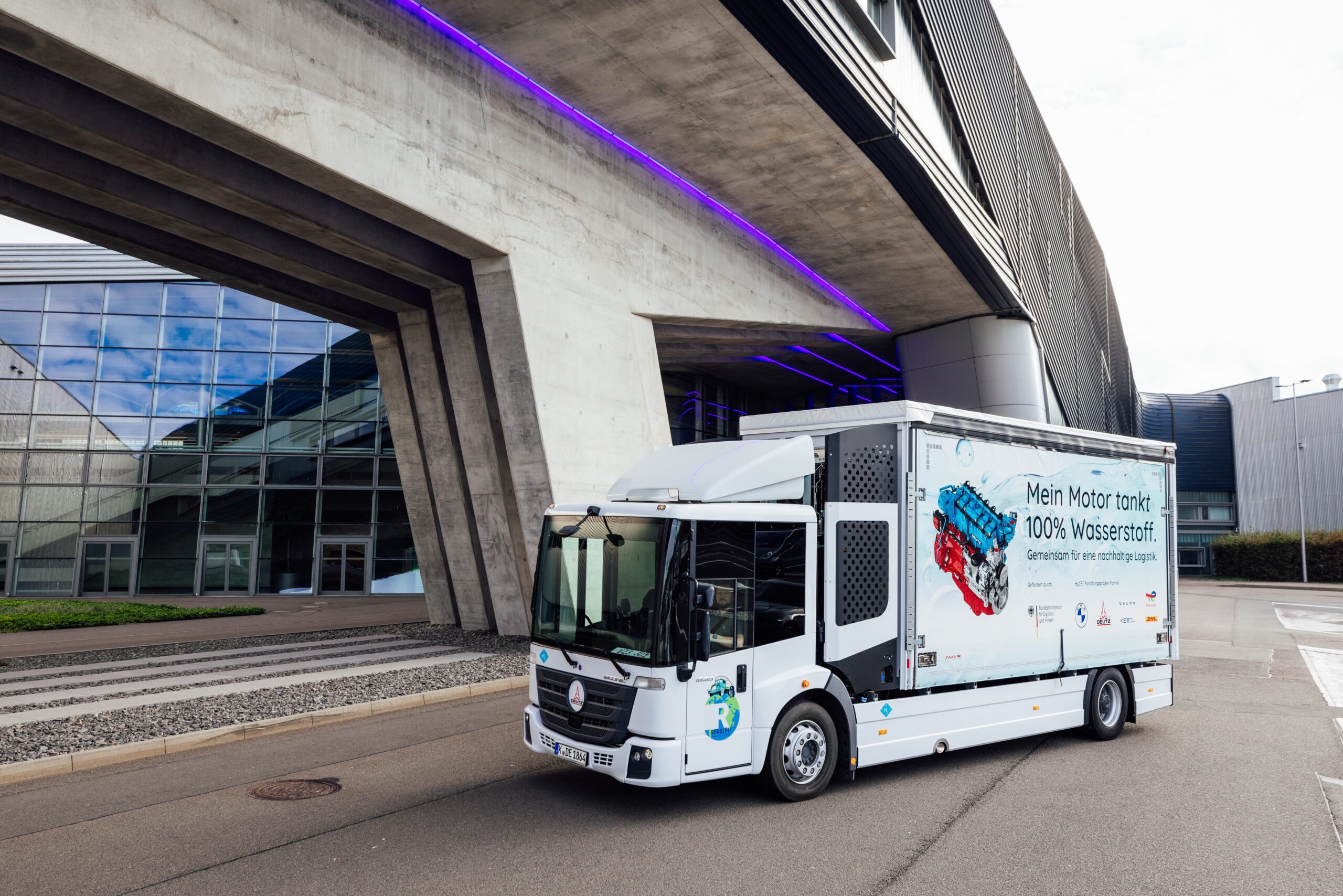
Two decades after its last experiment with hydrogen engines, BMW’s exploring their use in HGVs

In a first for the German industry, BMW is testing a hydrogen combustion-engined logistics truck at its Leipzig plant.
The short refuelling times and versatility offered by hydrogen trucks have potential for long-haul routes and multi-shift operations. The engine in Leipzig’s 18-tonne Mercedes Econic truck is a 7.8-litre six-cylinder TCG 7.8 H2 developed by Deutz, a partner in the German government-sponsored research and development project HyCET (Hydrogen Combustion Engine Truck), which BMW has led since 2022. The engine develops a hefty 738lb ft of torque between 1400rpm and 1600rpm, plus 295bhp at 2200rpm.
Although BMW is developing hydrogen fuel cell technology for its cars, rather than hydrogen-combustion engines, that hasn’t always been the case. In 2001, when most mainstream manufacturers were chasing the FCEV dream, BMW embarked on a ‘world tour’ with a small fleet of hydrogen-combustion 750hL saloons. Fuelled not by compressed hydrogen but 140 litres of liquid hydrogen stored in a cryogenic tank at -253deg C, they had a modest range of 217 miles. However, they also carried petrol in a conventional tank, giving them a further 310 miles, so range anxiety wasn’t a problem.

There was a fuel cell in play, albeit a small solid oxide device, rather than the proton exchange membrane used by FCEVs. The fuel cell served as an auxiliary power unit, feeding a 42V electrical system capable of driving the 750hL’s electrics, including air-con, even when the car was switched off.
A downside was that the engine’s power output was reduced from 326bhp on petrol to 204bhp on hydrogen, due to the lower energy density of the fuel. Since then, hydrogen-combustion engines have come a long way (there’s lots of activity in the trucking and off-road industry). Technical hurdles like the lack of natural lubrication provided to fuel injectors by hydrogen compared with fossil fuels have been overcome by a couple of decades of specialised development.
While using spark ignition like a petrol engine, modern hydrogen truck engines are based on diesel tech, making them easy to fit into existing vehicle maintenance schedules and helping to ramp-up the use of hydrogen engines and fuelling infrastructure.
Short refuelling times help with reduced downtime and a hydrogen engine is less sensitive to variations in hydrogen quality compared with hydrogen fuel cells.
The ultimate objective of all this is to reduce emissions, and although hydrogen engines do require exhaust after-treatment for NOx, they don’t emit any CO2, only water.
Another benefit of using hydrogen as a fuel is energy security, as it reduces our often crippling reliance on crude oil.

Related posts






Latest Post


No Comments