
BMW Recalls 189,000 3, 5, and 7 Series Over Silent Starter Fire Risk
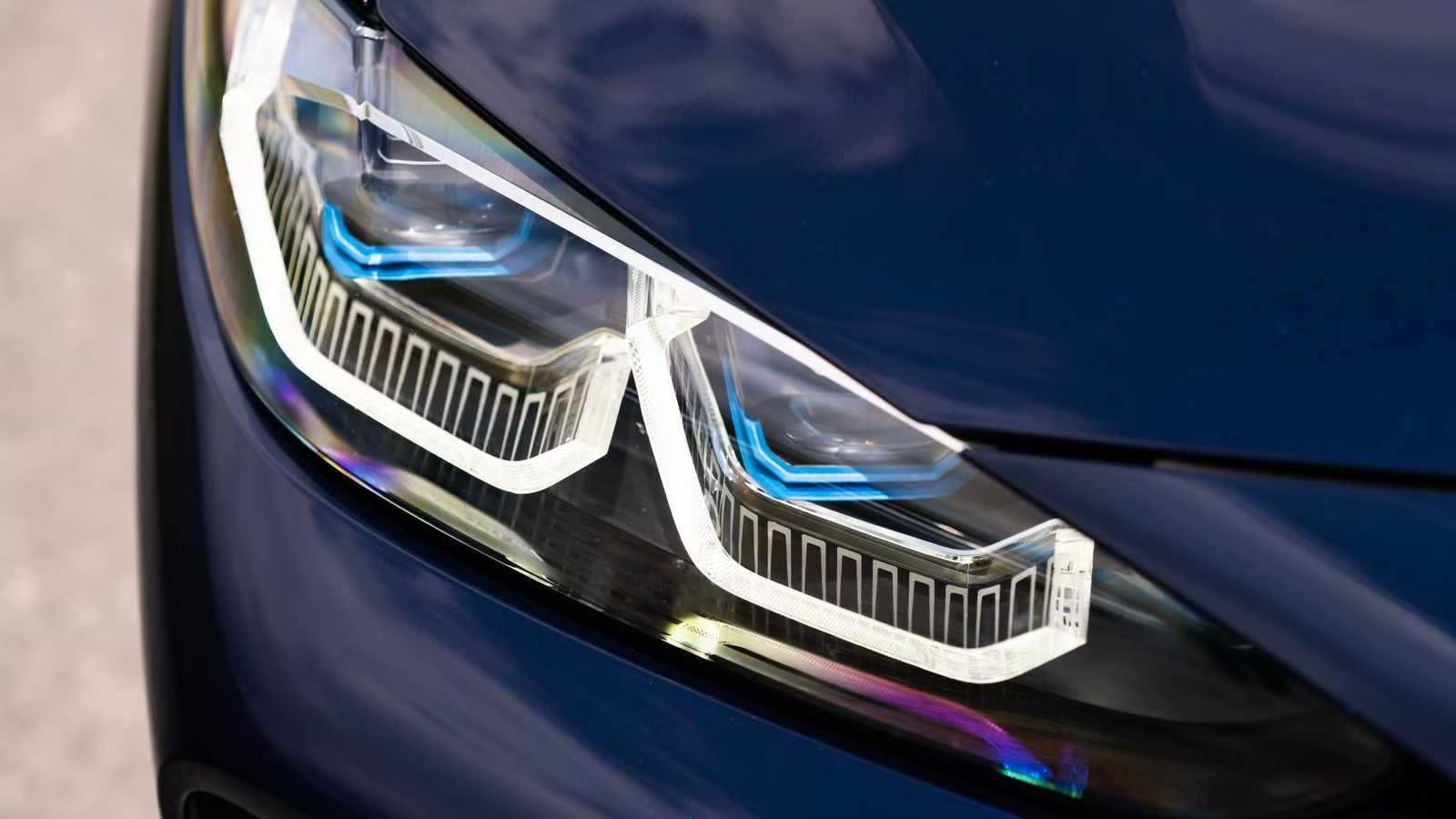
BMW has issued a worldwide recall covering 189,130 vehicles across its 3 Series, 5 Series, and 7 Series lineups — and the failure mode is one owners won’t see coming. A starter relay without adequate water sealing allows moisture to work its way into the component over time, corrode the internal contacts, and ultimately short-circuit near the starter motor. That short circuit is a fire risk, and there’s no warning light, no smell, no audible cue before it happens.
The recall was formally issued on September 3, 2026, and is being monitored by Germany’s Federal Motor Transport Authority under reference number 16791R. If you own an F30, G20, F10, G30, F01, F02, G11, or G12 built in the window between July 29, 2014, and November 12, 2020, your car may be among the affected units. The fix is a complete starter motor replacement — not a patch, not a relay swap — performed at any authorized BMW dealer worldwide.
Which Models Are Affected and Why the Count Is So High
The recall spans two full model generations across BMW’s three core sedan lines. On the 3 Series side, that means F30-generation cars through the early G20. The 5 Series coverage runs from the F10 through the G30. The 7 Series bracket takes in the F01 and F02 long-wheelbase cars through the G11 and G12. BMW hasn’t broken the 189,130-unit total down by individual chassis code, but the six-year production window and the multi-generation spread make the count easier to understand: the same starter relay part made it into two successive generations of each model line.

BMW has tied the affected units to internal part codes 0012820600 and 0012840600. If you want to verify your vehicle’s status independently before calling the dealer, those codes and the KBA reference number 16791R are the details to have on hand.
How Water Becomes a Fire Risk

The failure sequence is straightforward, which makes it all the more serious. The starter relay on affected cars lacks sufficient protection against water ingress. Moisture — whether from rain, car washes, or general underhood condensation over years of use — gradually seeps into the relay housing. Once inside, it begins corroding the internal electrical contacts.
Corroded contacts don’t just fail to work; they can bridge a short circuit. A short circuit in a component mounted near the starter motor, surrounded by wiring and in proximity to fuel and oil, creates a genuine fire risk. Because the corrosion builds slowly and silently, there’s no performance symptom that tips off the driver. The car may start and run normally right up until it doesn’t — or worse, until something ignites.
What the Fix Involves and Why You Shouldn’t Wait

The remedy is a complete starter motor replacement, not a targeted repair of the relay alone. Replacing the entire assembly eliminates the water ingress path at the source rather than attempting to reseal a component that was never adequately protected to begin with. The work is being carried out through BMW’s authorized dealer network, and there is no cost to the owner.
The recall was initially issued in Germany, and international notification timelines don’t always run in parallel with the originating country’s schedule. Waiting for a mailed notice to arrive is a risk not worth taking on a fire-related defect. The right move is to contact your local BMW dealer now, provide your VIN, and confirm whether your car is included. Dealers can check the part codes — 0012820600 and 0012840600 — against your vehicle’s build record and schedule the starter motor replacement directly. Given that this is a silent failure with no early warning signs, proactive contact is the only reliable safety net available to owners right now.
BMW 3, 5, and 7 Series owners from this era have earned a reputation for holding onto well-sorted, high-mileage cars — which is exactly the kind of long-term ownership profile where slow-building water corrosion becomes most dangerous. Get the VIN in front of a dealer before the mailed notice ever arrives.
Source: BMWBlog, KBA

Related posts




Latest Post


No Comments