
BMW M340i or M3? The $30K Question Every First-Time Buyer Asks
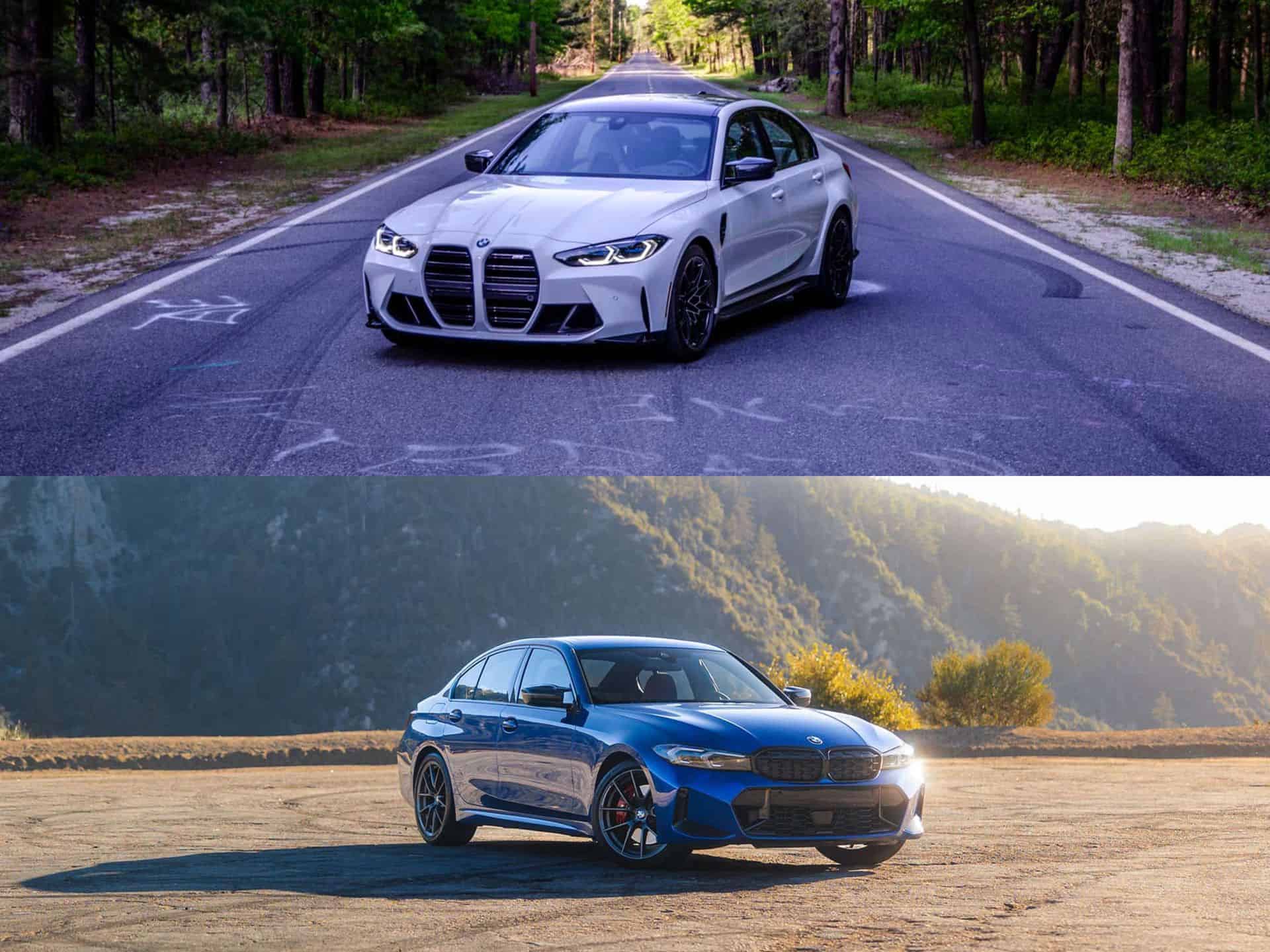
Article Summary
- The M340i starts around $62,300 and makes 386 hp; the M3 starts at $79,575 and climbs to $88,875 for the 523-hp Competition xDrive.
- The real deciding factor isn’t power, it’s brakes and suspension: the M340i fades fast on track, the M3 was built to handle it.
- For daily driving and commuting, the M340i delivers most of the experience for significantly less money — the M3 earns its premium because in the end, it’s a proper sportscar.
Let’s say you’re cross-shopping the 3 Series lineup and you’ve narrowed it down to two cars: the M340i and the M3. You’ve done the math, and the gap between them is somewhere between $17,000 and $30,000 depending on how you spec them. That’s not a rounding error. That’s most of a second car, a down payment on a house, or a very serious track day fund. So before you sign anything, it’s worth asking the question plainly: what does that money actually buy you, and do you need it?
The Base Numbers

A rear-wheel-drive M340i starts at roughly $62,300 with destination included. Add xDrive and you’re at about $64,300. For that you get a B58 3.0-liter turbocharged inline-six with a 48-volt mild hybrid assist, making 386 horsepower and 398 lb-ft of torque, run through an eight-speed automatic. BMW claims 0-60 in the mid-4-second range, and Edmunds got 4.8 seconds in RWD testing. That is not a slow car. That is quicker than an E46 M3 ever was.
The M3 starts higher and climbs fast. The base manual, rear-drive-only car is $79,575 and makes 473 horsepower with 406 lb-ft, hitting 60 in a claimed 4.1 seconds. Step up to the Competition and you get an eight-speed automatic in place of the manual, 503 horsepower, and a 3.8-second run to 60. Go all the way to the Competition xDrive and you’re at $88,875, 523 horsepower, and a 0-60 time that BMW claims at 3.4 seconds but that Car and Driver has run in under three. Option either car up with the Carbon package or M Driver’s package and the M3 pushes toward $95,000 to $100,000, while a well-equipped M340i tops out closer to $68,000 to $70,000. That’s where the real $30,000 gap lives, not necessarily at the base MSRPs.
What The M340i Actually Gives Up
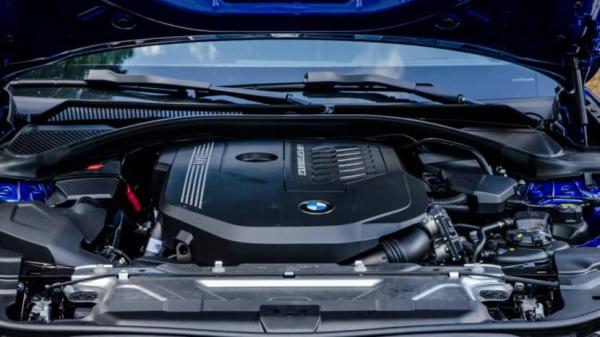

The B58 inline-six in the M340i is one of the best engines BMW builds, and I’m not saying that to soften the blow before I talk you into the M3. It pulls cleanly from idle, it’s smooth enough to daily without complaint, and responsive across the RPM band. What it doesn’t have is the S58’s top end. The M340i’s power tapers off as you approach redline in a way that feels like a very quick luxury sedan, not a race car with a license plate. There’s no carbon-ceramic brake option though, and the tires are sized for all-weather grip and tread life, not lateral g.
In the end, the M340i is the quickest version of a car built primarily to be comfortable, quiet, and easy to live with every day. It does sport sedan things well, but it can still hold its own during a casual track day.
What The M3 Actually Adds
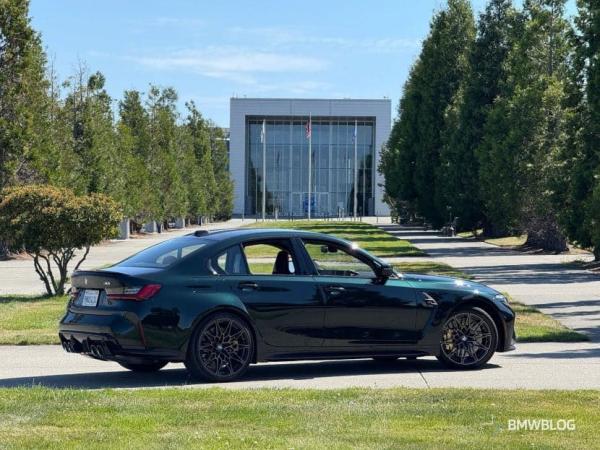
The S58 in the M3 is a different animal entirely, and the difference shows up specifically after 2,500 rpm, where the M340i is already thinking about the next gear and the M3 is just getting started. The M3 gets an M Sport differential, specific adaptive M suspension, a chassis tuned around a stiffer structure, and brakes sized for repeated hard stops rather than the occasional panic stop in traffic. The manual transmission, still available on the base car, is the only three-pedal option left in this segment at any price, and if you’ve ever wanted to learn to heel-toe on a car you can also drive to work, this is close to the last chance to do it new.
The M3 Competition xDrive is the one to get if outright speed is the entire point. It’s also the heaviest and, in my opinion, the least characterful of the three configurations, trading some of the rear-drive car’s playfulness for a security blanket most buyers in this segment will never actually need on public roads. The base manual RWD car is the one enthusiasts talk about on forums for a reason. It’s the M3 that still asks something of the driver.
The Question That Actually Matters: Will You Track It?

This is where the decision gets simple, and where I’d push back on anyone telling you the M3 is automatically worth it. If you are buying this car to commute, road trip, and occasionally enjoy a good on-ramp, in our humble opinions, the M340i does 90 percent of what the M3 does for 70 to 80 percent of the money, with a softer ride and a quieter cabin as a bonus. I’d rather have that car in my garage every day than a car built for a track I’m visiting twice a year.
If you are buying this car because you have a local track and you intend to use it, the calculation flips completely. The M3 was engineered for heavy track us, and the $30,000 gap starts looking a lot more reasonable.
If your BMW is your only car, if you live somewhere with real winters and want xDrive without the M3’s Competition-only AWD tax, or if you simply want a quick, comfortable, well-built sport sedan without the insurance premium and tire bill that come with 500-plus horsepower, the M340i is the smarter buy and it isn’t close. It’s also the better first BMW for someone who has never owned a performance car and wants to learn what the brand is about before committing to something that punishes mistakes at speed. But don’t forget, you can also add the xDrive system to the M340i if you’d like.
Who Should Buy The M3
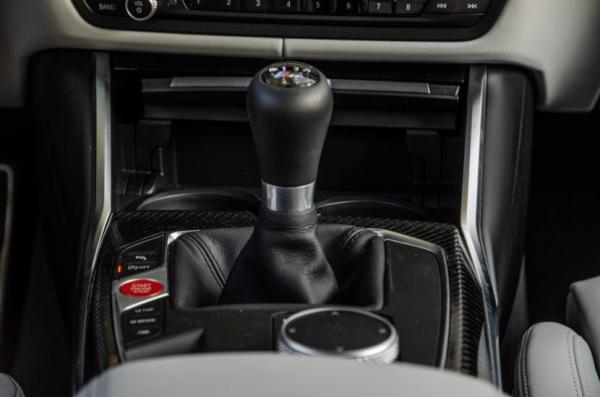
If you already know you want to track the car, if you’ve driven a modern M car before and know what you’re signing up for, or if the manual transmission specifically is the reason you’re cross-shopping in the first place, the M3 earns its price. It’s not worth $30,000 more as a commuter. It’s worth it as the car that does something the M340i structurally cannot.
Is The M3 Worth $30,000 More?
For most first-time buyers reading this, no. Most people who buy an M3 will never approach the limits of its chassis on public roads, and the M340i will out-deliver its price tag as a daily driver in every scenario short of a track day. But “worth it” isn’t really about the money once you already know you’re a track day person, an autocross person, or someone who wants a manual transmission before BMW stops offering one. For that buyer, the extra money isn’t paying for a badge. It’s paying for hardware the M340i simply doesn’t have, and no amount of driving skill closes that gap once the brakes start to fade.

Related posts


Latest Post


No Comments