
AAA: Average New Car Now Costs $12,863 a Year to Own, Here’s Why
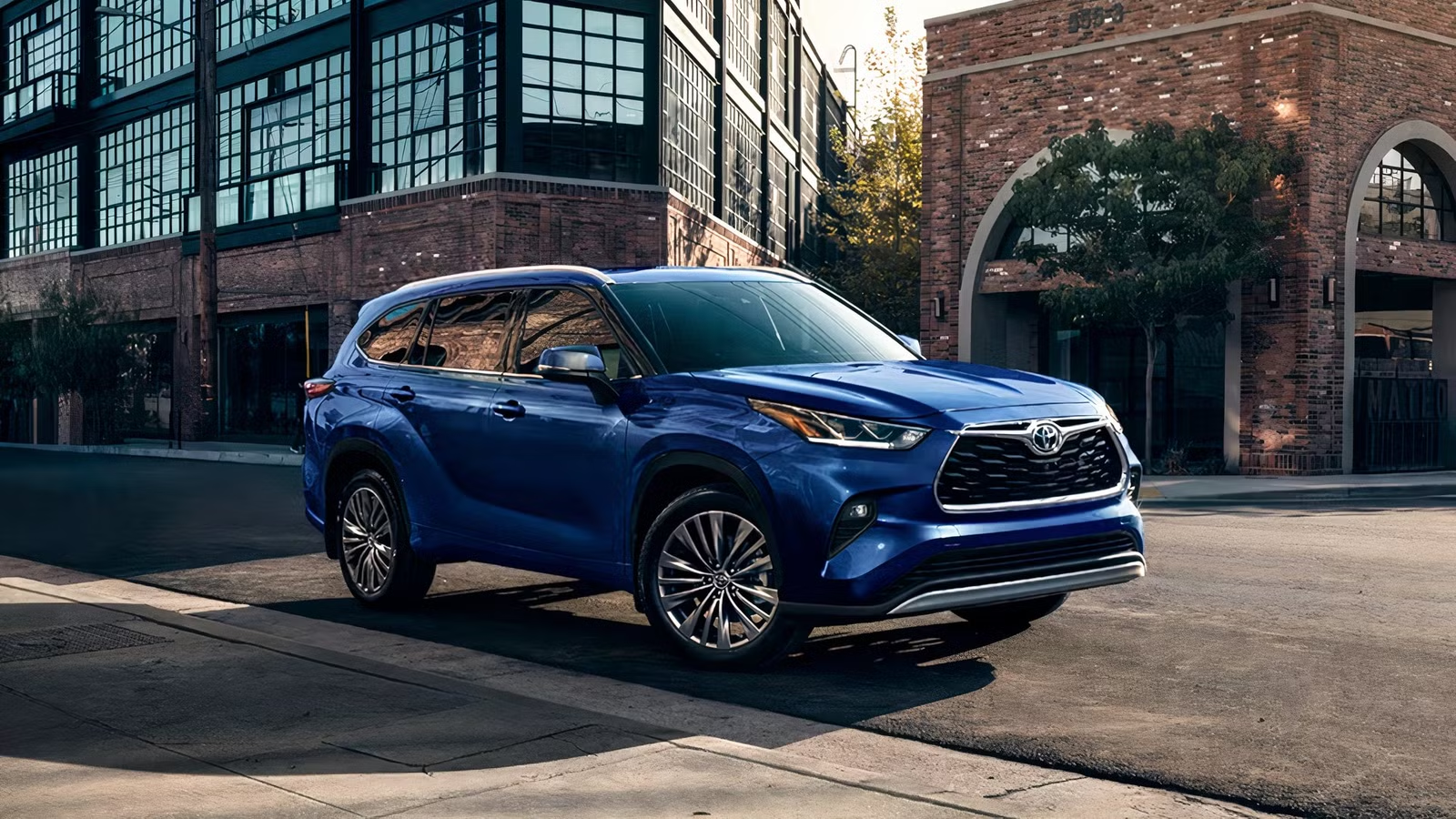
AAA released its 2026 Your Driving Costs study on September 15, and the number at the center of it should reset how anyone shopping for a new vehicle right now thinks about their budget. The average new car costs $12,863 a year to own and operate, or $1,071.92 a month. That’s up from $11,577 in 2025, though AAA notes methodology changes mean the two figures aren’t a clean apples-to-apples comparison.

Either way, the takeaway is the same: the number on the payment calculator is not the number that matters. Depreciation, insurance, and finance charges are eating buyers alive well before fuel ever enters the picture, and which category of vehicle you choose swings your annual cost by thousands of dollars.
Where The $12,863 Actually Goes
Depreciation is the single biggest line item by a wide margin. AAA found vehicles lose a weighted average of $4,422 in value every year, more than a third of total ownership cost. That’s the gap between what you pay and what the car is worth down the road, and it’s driven by the sales-weighted average new-vehicle price in the study, $39,376, which shapes how steep that drop can be.

Full-coverage insurance comes in around $2,098 a year for a driver under 65 with a clean record living in a city or suburb. Finance charges, based on a five-year loan with 15% down at the national average rate, add another $1,184 annually, including taxes and first-year registration. Fuel is a factor too, but not the dominant one: regular gas averaged $4.152 a gallon during the study window, up 31.8% from last year, which is the sharpest single-category jump AAA recorded.
Add maintenance, repairs, and tires, and the sticker price starts to look like a down payment on a much bigger five-year commitment. AAA’s study covers ownership over five years and 75,000 miles, which is the standard against which all these categories get measured.
Why Costs Jumped So Much From Last Year

AAA points to fuel prices, depreciation, and finance charges as the three fastest-moving categories behind the 11% year-over-year increase. Gasoline’s 31.8% jump is the headline mover, but it’s happening alongside a market where average new-vehicle transaction prices have kept climbing, pushing up both what buyers finance and what they eventually lose to depreciation. Higher purchase prices mean bigger loans, and bigger loans mean more interest paid over the life of the note, so the finance-charge line grows even without rates moving much.
It’s also worth noting AAA changed its methodology this year, folding EVs and hybrids into the same seven categories as gas vehicles instead of scoring them separately. That’s a more useful comparison for shoppers, but it does mean this year’s $12,863 figure and last year’s $11,577 aren’t measuring the exact same thing.

The category you pick matters more than the powertrain badge on the trunk. AAA found half-ton pickups cost $1.10 per mile to operate, 48 cents more than a small sedan, which adds up to roughly $7,191 in extra cost per year. If you’re deciding between a compact SUV and a full-size truck, that gap alone dwarfs most fuel-savings arguments people obsess over.
Powertrain choice matters too, just not in the direction a lot of shoppers assume. EVs post the cheapest energy costs in the study, running 66% to 70% below gas across the categories AAA tested. But in the medium-sedan segment, EV ownership actually costs 29.1% more per year than a comparable gas model, largely because EV depreciation there runs about double that of gas versions, and higher purchase prices inflate financing and fees. Hybrids split the difference and came out as the most consistently cheaper option across medium sedans, compact SUVs, medium SUVs, and pickups alike, delivering real fuel savings without the depreciation penalty EVs are carrying in some segments.
AAA’s practical advice is worth repeating: treat purchase price, financing, and trade-in value as three separate negotiations, get preapproved for financing before you walk into a dealership, and build a real monthly and annual budget before you sign anything. The company’s Your Driving Costs calculator lets you plug in vehicle category, powertrain, location, and driving habits to see a personalized estimate rather than relying on the national average. Given how much category alone can shift your annual cost, that’s a five-minute exercise that could save real money before you commit to five years of payments.

Related posts






Latest Post


No Comments