
Ford’s 429 Big-Block Family Wagon Quietly Shared DNA With The Cobra Jet Torino
Who doesn’t love a sleeper wagon? You know the ones: performance cars dressed up in the kind of load-lugging bodywork that makes you look all sensible and responsible. This irresistible combination of Labrador-carrying capability and stop light smoking ability means that those who have to settle down a little can still have our cake and eat it. But while we might think that fast wagons are a fairly new phenomenon, it turns out they are a lot older than many of us realize — and no, they weren’t necessarily an invention to come out of Europe either.
The Sleeper Wagon Wasn’t Invented In The ’90s

Talk about sleeper wagons and it won’t be long before someone mentions the Audi RS2 — and for good reason. When the RS2 arrived in 1994, mostly rolling out the factory in Nogaro Blue, a lot of people might have been baffled. Here was an Avant (a fancy term for wagon) version of the B3 Audi 80, a model that had been around for some eight years already, with Porsche wheels and brakes, and a body kit.
But underneath this unassuming skin nestled a 2.2-liter, 20-valve inline-five turbocharged engine that had, thanks to development with Porsche, an astonishing 315 horsepower. The RS2 could famously beat a McLaren F1 to 30 mph, and had all the practicality of a standard wagon to boot. Around the same time, Volvo launched the mad T-5R, a raucous front-drive touring car wagon for the road with 240 hp. Since then, fast wagons and sleeper cars have become a staple of Autobahn fast lanes. But it wasn’t the Europeans who pioneered this segment — it was the Americans, and they did it decades before.

The Station Wagon That Had Muscle Car Power In The 1960s
When muscle car fans settled down and had kids there was only one solution—drop a big block in a wagon. Some manufacturers took that to heart.
The Ford Country Squire Was A Muscle Car For The Whole Family

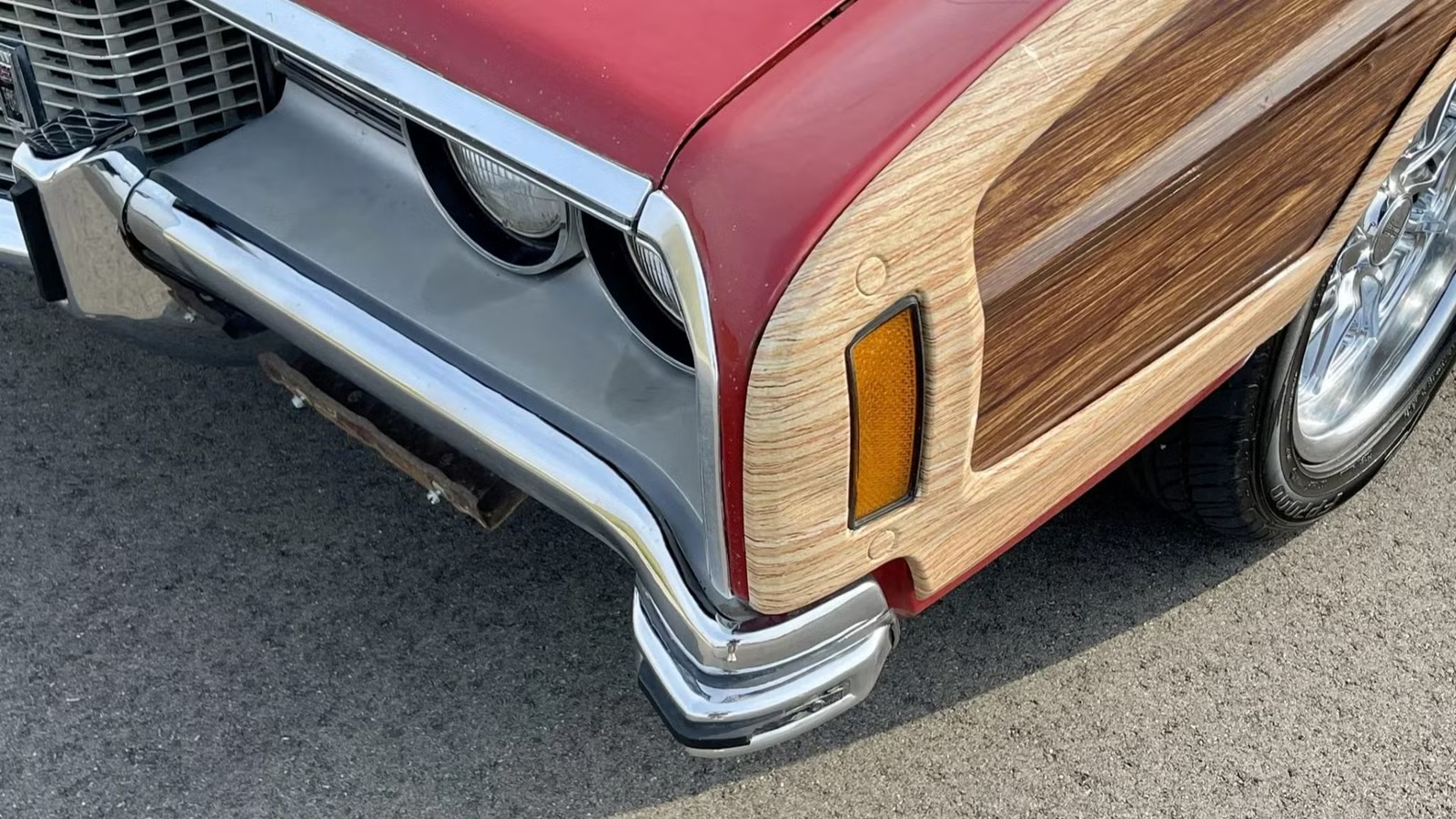
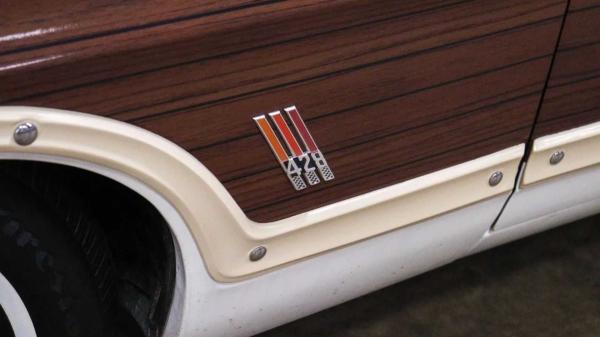
As car names go, Country Squire is certainly about as quaint as you can get. First used in 1950, this moniker was used for Ford’s top-level station wagon, easily identified by the woodgrain trim on the side. By 1969, the Country Squire was in its seventh generation, and was a bodystyle of the full-size LTD, the Blue Oval’s most expensive model. The LTD had a number of engine options, including the 220-hp 302 Windsor small-block and 351 Cleveland small-block, right up to 429 big-block units. According to MotorTrend, there were 1975 ’69 Squires fitted with Ford’s new 429-cubic-inch V8, which replaced the FE-series 428 in 1969, and in top four-barrel guise packed 360 hp and 480 lb-ft of torque.
By The Early ’70s The 429 Had Been Softened But Was Still Potent
By 1972, the 7-liter V8 (429) in the Ford LTD Country Squire no longer had the muscle car-esque figures it once enjoyed. Gross horsepower had been replaced by SAE net horsepower, and strict emissions controls had been introduced, with the 429’s output now sitting at 208 net hp and 322 lb-ft of torque. Still, that was a decent amount of twist for a car of that time. Inside, the seventh-gen Country Squire was incredibly roomy, thanks to an increase in size over the previous generation.
The three-way tailgate design allowed it to swing down like a standard unit or swing out with the window position down or up. Factory equipment included front disc brakes and power steering, with some cars being available with the optional Handling Suspension. The Country Squire was offered with both manual and automatic three-speed transmissions. The seventh Country Squire was built right up until 1978, and the CS itself was made until 1991, when minivans started to take over.
The Country Squire Was Incredibly Popular In The Early ’70s

Before minivans and huge SUVs, anyone with a large family would pile the entire family into something like a Country Squire. This was a time when car companies were selling a lot of wagons. The ’60s had seen an increase in the sales of these family haulers, and the early ’70s saw a peak in sales. There are no official figures, but Barnfinds.com states that sales for 1972 Country Squires alone were easily into six figures, somewhere around 121,000 units.
The Wagon That Quietly Hid A 400-Horsepower Muscle V8
A humble ’60s family wagon hid a 400-hp V8 secret under its long hood, turning grocery runs into muscle-era mischief.

The 429, which was introduced in 1969 in the Country Squire, was part of Ford’s iconic 385-series engine lineup and was built in Lima, Ohio. The unit used a skirtless block and thin-wall casting methods to cut down on weight. The 385 also served as the basis for some of Ford’s greatest big-block engines ever. The Cobra Jet came with a 700 CFM Rochester carb, an 11.3:1 compression ratio, tougher main-bearing webbing, smaller combustion chambers, and 2.24/1.72 valves in the heads.
The CJ was advertised as having a 10 hp gain at 370 hp (and a 30 lb-ft loss of torque), but it seemed like an open secret that Ford was deliberately downplaying the output figures to keep the insurance companies at bay. The Super Cobra Jet mill had four-bolt mains, forged aluminum pistons, and a 780 CFM Holley carb with a unique intake manifold. The result of all these mods? Just five hp more. But it might be best to take that with a grain of salt.
The First Factory Supercharged Muscle Wagon Ever Sold
It’s an exceedingly rare option that turned a family hauler into a proper sleeper wagon.
Country Squires Are An Interesting Way Into Big Block Fords Of The Early 70s

The seventh-generation Ford Country Squire is a very accessible entry into the classic market, and with a ton of space, they still work as a quirky family car for anyone who finds a muscle machine impractical. Over at Classic.com, this generation of car, made between 1969 and 1978, has an average price of just $11,300, but that includes all engines and options. It doesn’t even tell the whole story, as project cars start at just over $3,000, and one well-used 400 sold for just $3,300.
As for the 429s, they command higher prices, but not by much. A 1969 Ford LTD Country Squire 429 on Coys 18″ five-spoke wheels sold in 2024 for just $25,250, while a later 1971 model fetched just $11,678 in 2021. More recently, a 1972 Ford LTD Country Squire Wagon 429 project sold for an incredible $3,100, and although it needed some love, it was running and rolling. Few Country Squire LTDs of this generation ever seem to make it over $35,000. They may not have the all-out prestige of a two-door muscle car, but the ’90s fast wagons showed that there was something uniquely cool about the space race — and it was the Country Squire that got there first.
Sources: Classic.com

Related posts


Latest Post


No Comments