
BMW Has Already Moved 1 Million Cars Inside Its Factories Without Drivers
News
The fully autonomous driving tech is already operating at four plants, with BMW planning to bring it to Spartanburg in South Carolina in 2027.
Article Summary
- Instead of equipping cars with autonomous driving hardware, the system uses factory-mounted LiDAR sensors and cloud-based software to guide vehicles.
- The system is already operational at four plants: Dingolfing, Leipzig, Regensburg, and MINI Plant Oxford, with Spartanburg joining next year.
- BMW averages around 3,500 automated vehicle movements per day across its production sites.
BMW’s factories are getting better at moving cars around without anyone behind the wheel. The automaker has now surpassed one million driverless vehicle movements using its Automated Driving In-Plant (AFW) technology, which is already operating at four production sites across Europe.
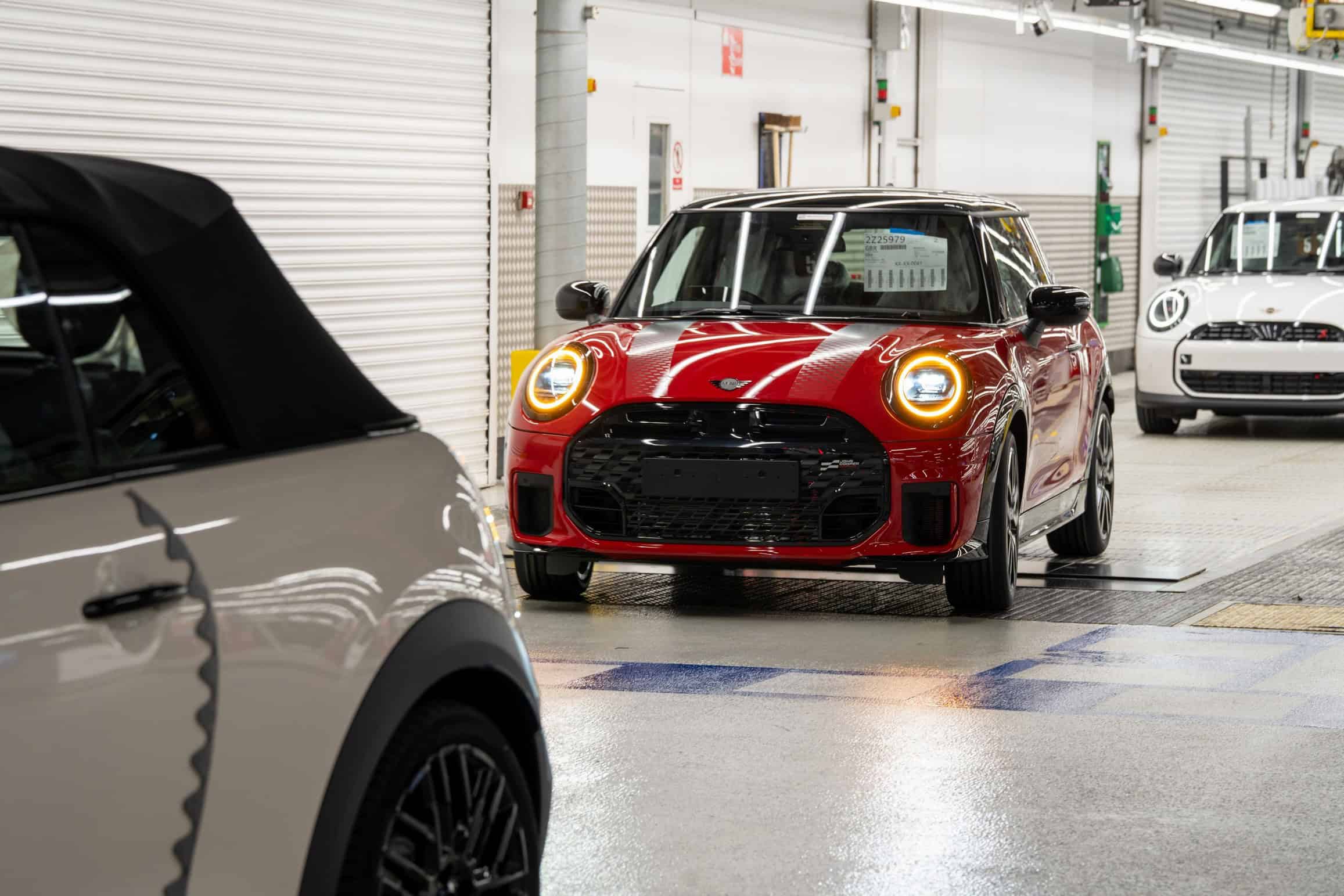
The milestone comes as MINI Plant Oxford in the UK becomes the latest facility to adopt the system, joining BMW’s German plants in Dingolfing, Leipzig, and Regensburg. The technology has come a long way since its initial 2022 trial in Dingolfing, evolving from a pilot project into a standardized solution BMW plans to roll out across its global production network.

BMW currently averages around 3,500 automated vehicle movements per day across its plants. At Oxford alone, the factory completed more than 53,000 movements over the past year, highlighting how quickly technology is becoming part of everyday factory operations.
How BMW Moves Cars Without Drivers
Rather than relying on autonomous driving hardware fitted to each vehicle, BMW’s system uses sensors installed throughout the factory. LiDAR sensors continuously monitor the surroundings, while cloud-based computing and motion-planning software determine how vehicles should move through designated production and logistics areas.

This setup allows new cars to navigate around workers, other vehicles, driverless transport systems, and temporary obstacles in real time. Not that we’re surprised in the slightest, but BMW also uses artificial intelligence to develop, simulate, and operate the technology.
Another advantage of this approach: the vehicles don’t need their own autonomous driving sensors. By placing the necessary hardware in the factory infrastructure, BMW can move cars automatically regardless of their individual specifications.
The technology also extends beyond simply driving a car from one point to another. At MINI’s Oxford site, BMW has connected AFW directly to existing factory control systems for the first time. The system can position vehicles precisely beside lifting equipment for specific production tasks, while cloud-based technology coordinates the interaction between the cars and the machinery.
BMW says its Dingolfing facility, where it builds the new 3 Series (G50) with combustion engines, has Europe’s largest LiDAR infrastructure, providing a foundation for automated maneuvers and helping the company expand the system to additional sites.
BMW Is Taking The Technology Global
Next stop? BMW’s Spartanburg plant in South Carolina, where the technology is scheduled to enter series operation in 2027. That will make it the fifth facility to adopt AFW as BMW continues its push toward a digitalized production network.
BMW developed the system in close collaboration with Swiss technology company Embotech. The partnership grew out of BMW Startup Garage, which works with emerging technology companies, while BMW’s venture capital arm, BMW i Ventures, acquired a financial interest in Embotech in December 2024.
For BMW, the achievement is about more than reaching a round number. Automating vehicle movements can streamline logistics, reduce manual handling, and help factories operate more efficiently. Because the technology can adapt to different plants, vehicle architectures, and production processes, BMW sees plenty of room to expand its use.
The cars may not be driving themselves on public roads yet, but inside factories, they’re already learning to navigate without a driver. With four plants using the system and Spartanburg next in line, that million-movement milestone could soon look like just the beginning.

Related posts

Latest Post


No Comments