
Honda’s Biggest Motorcycle Engine Makes Its Liter Bikes Look Tiny
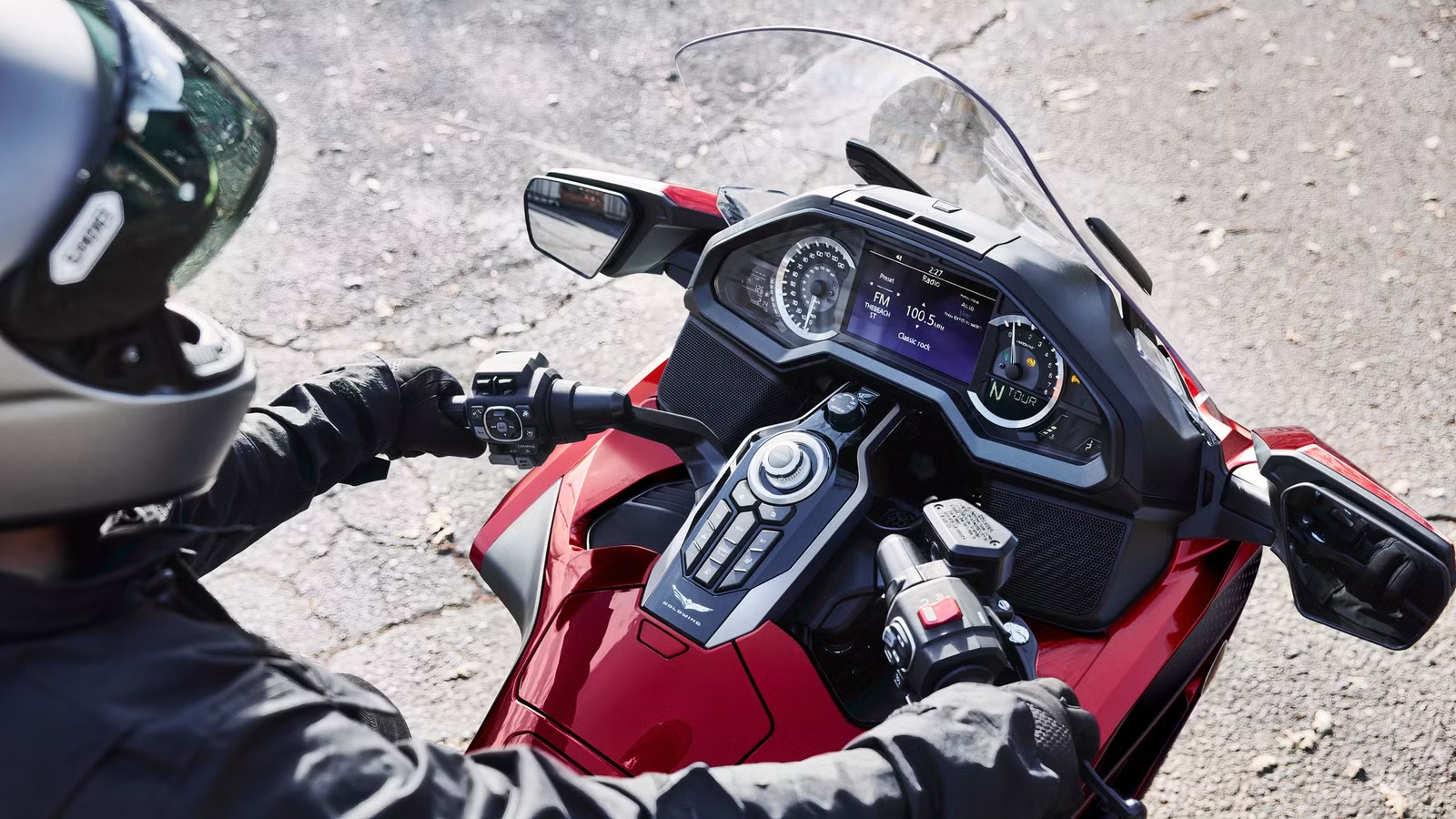
In the motorcycling world, the 1,000 cc baseline has long been considered the pinnacle of street-legal speed, power, and engineering prowess. Superbikes routinely pack in liter-class engines into lightweight frames, delivering blistering acceleration and precise handling that push the envelope. However, Honda decided that a liter-class motorcycle was merely a starting baseline rather than an engine capacity ceiling. Its flagship tourer has an engine that rivals the displacement of compact cars and SUVs, an engineering marvel that changes the scale of Honda’s motorcycle engines. Besides its gigantic size, this motor is known for its colossal low-end torque, whisper-quiet refinement, and fantastic balance, redefining what long-distance touring on two wheels can feel like.
When Four Cylinders Aren’t Enough: Six Cylinders Change The Game

When high-revving four-cylinder engines excel on track-spec liter-class motorcycles, they require high engine speeds and aggressive gear shifts to keep the engine in its powerband. Moving over to a flat-six cylinder configuration completely redefines performance on two wheels, thanks to its mechanical balance and smooth power delivery throughout the rev range.
In a flat-six boxer engine, opposing pistons naturally cancel out secondary vibrations, creating an exceptionally smooth power delivery without the need for heavy, power-sapping balancer shafts. Placing six horizontally-opposed cylinders low in the motorcycle frame drastically drops the center of gravity closer to the ground. This clever weight distribution turns a heavy motorcycle into a remarkably stable and easy-to-handle machine.
Furthermore, adding two additional cylinders increases displacement without the inherently noticeable engine buzz associated with three-and four-cylinder engines. This substantial gain in engine capacity reduces performance lag by providing an immediate, low-end torque surge right off idle. Compared to the constant wave of torque, traditional high-strung inline-four engines can feel stressed, buzzy, and unrefined, especially during long interstate rides.

The Honda Gold Wing And Its 1.8-Liter Flat Six Heart

The undisputed heavyweight in Honda’s lineup is the iconic Gold Wing, powered by a mammoth 1,833 cc liquid-cooled flat six-cylinder engine. This massive motorcycle’s engine features six horizontally opposed cylinders that sit flat across the frame, effectively two three-cylinder engines placed in each opposing direction.
The 1.8-liter engine puts out an earth-moving 125 horsepower and 130 pound-feet of torque, through a shaft drive. Besides its staggering dimensions, the Unicam SOHC flat six also serves as a stressed member of the aluminum twin-spar frame.
By integrating the engine block directly into the chassis architecture, Honda engineers have managed to keep the motorcycle’s center of gravity impressively low to the ground. Its practical result is supreme low-speed balance and rock-solid highway stability that masks the Gold Wing’s monumental 802-pound curb weight. This engine setup and placement allows riders to effortlessly navigate tight parking lot turns, winding mountain passes, and high interstate speeds with ample confidence and control.
Honda Gold Wing: The Tech And Engineering Behind The Six-Cylinder Powerhouse

Building a large 1.8-liter motorcycle engine comes with its own set of issues, such as overcoming weight, packaging, and heat management challenges. Honda engineers solved this by developing a compact cylinder bore spacing and utilizing lightweight aluminum sleeves, allowing the current-generation engine to be shorter and significantly lighter than its predecessors.
The motor gets high-efficiency electronic fuel injection with optimized intake runners to ensure the Gold Wing runs virtually vibration-free at highway cruising speeds. The engine comes paired with an optional 7-speed Dual Clutch Transmission (DCT). This automatic gearbox is able to execute seamless, instantaneous gear shifts.
The engine also has a walking mode with reverse gear that uses the starter motor system to help riders maneuver the gigantic motorcycle out of parking lots. It’s a godsend tech, especially when you consider the motorcycle’s gargantuan weight and dimensions.
Honda Gold Wing Legacy and Impact On Long-Distance Touring

Interestingly, the first few generations of the Honda Gold Wing did not come with a 6-cylinder engine; they were powered by a 999 cc flat-four engine. It was the fourth-generation Gold Wing that had a 1,520 cc horizontally opposed 6-cylinder engine. The fifth-generation update saw the engine capacity rise to 1.8 liters, while the sixth (current) generation model got a lighter, redesigned engine with a Unicam valvetrain and the choice between a 6-speed manual or a 7-speed DCT transmission.
Since introducing the six-cylinder engine configuration, Honda has set the gold standard for luxury two-wheeled touring. Unlike large traditional high-vibration V-twin cruisers, riding a Gold Wing is equated to driving an open-top luxury automobile.
The Honda Gold Wing’s bulletproof reliability and smooth powertrain have earned it a cult following among long-distance riders who have racked up six-digit figures on a single engine. The Gold wing is an unrivaled titan that makes Honda’s other liter-class motorcycles look like mere toys in comparison. It is proof that even giant automotive-sized motorcycle engines can be relaxed, nimble, and incredibly smooth.

Related posts




Latest Post



No Comments