
McLaren’s Senna At 30: The Hypercar That Rejected Everything Modern
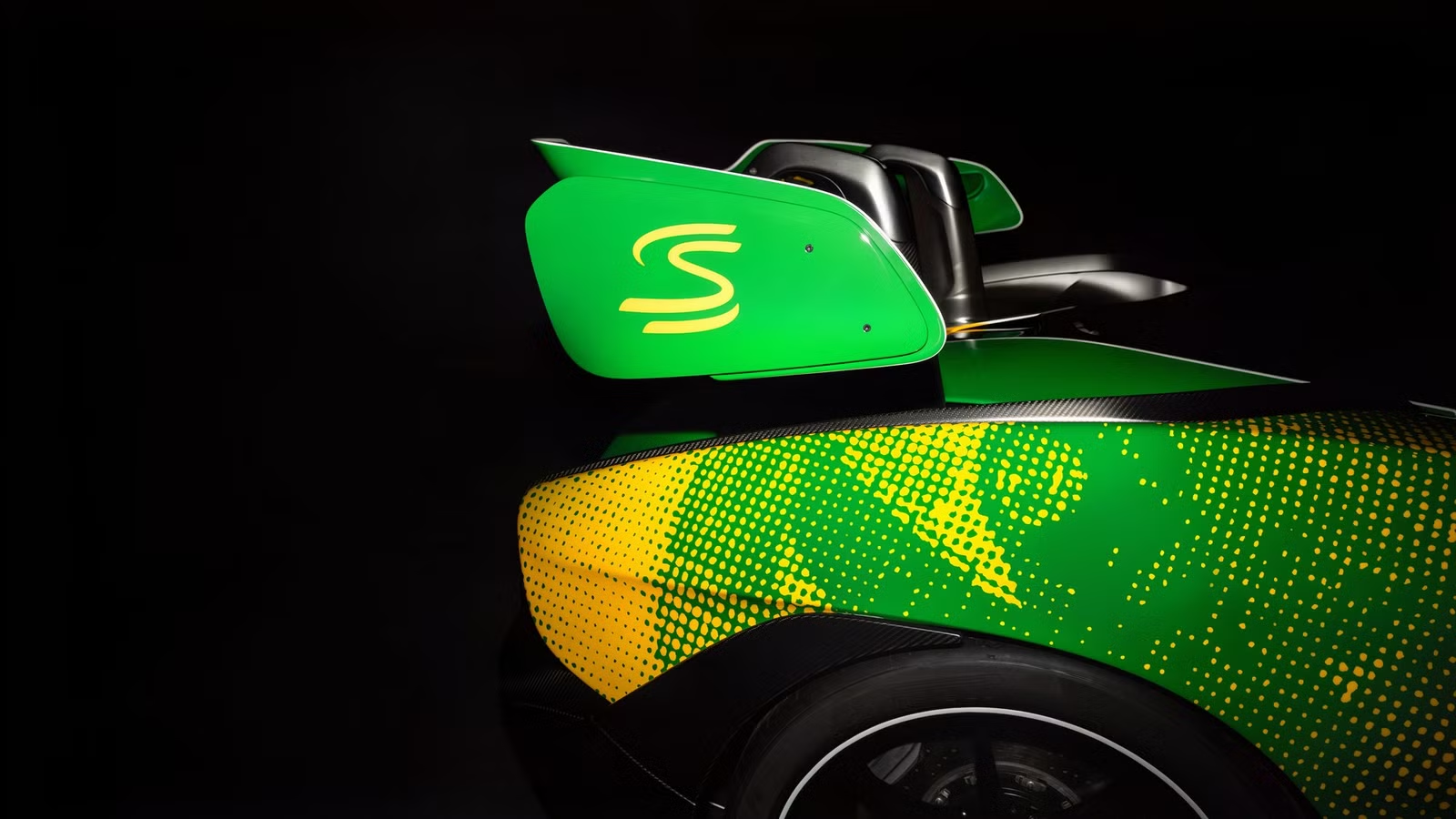
Thirty years on, McLaren has published an official anniversary feature on the Senna — and the timing is a useful reminder of just how deliberately brutal that car was. Named for Ayrton Senna and built around a single, unapologetic design brief, the Senna arrived as a road-legal track weapon that rejected comfort, rejected compromise, and rejected the idea that a hypercar needed to be livable. It was never meant to be loved by everyone. It was meant to be the fastest road-legal McLaren ever built.

McLaren’s 30th-anniversary retrospective, published June 30, revisits the engineering and design decisions that made the Senna what it was. The picture it paints is of a car conceived in direct opposition to the softening trend already visible in the hypercar segment — a machine where every gram saved and every aerodynamic surface justified its existence in lap time, not in showroom appeal.
Weight Was The Mission, Not A Target
The Senna‘s development team treated mass as the primary enemy. The car was built around a carbon fiber monocoque derived directly from McLaren’s motorsport program, and the weight discipline extended to every component decision. Dry weight came in at 1,198 kg — extraordinarily lean for a road-legal car producing 789 horsepower from its twin-turbocharged 4.0-liter V8. That power-to-weight ratio placed it in a category of one when it launched.

Nothing was added unless it served the driver or the lap time. Interior appointments that a buyer of a million-pound car might reasonably expect — sound deadening, plush trim, conventional storage — were either stripped or minimized. The cabin was functional in the way a racing cockpit is functional: everything within reach, nothing superfluous.

Britain Built The World’s First Hypercar
British car brands may be known for luxury, but one of them is credited with starting the hypercar era.
Aero That Worked Instead Of Aero That Posed

The Senna’s bodywork is still polarizing to look at. The dihedral doors, the enormous active rear wing, the deep front splitter — none of it was styled for the sake of drama. McLaren’s anniversary feature reinforces what was evident from the car’s debut: the aero package was developed to generate real downforce at road-legal speeds, not to signal performance through visual aggression alone.
Active aerodynamics adjusted the rear wing depending on driving mode and braking demand. At track pace, the Senna could generate over 800 kg of downforce — more than the car’s own weight. That figure wasn’t marketing copy. It was the point. The body shape that made the Senna controversial in photos was the direct consequence of chasing that number without aesthetic compromise.
The Driver Was The Priority, Not The Passenger

McLaren’s retrospective is clear on the ergonomic philosophy: the Senna was engineered around the driver’s relationship with the car, not around making that relationship accessible. The seating position, the visibility through the large glazed panels, the pedal placement — all of it was calibrated for feedback and control. Comfort was a secondary consideration at best.
That philosophy extended to the electronics package, or rather the deliberate restraint of it. The Senna offered driver aids, but they were tuned to communicate rather than intervene. The intent was to keep the driver in the loop — to let them feel the limits of grip and make decisions accordingly. In an era when hypercar rivals were increasingly wrapping performance in electronic insulation, the Senna went the other direction.

The First Production Car To Break 600 Horsepower
It broke the 600 hp barrier in the 90s, and remains the fastest naturally aspirated car ever.
Why The Senna Still Commands Collector Respect

McLaren built First Ever McLaren Senna Hits The Market, all of which sold before the car was publicly revealed. That production ceiling, combined with the car’s unfiltered character, has kept it firmly in the upper tier of the modern collector market. The Senna GTR — the track-only variant that followed — pushed the concept further still, but the road car remains the definitive statement.
The anniversary feature arrives at a moment when the hypercar segment has fractured into distinct philosophies. Bugatti’s current direction leans into grand touring luxury at extreme speed. Koenigsegg pursues engineering spectacle — hybrid systems, freevalve technology, theoretical top-speed records. The Senna represented a third path: no luxury angle, no innovation theater, just the most direct connection between driver input and road-legal performance that McLaren could engineer. Three decades later, that clarity of purpose is exactly why it holds the status it does.
McLaren’s 30th-anniversary retrospective doesn’t reinvent the Senna’s legacy — it doesn’t need to. What it does is put the original design brief back in focus at a moment when the hypercar world has moved in several different directions at once. The Senna was built for gearheads who wanted the track brought to the road, not the road brought to the track. That distinction still matters.
Source: Mclaren

Related posts






Latest Post


No Comments