
The 1,025-HP Dodge Crate Engine That Outlived The Demon 170
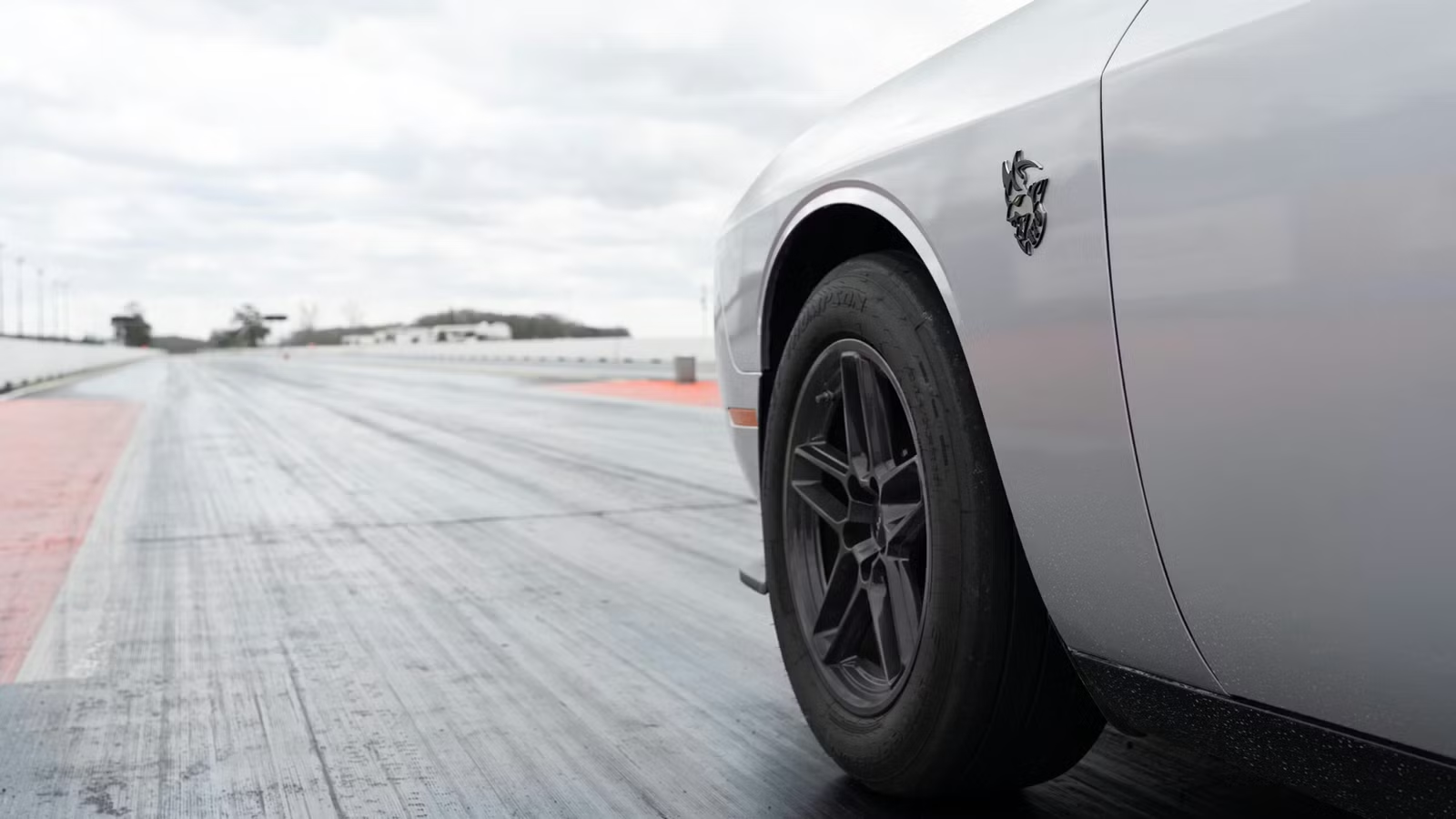
When Dodge officially closed the book on its gas-powered muscle cars, an eerie silence fell over the automotive world. For over a decade, the brand had defined itself with a simple formula: drop a massive, supercharged V8 into a big rear-wheel-drive car capable of creating smoke clouds. It was a golden era of excess, culminating in a street-legal drag racer that rewrote the rulebook on straight-line performance. But when the final factory car rolled off the assembly line, Mopar loyalists felt an immediate void, wondering if the soul of the brand had been permanently retired.

Yet, behind the scenes, a quiet transformation was taking place. While the VIN numbers of the traditional American muscle car were officially dead, the true heart of that performance legacy wasn’t going anywhere. Dodge had secretly devised an entirely new strategy to keep its horsepower war alive, placing its most terrifying engineering marvel directly into the hands of the enthusiasts who helped build the brand.
The End Of The Demon 170 Was Supposed To End Dodge’s Horsepower War
The 2023 Dodge Challenger SRT Demon 170 was never meant to be just another fast car; it was a rolling monument to internal-combustion defiance. Rolling out of the Brampton Assembly plant with an absurd 1,025 horsepower and 945 lb-ft of torque from a modified 6.2-liter HEMI V8, it was the final, ultimate halo car of this muscle car era. On a prepped drag strip running on E85 fuel, it could blitz the quarter-mile in a NHRA-certified 8.91 seconds at over 151 mph. This initially got the car banned from the track, but that was the kind of publicity Dodge wanted.

The Demon 170 served as the grand finale of Dodge’s “Last Call” program—a bittersweet celebration consisting of seven special-edition models designed to give the Gen III HEMI platform a proper send-off. When the final pitch-black Challenger left the line in December 2023, it signaled the end of the V8-powered Dodge muscle. To the public, it appeared the brand’s legendary horsepower war had reached its end.
Regulations Killed This Car, Not Demand

The termination of the Demon 170 and its Hellcat siblings wasn’t driven by a lack of buyers. In fact, dealerships were flooded with eager enthusiasts willing to pay massive markups just to secure a piece of history. Instead, the enemy was the corporate average fuel economy (CAFE) regulations, tightening greenhouse gas emissions standards, and an industry-wide pivot toward electrification. Dodge simply could no longer afford the mounting regulatory penalties required to sell high-emission, supercharged street cars at a mass-production scale. The appetite for raw, tire-shredding Mopar performance was strong, but from a regulatory standpoint, selling these cars as brand-new, showroom-ready street cars was not going to work.
Dodge’s New SRT Flagship Won’t Share A Platform With The Charger
Dodge’s SRT lineup is being completely revived with a new halo car that borrows from an unlikely rival’s playbook.
Dodge Quietly Found A Different Way To Keep The Hellcat Dream Alive

Faced with a regulatory choke hold on production vehicles, Dodge leadership pulled off a classic automotive pivot. If they could no longer sell a fully assembled 1,025-hp street car to the public, they would stop selling the complete package and start selling the hardware. The brand shifted its focus from building heavy, crash-tested production vehicles to supplying top-tier hardware for custom builders, hot-rodders, and racers. Dodge has been doing this for a long time but leaned further into it once the V8 cars were discontinued.
This strategic move fundamentally changed the relationship between the manufacturer and the enthusiast. By focusing strictly on standalone power plants and performance components, Dodge was no longer bound by government regulations, so it could simply give enthusiasts what they needed to build their dream machines.
Direct Connection Is The New SRT

The vehicle for this new era is Direct Connection, an iconic performance-parts portfolio from Dodge’s history that was officially revived to serve a modern purpose. Direct Connection was first established in 1974 and was the factory-backed performance parts department until 1987. The Street and Racing Technology (SRT) division set its roots in 1989 as “Team Viper” and was responsible for engineering complete factory rocket ships like the Viper, Hellcat, and Demon.
Today, Direct Connection has been revived and has effectively stepped into its role once again, acting as the new home for high-tier Mopar performance parts. Operating through a specialized network of “Power Brokers” dealerships, Direct Connection allows buyers to source factory-engineered, warrantied speed parts directly over the counter. It isn’t just an accessory catalog; it is the infrastructure through which Dodge continues to distribute its most lethal racing technology.
Dodge’s V8 Comeback: Hemi Muscle Car Rumors Heat Up for 2027
Stellantis is aiming to invest big money in US productions. There’s a good chance that Hemi muscle cars are on the agenda.
The 1,025-HP Hellephant C170 Has Outlived The Demon 170

|
Name |
Hellephant C170 Crate Engine |
|---|---|
|
Engine Type |
Gen III HEMI V8 (Supercharged) |
|
Displacement |
6.2 Liters (376 cubic inches) |
|
Supercharger Size |
3.0-liter IHI Twin-Screw |
|
Peak Horsepower |
1,025 hp @ 6,500 rpm (on E85), 900 hp (on 91) |
|
Peak Torque |
945 lb-ft @ 4,200 rpm (on E85), 810 lb-ft (on 91) |
The crown jewel of this new Direct Connection catalog is the engine that made the Demon 170 a household name: the Hellephant C170 supercharged crate engine. While the limited-edition car that birthed it is locked away in climate-controlled collector garages, the engine itself is alive, well, and completely accessible to anyone with a project car and an appetite for speed. This powerplant is an absolute marvel of heavy-duty engineering.
Unlike standard Hellcat engines, the C170 uses a high-strength cast-iron block fitted with four-bolt billet steel main caps to manage intense cylinder pressures. It has a massive 3.0-liter IHI twin-screw supercharger spinning a 3.02-inch pulley, drawing air through a wide 105mm throttle body. To withstand the violent forces of its 1,025-hp output on E85, the internals are packed with forged powder-metal connecting rods featuring diamond-like coating (DLC) wrist pins, copper-lead bearings, and upgraded main fasteners to maximize clamping load. Does your head hurt yet? This isn’t just a big ol’ V8 with a big supercharger on it; this is Dodge engineering at its finest.
Same Monster Heart, Now Available As A Crate Engine

The best part of the C170 crate engine program is the value proposition it offers to pure builders. The Dodge Demon 170 originally cost around $100,000 new, but the average price of a used one is $137,000. A fully assembled Hellephant C170 engine costs $32,665, while a long-block version is available for $18,995. Compared to the six-figure collector prices the Demon 170 demands on the secondary market, the crate engine provides an incredibly cost-effective path to world-class power.
Crucially, because these are sold as standalone components intended for race-only applications or installation into pre-1976 vintage vehicles, they are exempt from the strict modern passenger-car tailpipe emissions rules that killed the production vehicle. Dodge can continue selling these 1,025-horsepower monsters indefinitely, leaving it up to the builder to drop them into everything from vintage Chargers to custom drag chassis.
It is worth mentioning that inventory and availability is notoriously sporadic for the C170 engine. As noted by FAS Motorsports, confirming availability with a Mopar dealer before purchasing is always the best move. As of writing, it’s showing “Currently Unavailable” on Direct Connection’s website, but it is still being sold, along with several other Hemi crate engines.
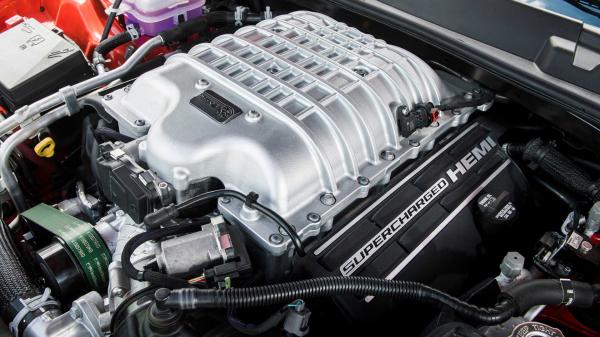
10 Supercharged V8 Engines Performance Fans Are Hoarding
The transition to electric cars is increasing the pressure to scoop up supercharged V8 engines before they’re all gone.
Dodge’s Performance Future Isn’t Built Around V8s Alone

While V8 loyalists can rejoice over the continuation of the HEMI through the crate program, Dodge is actively using Direct Connection to showcase its next generation of engine technology. Alongside the supercharged V8s sits the HurriCrate series, derived from the modern 3.0-liter Hurricane twin-turbocharged inline-six engine family.
The HurriCrate lineup is split into two distinct tiers:
- HurriCrate Cat 1: Features two low-inertia, high-flow turbos pushing 22 psi of boost to produce a highly responsive 420 hp and 468 lb-ft of torque at just 2,500 rpm. A complete engine costs $10,985, while a long block costs $7,995.
- HurriCrate Cat 3: Steps things up with dual Garrett turbochargers pumping out 26 psi of boost, oil-jet-cooled forged aluminum pistons, and a dual high-pressure direct-injection system to deliver a fierce 550 hp and 531 lb-ft of torque at 3,500 rpm. This is a bit more expensive at $13,745 for a complete engine, while a long block costs $11,715.
Both configurations utilize an advanced aluminum block with Plasma Transfer Wire Arc (PTWA) cylinder coatings, creating an incredibly low-friction, high-power-density package that weighs around 70 pounds less (430–441 pounds) than a traditional 6.4-liter Apache HEMI V8 (over 500 pounds).
The Twin-Turbo Hurricane Isn’t Replacing The Hellcat

It is easy for old-school purists to look at an inline-six and see it as a threat to the V8 king, but the Hurricane architecture isn’t meant to replace the Hellcat—it is meant to expand your options. The extreme weight savings of the aluminum inline-six completely transform the handling dynamics of a resto-mod build, keeping the nose light and the chassis agile.
Furthermore, the dual overhead cam architecture and modern twin-turbo design offer massive tuning potential for builders who prefer the sleek, surgical power delivery of a turbo setup over the instant, brutal drag of a supercharger. By offering both platforms simultaneously, Direct Connection supports the traditional muscle car crowd while opening the door for a younger, tech-forward generation of custom builders.
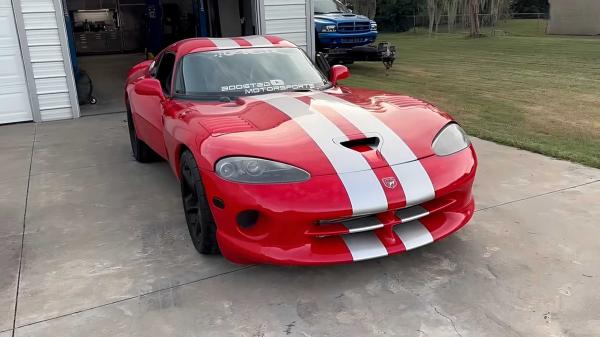
Insane Viper ACR Swap: 550+ HP Hurricane Inline-Six Replaces V10!
A daring swap challenges the norm for Roadkill Nights.
Dodge’s Performance Future Is Still Secure

Ultimately, the existence of the Hellephant C170 and the HurriCrate series proves that Dodge’s performance philosophy didn’t die with the Challenger assembly line—it simply evolved. The brand has created a parts catalog to support various types of builds. You no longer have to buy a specific showroom model to access legendary speed; you just need a vision, a wrench, and some cash. Buying the engine is one thing; you may also need extra cash for some supporting modifications.
By providing factory support for extreme, high-horsepower builds through standalone hardware, Dodge is ensuring its survival in the custom car community for decades to come. The sheet metal may change, and the factory configurations will shift, but the pursuit of pure speed remains a core priority for this brand.
Direct Connection Has Become Dodge’s Unofficial SRT Division

As the dust settles on the modern muscle car era, it is clear that Direct Connection has become the true heir to the SRT legacy…. It is the official outlet for raw power, untethered by mass-market vehicle guidelines and corporate compromises. Through this innovative parts-first framework, Dodge has quietly guaranteed that the rumble of a 1,025-horsepower HEMI and the hiss of high-boost twin turbochargers will continue to dominate drag strips, car shows, and custom garages for generations to come. Dodge listened to its core fans and made sure they were taken care of. The muscle cars may be gone, but the horsepower war is far from over.
Sources: Dodge, DCperformance, Mopar, FAS Motorsports

Related posts




Latest Post


No Comments