
Lamborghini’s Urus Performante Facelift Goes Plug-In Hybrid—Here’s What That Means For The Super-SUV’s Performance
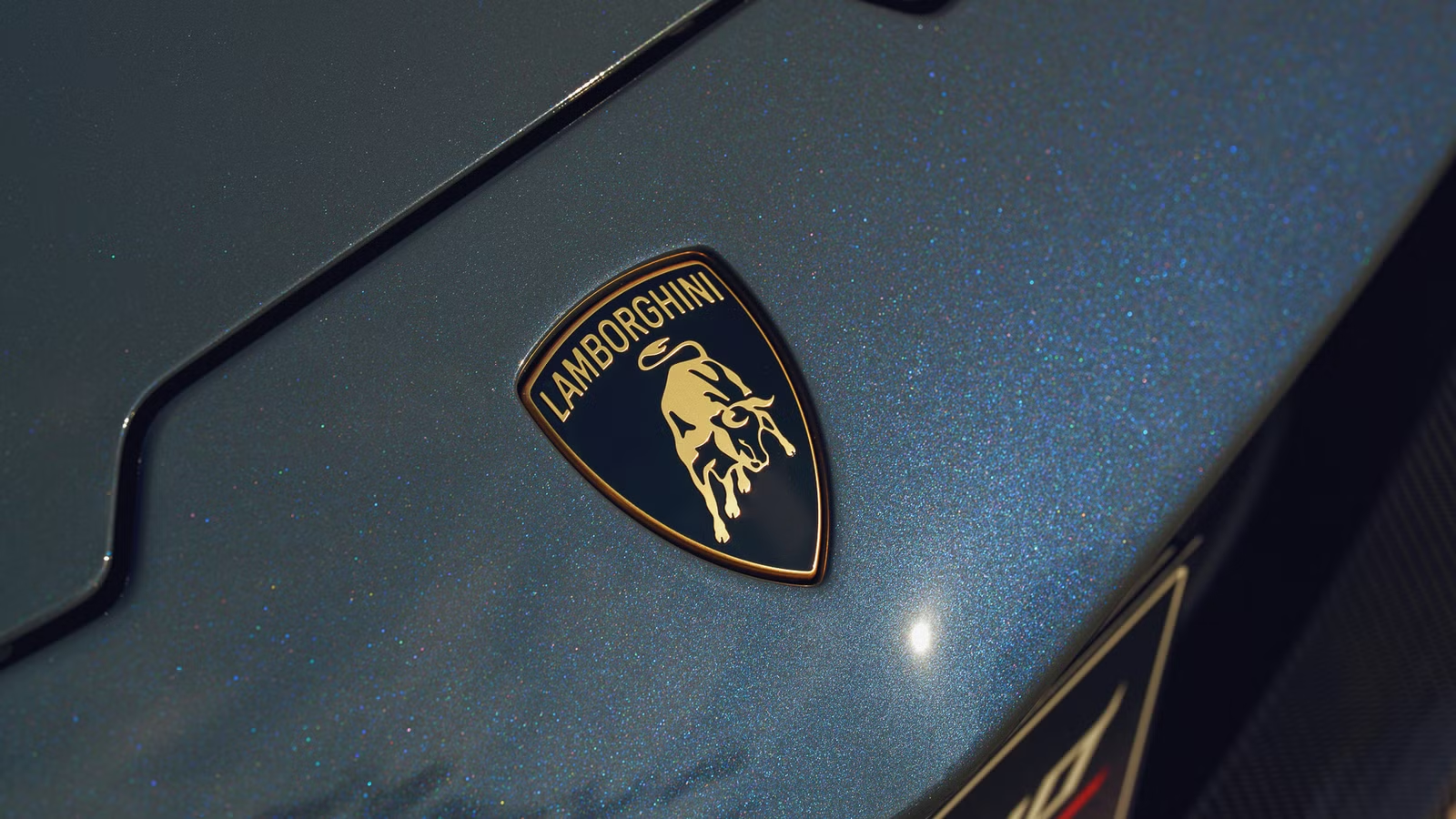
Lamborghini has confirmed the Urus Performante is getting a significant powertrain overhaul, with a plug-in hybrid system replacing the outgoing pure-V8 setup when the facelifted model debuts on July 1, 2026. The move marks a fundamental shift for the brand’s most hardcore SUV—one that raises real questions about what a battery pack and electric motor do to a vehicle that was already pushing 4,500 pounds before the extra hardware.

The teasers released ahead of the reveal hint at more than a cosmetic refresh. Carbuzz reporting ahead of the debut suggests the new Urus variant could produce north of 800 horsepower, which would represent a substantial jump over the outgoing Performante’s twin-turbocharged 4.0-liter V8. Car & Driver notes that the PHEV V8 architecture is the only powertrain direction Lamborghini is pursuing for this generation, meaning the pure-combustion Performante is effectively done.
What A PHEV System Adds—And What It Costs
Plug-in hybrid architecture on a performance SUV is a genuine engineering trade-off, not a straightforward upgrade. The electric motor and battery pack add instant torque at low revs—something that can actually sharpen real-world throttle response off the line and out of slow corners. But they also add weight, typically 300 to 500 pounds depending on battery capacity, which lands on a vehicle that was already one of the heaviest performance SUVs on the market.

For the Urus Performante specifically, that weight penalty matters. The outgoing model earned its reputation partly by feeling more agile than its mass suggested—tighter body control, sharper turn-in, and a powertrain that revved with genuine urgency. A PHEV system that adds bulk at the floor threatens that character unless Lamborghini has done serious work on suspension tuning and torque vectoring to compensate. The brand hasn’t confirmed final curb weight figures ahead of the July 1 reveal, so that number will be one of the first things to scrutinize when the full specs drop.
Where Lamborghini Stands On New SUVs As The Brand Seeks Expansion
The Urus is about as big and SUV-like as the company wants to go, but here’s what it could build instead.
Power Figures And Performance Claims Ahead Of The Reveal

Pre-reveal reporting points to an output figure exceeding 800 horsepower in combined system power — a meaningful leap from the outgoing Performante’s 657 hp. If that number holds, the PHEV system would be doing real performance work, not just serving as a regulatory compliance measure. The electric motor’s contribution at low speeds could also tighten the 0–60 mph time, since instant electric torque fills the gap before the twin-turbo V8 builds full boost pressure.
The outgoing Performante ran 0–60 mph in around 3.3 seconds. A combined output north of 800 hp, paired with electric torque fill, suggests Lamborghini will target a sub-3.0-second figure—though confirmed numbers will have to wait for the official debut. Electric-only range on a performance-focused PHEV of this type typically lands in the 20–40 mile window, enough for urban zero-emission driving but not a meaningful factor on track.
What Changes For Track Days And Real-World Driving Feel

The character shift is where PHEV skeptics have a legitimate point. The outgoing Performante’s appeal was rooted in a high-revving, combustion-first experience—a twin-turbo V8 that built power in a linear, predictable way with a soundtrack to match. A hybrid system introduces a new variable: the transition between electric-only, combined, and combustion-priority modes. Done well, that transition is seamless. Done poorly, it creates hesitation or an artificial feel that breaks the driver’s connection to the car.
Lamborghini’s own hybrid experience with the Revuelto suggests the brand understands how to calibrate these systems for performance rather than economy. The Revuelto’s three-motor hybrid setup prioritizes driver feel over efficiency metrics, and the expectation is that the Urus Performante PHEV will follow a similar philosophy — using the electric motor as a performance tool rather than a fuel-saving measure. On track, the added torque could genuinely improve mid-corner exit acceleration. The weight, however, remains the open question that no amount of software tuning fully solves.
Facelift Details And What To Watch On July 1
Lamborghini’s teasers ahead of the reveal show updated aerodynamic bodywork consistent with a mid-cycle facelift—sharper lines and revised front and rear fascias that bring the Urus closer to the current Huracán and Revuelto design language. The visual updates appear meaningful rather than token, though the powertrain story is clearly the headline.
The confirmed specs to watch when the July 1 reveal goes live: total system output, official curb weight, 0–60 mph time, and electric-only range. Those four numbers will determine whether the PHEV Urus Performante is a genuine step forward or a heavier car wearing a bigger horsepower badge. Given Lamborghini’s track record with the Revuelto’s hybrid integration, there’s reason for cautious optimism—but the proof will be in the driving impressions that follow.
Sources: Carscoops, Car & Driver, Carbuzz

Related posts





Latest Post


No Comments