
Ford’s Hemi Killer Needed A Nearly 7-Foot Timing Chain And Two Different Cam Timings
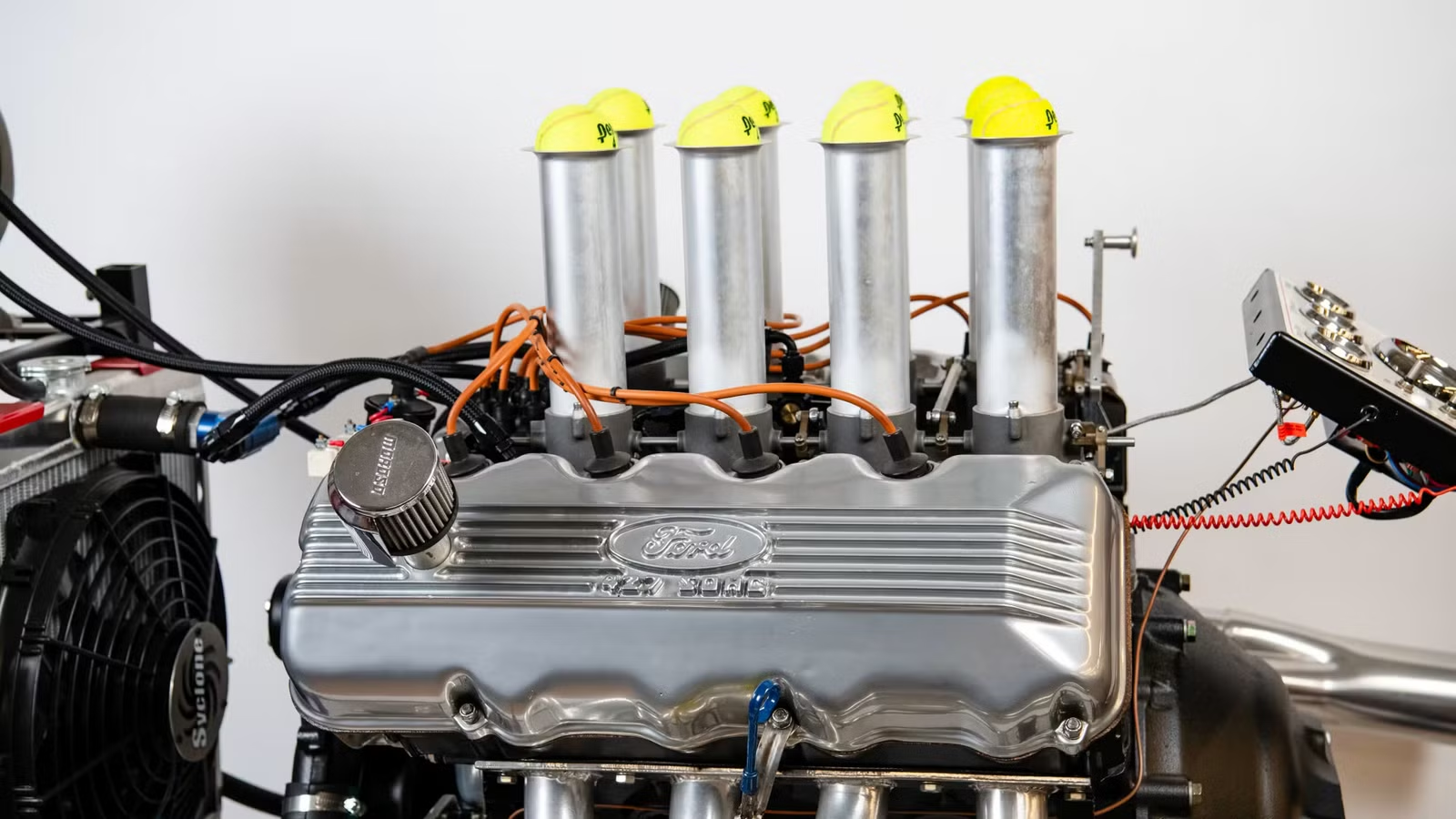
In early 1964, Ford Motor Company watched Chrysler’s new race engine run away with the biggest event in stock car racing, and it wanted an answer fast. Its engineers delivered one in a matter of months, and on paper it was a masterpiece. Underneath the headline horsepower, though, sat a compromise born of that rush. It was a single part so long and so stubborn that the people who raced the engine had to set up its two cylinder banks as if they belonged to different motors.
Ford Rushed Its Answer To Chrysler’s Domination

The trigger was the 1964 Daytona 500. Richard Petty won it in a Plymouth powered by Chrysler’s new 426 Hemi. For Ford, which had spent heavily on its “Total Performance” racing push, losing that badly on the sport’s biggest stage was a problem it could not leave alone through another season.
Ford’s engineers had no time to design a clean-sheet engine. According to most accounts, the company took its new design from the drawing board to a running engine in about three months. That pace forced every decision toward whatever Ford already had on the shelf. NASCAR boss Bill France rejected the engine as soon as he learned of it, and it never turned a lap in Grand National racing, but the bigger story is what the rush did to the hardware itself.
Bolting Overhead Cams Onto A Pushrod Big-Block


Rather than start from scratch, Ford took its existing pushrod big-block, a proven and durable racing engine, and gave it new cylinder heads with a single overhead camshaft on each bank. Overhead cams freed the valvetrain from heavy pushrods and rocker geometry, which meant the engine could breathe and rev far harder than its pushrod sibling ever could.
The catch was how to turn those two camshafts. Both sat high up in the heads, far from the crankshaft at the bottom of the block. A gear train would have been precise but complex and slow to develop. Ford chose a chain instead, because it was quicker to engineer and easier to package in a block that was never designed for overhead cams in the first place.
The Idler Shaft That Replaced The Camshaft

The old pushrod camshaft did not simply vanish. Ford kept a shaft in its original bore, where it now worked as an idler, turning the oil pump and distributor just as the camshaft once had. The crankshaft drove this idler through a conventional short chain at the front of the block.
The long chain was the clever and troublesome part. It ran from the idler up and over a set of guides and tensioners to sprockets on both overhead camshafts, snaking across the full width of the engine. It worked, and it let Ford build engines quickly, but a chain that long was always going to behave differently from one that only had to travel a few inches.
The Ford 427 SOHC Cammer’s Marathon Timing Chain

This was the Ford 427 SOHC, the engine racers quickly nicknamed the Cammer. Ford rated it at 616 horsepower with a single four-barrel carburetor and 657 hp with two, at a time when that kind of output from a production-based V8 seemed almost absurd. Its chain is where the headline comes from, and even the length is up for debate.
Several historians describe the chain as nearly seven feet long, and that figure appears in other detailed histories of the engine too. Others put it closer to six feet in total. Either way, it was an extraordinary length for a part spinning at 7,000 rpm, and it gave the engine a habit no stopwatch could ignore.
Why Each Cylinder Bank Needed Its Own Cam Timing

Under load, a chain that long stretches. Slack built up in the links as the engine spun, and it never spread evenly between the two camshafts, so one bank’s timing drifted away from the other. The result was two cylinder banks running slightly different valve timing at high rpm, which robbed power and made the engine harder to tune.
Racers solved it the only way they could. They learned to stagger the cam timing by four to eight degrees between banks, setting each side up so that both landed in the right place once the chain had stretched at speed. It was strange guesswork for a factory racing engine.
There was another quirk hiding in the heads. The chain layout also demanded left and right camshafts that were mirror images of each other. A builder could not simply swap one for the other, so every spare had to be the correct side. For drag teams who wore out parts at a furious rate, that doubled the inventory they had to carry.
How Drag Racers Fixed The Cammer’s Chain

With NASCAR closed to it, the Cammer found its real home on the drag strip. Ford first put the engine in factory-backed Mustangs and Mercury Comets running in NHRA’s Factory Experimental classes from 1965, and racers such as Dyno Don Nicholson made it famous. Ford also supplied engines to nitro racers, including Connie Kalitta and Pete Robinson, who pushed the design far beyond anything its engineers had planned for.
At those power levels, the chain’s flaws were impossible to live with. Robinson, one of the most inventive racers of the era, teamed up with cam specialist Harvey Crane and P&S Machine to replace the chain with a gear drive. Gears do not stretch, so the two banks finally stayed in step, and the guesswork of staggered cam timing went away.
Their design had a neat side effect. An extra gear on the left bank reversed the drive on that side, which meant a right-hand camshaft could be used in both heads. In one move, Robinson’s gear drive fixed the timing problem and halved the camshafts a team needed to keep on hand. Ford built the engine in a hurry, but it took the racers who ran it hardest to finish the job.
Sources: Mac’s Motor City Garage, FordMuscle, Ford

Related posts





Latest Post


No Comments