
Honda’s Spaceship Bike Had A 25.6-Inch Seat And Standard DCT But Still Vanished
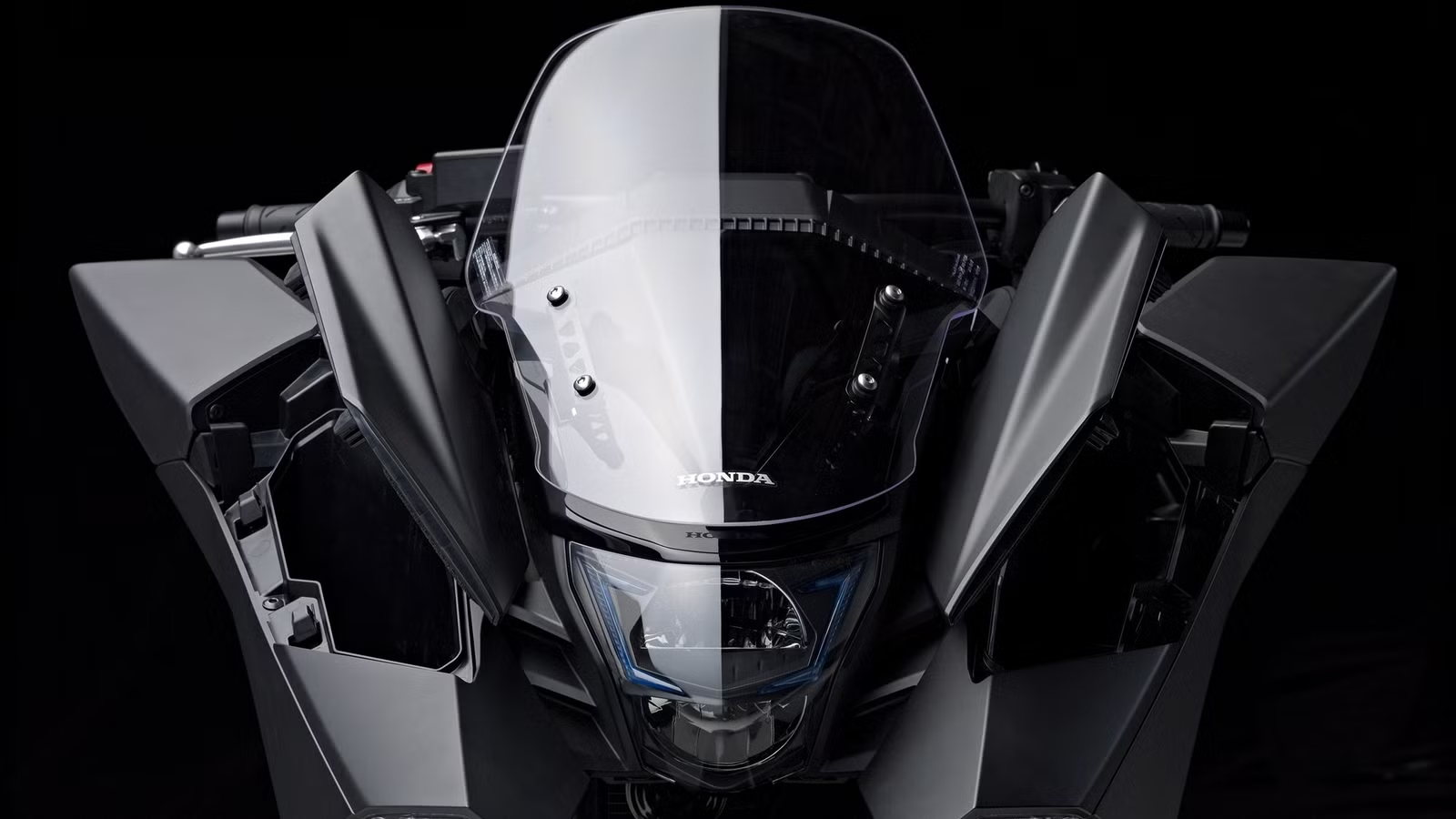
Most motorcycles follow familiar rules. Cruisers, for example, celebrate exposed engines, traditional styling, and the experience of shifting gears. However, Honda once challenged that formula with a futuristic machine designed to attract people who had never considered riding. It combined outrageous science-fiction styling with a remarkably low seat, an automatic transmission, and surprisingly approachable performance. The motorcycle looked intimidating, but Honda designed it to make riding easier.
Honda Wanted To Attract Riders Who Didn’t Like Traditional Motorcycles

Motorcycle manufacturers have always struggled to attract people who find conventional bikes intimidating or complicated. Traditional cruisers also appeal to a specific audience, with exposed engines, chrome, and classic proportions reinforcing their connection to motorcycle history. Harley-Davidson built much of its identity around that heritage, offering machines that celebrate the sights, sounds, and character of American cruising.
Honda took a different approach. The Japanese manufacturer experimented with unconventional styling, automatic transmissions, and alternative riding experiences to reach new customers. However, making motorcycles easier to operate solved only part of the problem. Honda also needed to give younger buyers, including those interested in gaming and science fiction, a reason to actually want a motorcycle.
The Futuristic Styling Made It Look More Intimidating Than It Really Was


Honda’s answer looked like something Batman might ride if the Batmobile needed servicing. An enormous front fairing dominated the design, while sharply sculpted panels, an unusually low cockpit, and a wide rear tire gave the machine an aggressive appearance. Japanese anime, science-fiction vehicles, and stealth fighters influenced its styling. Reviewers frequently compared its appearance to the futuristic motorcycles in Akira.
The unusual proportions also blurred traditional motorcycle categories. Its relaxed riding position suggested a cruiser, the surrounding bodywork resembled an oversized scooter, and the substantial fairing hinted at a touring machine. Instead of sitting upright on a conventional motorcycle seat, the rider settled low behind the bodywork with a supportive backrest. Despite its menacing appearance, Honda prioritized accessibility over outright performance.
The Honda NM4 Combined A 25.6-Inch Seat With An Automatic Transmission

The motorcycle was the Honda NM4, introduced in 2014 and marketed as the NM4 Vultus in Europe. Honda intended this genuine production model to attract younger, gaming-oriented customers and people who wouldn’t normally consider buying motorcycles. It remained in Honda’s catalog through 2019. Its biggest advantage was a remarkably low 25.6-inch (650 mm) seat height, which helped shorter riders place their feet securely on the ground. The low center of gravity also made the motorcycle feel more manageable than its bulky bodywork suggested. Riders enjoyed a feet-forward position, while the passenger seat could flip upward to create an adjustable backrest. However, the NM4 wasn’t particularly light – depending on the version, published curb weights ranged from approximately 540 to 562 pounds. A low seat helped riders control the motorcycle at stops, but it couldn’t eliminate the effort required to move that weight around a parking lot.

Honda also equipped the NM4 with its six-speed Dual-Clutch Transmission (DCT) as standard equipment. Unlike a scooter-style continuously variable transmission, DCT used conventional gears and electronically controlled clutches. Riders could select automatic Drive or Sport modes, or manually change gears using handlebar buttons. Without a clutch lever to operate, inexperienced riders had one less skill to master. Beneath the futuristic bodywork sat Honda’s NC-series parallel-twin engine, which shared its basic architecture with the NC700X and CTX700. North American models used a 670cc engine, while European and Asian versions received a 745cc unit. The manufacturer inclined the cylinders 62 degrees forward, helping lower the center of gravity. The engine emphasized smooth torque and fuel efficiency rather than thrilling acceleration.
Meanwhile, LED lighting, integrated fairing compartments, cockpit-inspired controls, and a digital instrument display with 25 selectable colors reinforced the spaceship theme. Honda had combined unusual styling with approachable engineering, but several compromises weakened the overall package.
The NM4’s Price And Practical Compromises Undermined Its Appeal

The NM4’s biggest obstacle was its price. Honda introduced it in the United States for approximately $10,999, while the 2018 model carried an $11,299 MSRP. That made it considerably more expensive than motorcycles with related mechanical components. For comparison, the 2018 CTX700 DCT cost around $8,399, while the NC750X DCT started at $8,699. Both delivered everyday practicality and automatic shifting for less money.
The NM4’s enormous bodywork also created unrealistic expectations about luggage space. Despite its integrated compartments, reviewers found the available storage surprisingly limited. It looked ready for an intergalactic road trip but struggled to accommodate ordinary touring luggage.

Road testers discovered other drawbacks. The feet-forward seating position could become uncomfortable over longer distances, while the automatic transmission occasionally changed gears during corners. These shifts weren’t necessarily harsh, but their timing could feel distracting.
Nevertheless, reviewers praised the smooth DCT, predictable power delivery, and surprisingly manageable handling despite the motorcycle’s wide rear tire and substantial weight. Its dramatic appearance also attracted attention from non-riders, exactly as Honda intended.
Unfortunately, curiosity didn’t consistently translate into purchases. The NM4 remained a niche motorcycle and disappeared for the 2020 model year, with limited sales cited as the reason.
Honda’s Futuristic Cruiser Challenged Tradition But Couldn’t Replace It

The NM4 demonstrated that accessibility didn’t require traditional cruiser styling. While Harley-Davidson continued celebrating its heritage, Honda explored an entirely different interpretation of relaxed riding. Its low seat, manageable engine performance, and automatic transmission reduced several barriers that discourage newcomers. However, its unconventional appearance and premium price also limited its appeal. Experienced riders could find more familiar alternatives, while practical-minded buyers could purchase cheaper Hondas with similar mechanical advantages.
Still, the NM4 wasn’t a complete failure. Honda wanted to generate attention and introduce motorcycling to audiences beyond traditional enthusiasts, and the machine accomplished both. Its futuristic design sparked conversations, drew curious onlookers, and demonstrated the appeal of unconventional engineering. The NM4 ultimately proved that attracting attention and securing sales are two very different challenges.
Source: Honda

Related posts



Latest Post


No Comments