
Modern Muscle Cars Have Lost What Made Them Special
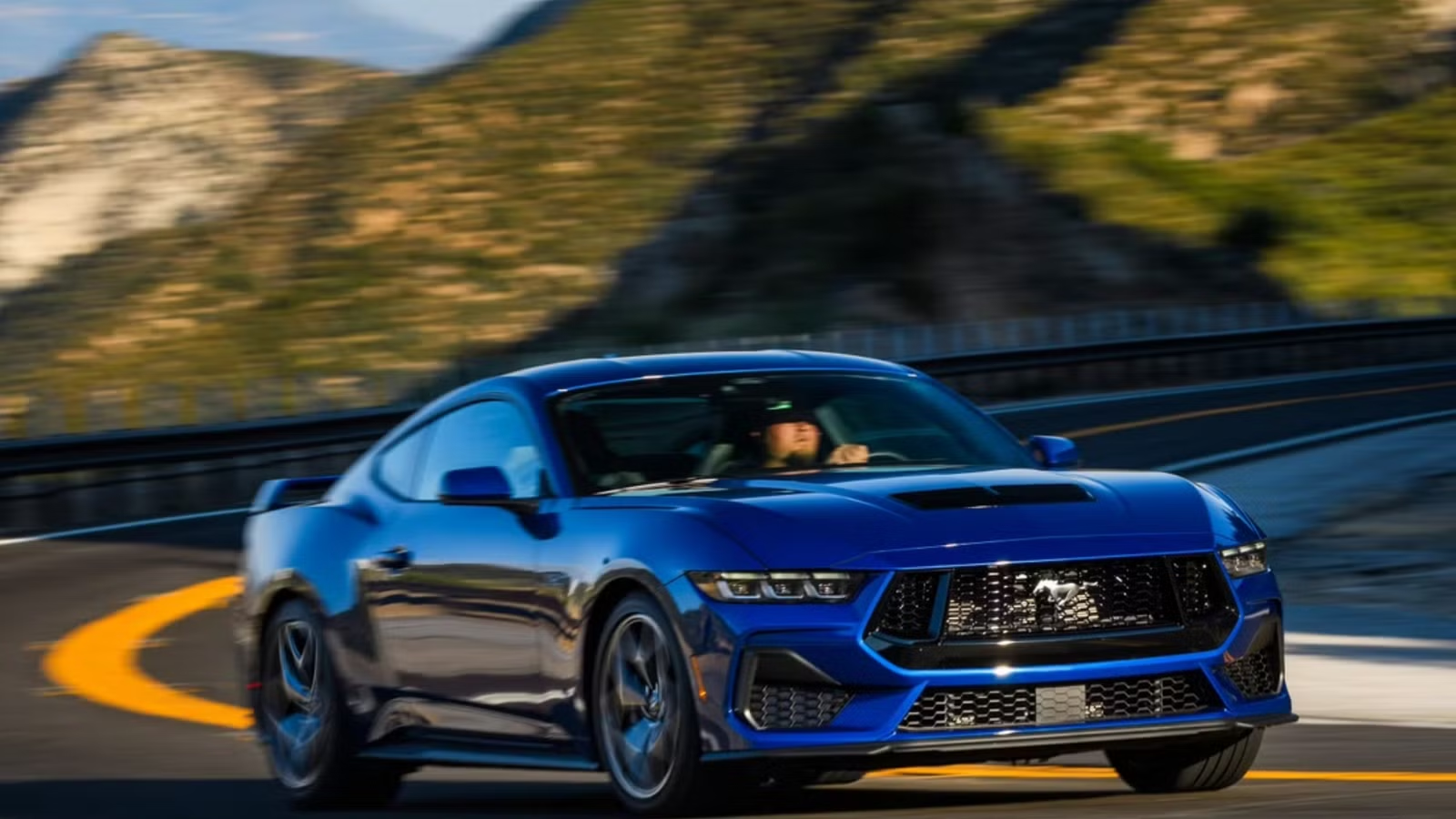
In 1968, a Plymouth Road Runner cost $2,896, made 335 horsepower, and could barely stop. People loved it anyway. Today, American muscle has never been quicker, and the most extreme Mustang costs more than a Porsche 911 GT3 RS. The V8 Challenger and Camaro are gone, and the Charger now runs on a twin-turbo six or on batteries. Nearly every number has improved. What hasn’t survived is the cheap, loud, usable fun that made people fall for these cars in the first place. The modern defense deserves a fair hearing, too.
The Muscle Car Formula Was Never About Lap Times

The Plymouth Road Runner answered one question: how cheaply can you sell speed? Plymouth took a Belvedere, stripped the cabin to taxicab basics, and fitted a 383-cubic-inch V8 with the heads and camshaft from the 440, rated at 335 gross horsepower.
A four-speed manual came standard. The pillared coupe listed for $2,896, and Plymouth sold 44,599 Road Runners that first year. That’s the whole formula. A young buyer on a modest paycheck could afford the fast one.
Why 335 Horsepower On Skinny Tires Felt Like 600

Period testing put the base car at 7.3 seconds to 60 mph and a 15.37-second quarter-mile at 91.4 mph. Modest by today’s standards, but those runs happened on F70-14 bias-ply tires, with no traction control and a live rear axle. The car reached its limit at speeds you could actually see on a public road. The drama per mile per hour was enormous, and that’s what owners remember, not the timeslips.

How 800 Horsepower Became The New Normal

The 2015 Dodge Hellcat’s 707 horsepower started an arms race that never ended. Its logical end point is the Mustang GTD, with 815 horsepower from a supercharged 5.2-liter V8. Ford told prospective buyers to expect close to $325,000, and a leaked window sticker showed a base price of $318,760.
Now the math. The Road Runner’s $2,896 in 1968 dollars, multiplied by roughly 9.5 for cumulative inflation, comes to about $27,500 today. The GTD costs more than 11 times that. Even the standard 500-horsepower Dark Horse, with its naturally aspirated 5.0-liter Coyote V8, starts at $63,080, or about 2.3 times the Road Runner’s adjusted price.
What 4,800 Pounds Does To A Muscle Car

The Charger Scat Pack Sixpack makes 550 horsepower and 531 pound-feet from a twin-turbo 3.0-liter inline-six, and Dodge quotes 3.9 seconds to 60 mph. It also weighs about 4,800 pounds, rides on a 121-inch wheelbase, and sends its power through standard all-wheel drive and an eight-speed automatic. There’s no manual. All that mass, width, and grip means the speed arrives without the sensation. You’re well into illegal territory before the car feels busy.
What Electronics And Grip Took Away From The Driver

Modern muscle comes loaded with launch control, line lock, rear-drive modes, and, in the Mustang’s case, an electronic drift brake. Each feature is clever. Together, they hand the car the job the driver once had to learn. Add 305-section tires and 500-plus horsepower, and the fun doesn’t start until speeds that put your license at risk.
Turbo Sixes, Electric Motors, And The Missing V8 Soundtrack
Sound was never garnish on a muscle car. It was the point. The Sixpack’s Hurricane six is effective, but reviewers keep flagging its exhaust note as a weakness, and the electric Charger Daytona leans on its speaker-driven Fratzonic system to imitate a V8. Neither replaces the lazy rumble and instant throttle response of a big naturally aspirated engine.
The Case Against Nostalgia: Modern Muscle Is Better At Nearly Everything


Here’s the uncomfortable part. When Car Life tested a base Road Runner in 1968, it found the car short on both go and stop, with poor drum brakes. By modern standards, classic muscle couldn’t stop, turn, or protect its occupants. A base Mustang GT would beat a Road Runner everywhere, including the drag strip, and then drive home with the air conditioning running. Reliability, safety, and daily usability are real gains, and ignoring them is selective memory.
The 480-Horsepower Mustang GT Still Keeps The Old Promise

The formula isn’t dead, either. The 2025 Ford Mustang GT pairs a 480-horsepower 5.0-liter V8 with rear-wheel drive and a standard six-speed manual, starting at $46,560 before destination. That’s about 1.7 times the Road Runner’s adjusted price, the closest any current car gets. And the market is pushing back. Multiple outlets report that Dodge plans to return the supercharged Hellcat V8 to the Charger, likely for the 2028 model year. A new Camaro is also reportedly in development, though GM hasn’t confirmed it, and the reported timing has already shifted.
Modern Muscle Cars Are Faster Than Ever And Harder Than Ever To Love

By every measurable standard, these are the best muscle cars ever built. That’s the honest concession. But what made the breed special never lived on a spec sheet. It was a price a young buyer could manage, a noise that rattled windows, and speed you could feel on the way to work. The reported Hellcat comeback suggests automakers have heard the complaint. The bigger question belongs to the rest of us: is a 550-horsepower, all-wheel-drive six-cylinder a muscle car, or just a fast car wearing the name?
Sources: KBB, Ford, Dodge, Cars.com

Related posts
Latest Post


No Comments