
This Harley Cruiser Continues To Age Like Fine Wine
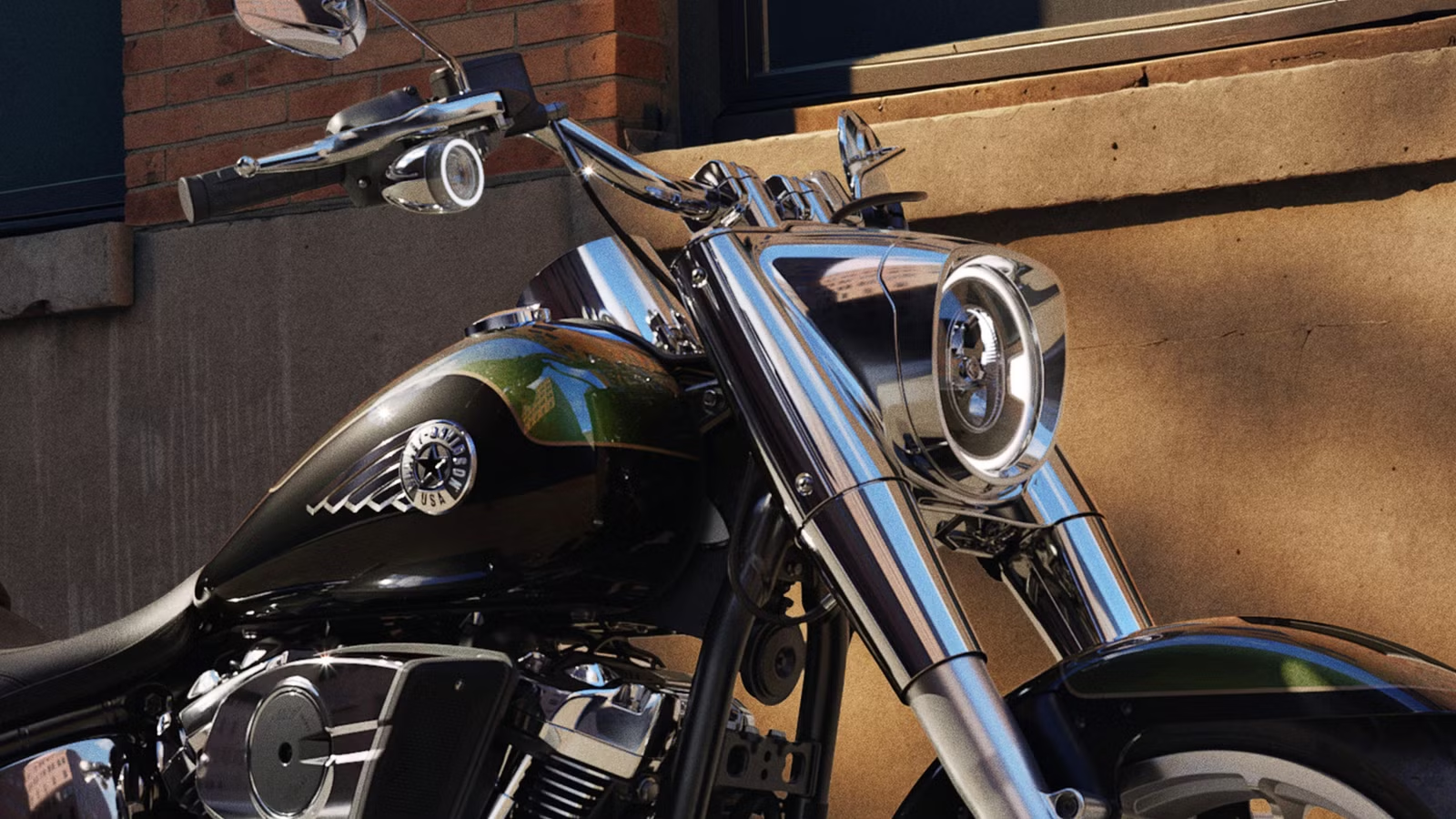
Cruiser motorcycles have always stood apart for their unconventional nature. While most bikes are built around a rider’s needs, cruisers demand that riders adapt to them. They keep their low-slung proportions, relaxed riding posture, and long wheelbases at the core of their identity, adapting as needed to survive in the modern world. Through this evolution, some prevail, some get forgotten, but a select few throw logic out the window. These machines mostly stick to their original form and gain value and character as the years pass.
Cruiser Bikes Are Usually Unbothered By Evolving Design Trends

Cruiser bikes have never been known to follow all the trends and updates like other segments do. Moreover, cruisers’ advantage is that their looks are never tied to performance. While superbikes rely on aerodynamics and aggressive styling that date with modernization, cruisers rely on proportions.
The stretched-out wheelbase, a V-twin build to display the muscle, chrome and polished metals, and aesthetic paint schemes wear in rather than wear out. Evolving design trends don’t matter when you have these uncomplicated things doing a much better job of adding value.
But Only Some Cruiser Silhouettes Remain Iconic For Decades

However, not every cruiser successfully pulls off the timeless look. The tag of a “cruiser” doesn’t necessarily grant it permission to be iconic. Many models have succumbed to changing styling preferences or been tied to a particular era. So, the motorcycles that deliver a distinctive silhouette that blends definition with a design identity that stands out even from a distance survive for decades. No one understands this better than the one that introduced it all, Harley-Davidson.

The Harley-Davidson Fat Boy Has Always Played By Its Own Rules

The Harley-Davidson Fat Boy was born to disrupt the cruiser landscape. Its 1990 introduction sparked heavy debate because of its design choices. Yet it surprised people with a unique solid-cast disc wheel, a beefier body, and a livery that highlighted the metalwork. Over time, the bike has become more of an art form than a simple motorcycle. The first generation to run the legendary 1,340cc Evolution engine is highly coveted by purists who still hunt the models today. While the Harley made a statement with its presence, it became untouchable after its Hollywood boom.
The credit goes to the highly acclaimed Terminator 2: Judgment Day, which shows Arnold Schwarzenegger jumping into a storm drain during a chase on the 1991 Fat Boy. The bike has been an icon for Harley-Davidson loyalists and beyond ever since. With that in mind, Harley has never taken a wrong turn in its creation, which helps explain why it has survived more than three decades.
Its Design Has Only Become More Distinctive

While the Fat Boy relies on its roots, 35 years is a long time to stay the same. Harley resolved the first-generation issues when it moved on to the 1450cc Twin Cam 88B Big Twin (counter-balanced engine) to tame frame vibrations. Throughout its lifetime, which ended in 2017, Harley bumped the engine up twice — to the 96B and 103B — and replaced the old five-speed gearbox with a six-speed Cruise Drive transmission. To match these custom tastes, Harley also made cosmetic changes, widening the rear frame section to make it even beefier.
The current era introduced the most radical changes to the Softail. Harley built the chassis from the ground up, making it stiffer and lighter than the previous generation. It swapped in its groundbreaking Milwaukee-Eight V-twin featuring double counter balancers and an even bulkier engine. The suspension received an upgrade for modern comfort, while the layout accommodates Harley’s widest-ever tires on a lighter set of wheels. This generation marks the platform’s biggest leap in digital architecture as well.
A Closer Look Reveals More Than Just Timeless Looks

The current iteration of the Harley-Davidson Fat Boy features the formidable Milwaukee-Eight 117 Custom V-Twin engine. Up from the 114, this engine now displaces 1,923cc, produces only 103 horsepower, but delivers a crushing 126 pound-feet of torque that peaks at just 3,000 rpm. The Fat Boy has also carefully implemented technology without announcing it. It comes with selectable ride modes and cruise control, both of which you can toggle with a simple switch. Features like corner-assisted ABS and TCS, drag-torque slip control, and tire pressure monitoring intervene seamlessly without hampering the bike’s raw feel.
A Modern Chassis Makes Fat Boy More Than A Straight-Line Cruiser

The Fat Boy still runs on the Softail platform, but on a completely re-engineered one. The foundation sits on a high-stiffness, lightweight carbon steel tubular frame which is 34 percent stiffer and cancels out the frame flex prominent in the previous generations. Using fewer components also helped shed some crucial pounds.
It still weighs a massive 694 pounds, and the upgraded suspension is calibrated to keep the huge 160mm and 240mm front and rear tires, respectively, planted. The front runs 49 mm Showa forks with 5.1 inches of travel, in addition to a rear preload-adjustable monoshock with 3.3 inches of travel. Meanwhile, the signature 18-inch Lakester cast aluminum wheels house a 300mm floating disc with a four-piston caliper up front, paired with a 292mm rotor and a two-piston caliper at the rear.
The Fat Boy Is One Of The Priciest Softails Out There

Harley-Davidson has never shied away from a high price tag, and the Fat Boy is no exception. Priced at $22,599, the cruiser sits on the higher side of the Softail family. Of the lot, only the Breakout and Low Rider ST are slightly more expensive, sitting at $22,999 and $23,999, respectively. However, that has never driven away devotees or those who understand Harley culture. As motorcycle trends change, the Fat Boy has stayed relevant for decades, retaining its identity without a redesign.
Source: Harley-Davidson

Related posts


Latest Post


No Comments