
BMW Beat The 1999 Hayabusa’s Top Speed With Wings And Wheel Covers, Not Horsepower
In 1999, Suzuki built a motorcycle so fast it helped force the entire industry to slam the brakes. The Hayabusa’s top speed became the number every hyperbike was measured against, and for years after, no mainstream manufacturer officially claimed more. Then BMW tried something different. Rather than bolting on more horsepower, it turned to the wind tunnel, adding wings and carbon covers borrowed from racing until the speedometer crept past Suzuki’s old benchmark. The margin is tiny. The way BMW got there is the interesting part.
How The 1999 Suzuki Hayabusa Set A Speed Benchmark That Stood For Decades

The Suzuki Hayabusa arrived for 1999 with a 1,299 cc inline-four making 173 horsepower at the crank, a full 20 hp more than Suzuki’s own GSX-R1100. Suzuki shaped its bulbous bodywork in the wind tunnel to slice through air at speeds no production bike had reached, and the name, Japanese for peregrine falcon, matched the target.
It worked. Period testers recorded a 194 mph top speed, which made the Hayabusa the fastest production motorcycle of its era and knocked Honda’s CBR1100XX Super Blackbird off the top spot.
The Gentleman’s Agreement That Froze Superbike Top Speeds


Speeds like that worried regulators, especially in Europe. To head off possible restrictions on sportbikes, manufacturers voluntarily agreed to cap their production bikes at 186 mph, or 300 km/h. Nobody signed a law. They just stopped chasing the number.
The effect showed up immediately. Kawasaki’s 2000 ZX-12R, rated at 178 hp and widely expected to break 200 mph, stopped at 186 mph. From then on, the arms race shifted to lap times, electronics, and power figures, while top speeds stayed frozen. That left the 1999 Hayabusa’s tested figure as the benchmark for mainstream production bikes for more than two decades.
The BMW M 1000 RR Uses Wings And Wheel Covers To Pass The Hayabusa

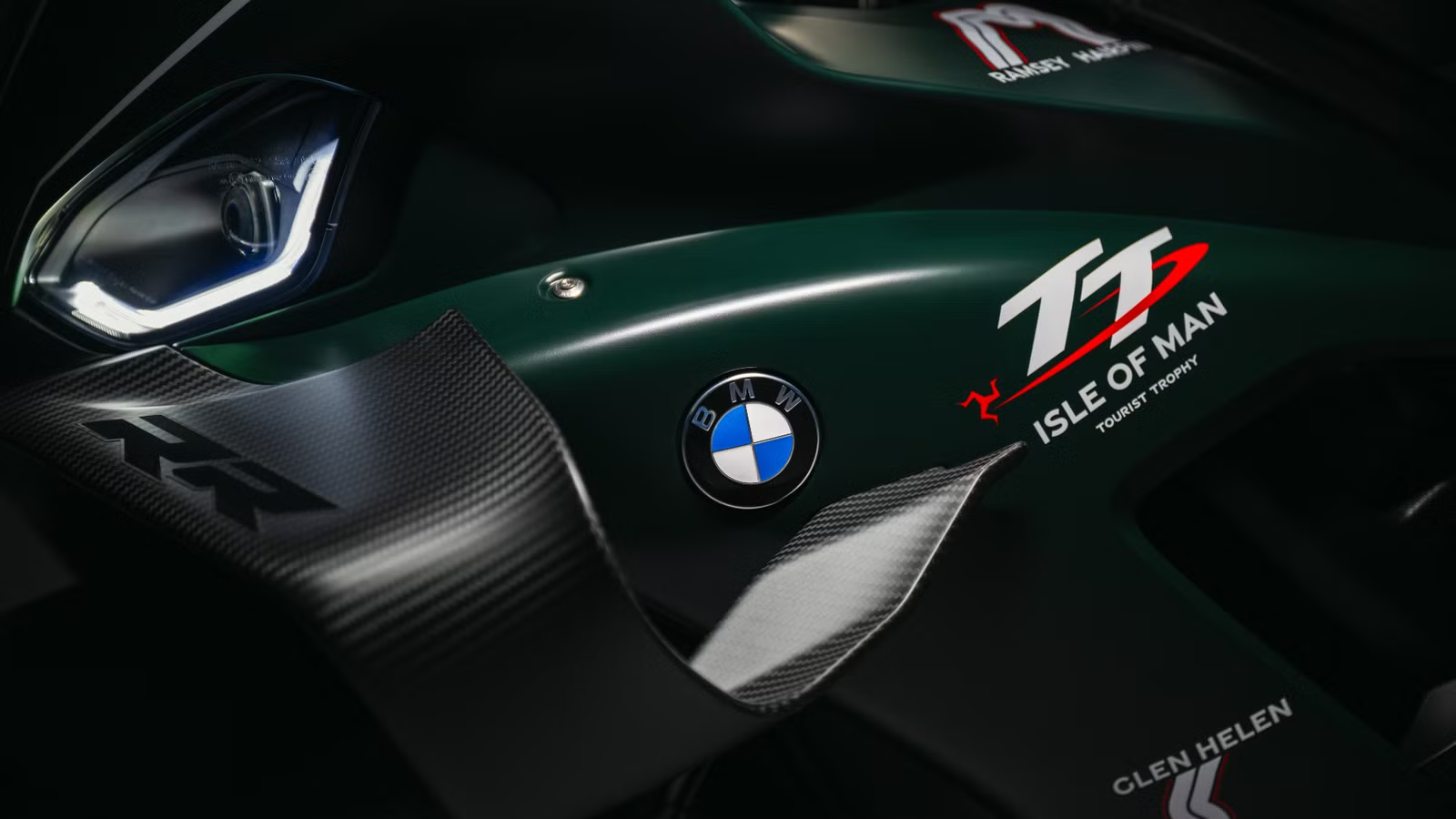
BMW’s answer came from its M division. When it updated the BMW M 1000 RR for 2023, BMW raised the bike’s homologated top speed from about 190 mph to about 195 mph, or 314 km/h. Power barely moved. The 999 cc inline-four made 212 hp at 14,500 rpm and 83 lb-ft at 11,000 rpm, essentially the same output as before.
The difference came from the air. BMW revised the carbon M Winglets for more downforce and offered carbon aero wheel covers, all to cut drag and keep the front end planted at speeds where most superbikes start to shake their heads. That was enough to edge past the Hayabusa’s tested 194 mph by roughly 1 mph.
How M Winglets And Carbon Aero Wheel Covers Add Top Speed

At 186 mph, a motorcycle spends almost all of its power pushing air out of the way, so trimming drag pays off more than adding a few horsepower. The carbon wheel covers smooth the turbulent air churned up by spinning spokes. The winglets work the other way, pressing the front tire into the road so the rider can hold the throttle open longer without the front going light.
BMW kept pushing the idea. For 2025, power rose to 218 PS, about 215 hp, and the new Winglets 3.0 generate around 66 lbs of downforce at 186 mph, up from about 50 lbs. The front wheel cover was dropped, yet the official top speed held at about 195 mph with a DIN weight of 194 kg, or 428 lbs.
Why The M 1000 RR’s Speed Record Comes With An Asterisk
The margin is razor thin, and the two numbers weren’t produced the same way. The Hayabusa’s 194 mph came from real-world testing, while BMW’s 195 mph is a manufacturer figure from European type approval. A mile per hour either way could come down to conditions, gearing, or the rider tucked behind the screen.
American buyers also get a different bike. US-spec M 1000 RRs were rated at 205 hp at 13,000 rpm, with BMW listing a top speed of 189-plus mph, just under the Hayabusa’s tested figure. The carbon wheel covers were never standard either, arriving only with the optional M Competition Package.
What The BMW M 1000 RR Costs Against A Modern Hayabusa

Speed this close to the line doesn’t come cheap. The 2026 BMW M 1000 RR starts at $33,695 in the US, while the 2026 Suzuki Hayabusa lists at $19,499. That’s a gap of more than $14,000 for a bike that edges the old Hayabusa’s top speed only on paper in Europe.
What the extra money buys is everything around that number: a lighter, track-focused chassis, racing-derived aero, and a bike that turns and stops far harder than any Hayabusa. For pure straight-line speed per dollar, the Suzuki still makes a powerful case. Twenty-seven years on, the falcon remains the benchmark everyone measures against.
Sources: Rider Magazine, BMW Group, Motorrad, Bring a Trailer, Kawasaki.

Related posts

Latest Post


No Comments