
The Nine-Passenger Dodge Wagon With A 330-HP Big-Block And Sub-15-Second Quarter-Miles
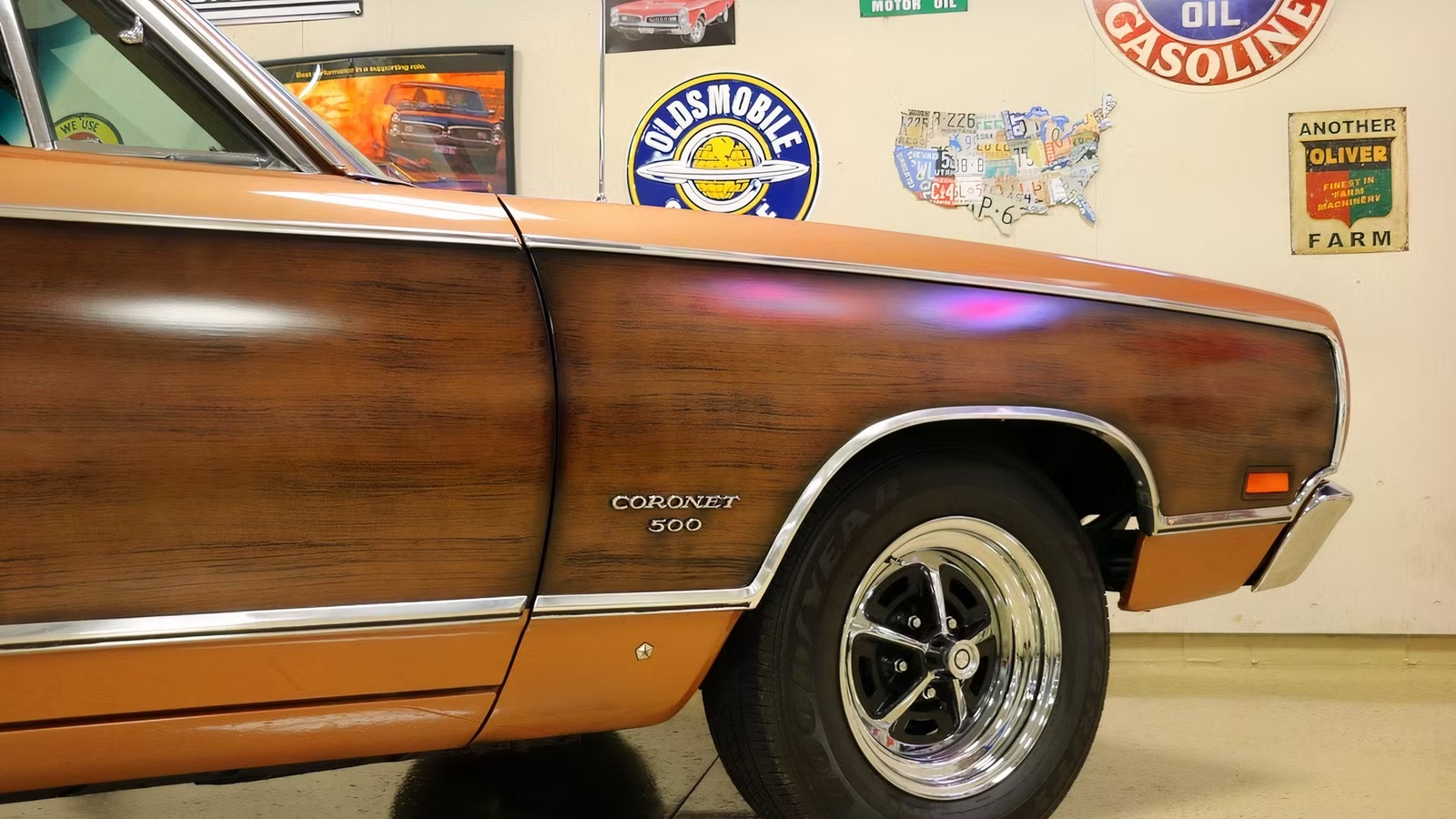
A family wagon that could carry nine people and still run the quarter-mile in less than 15 seconds sounds like an odd bit of muscle-car trivia. But Chrysler was never strict about keeping big-block power in sporty coupes. Its engines could also be ordered in vehicles expected to haul passengers, luggage, and sometimes a trailer. That made for an unusual combination: a practical body with enough displacement to make noise at the drag strip.
Mopar Was Putting Big-Block Power In Unexpected Places

During the muscle-car era, horsepower was usually marketed through coupes and convertibles. But big-block engines were useful for more than winning stoplight contests. Their strong torque appealed to buyers who needed to move a heavy vehicle with people or cargo aboard.
Mopar understood that not every customer shopping for a large V8 wanted a two-door. A wagon could benefit from the same engine choices, especially when towing or carrying a full load. Buyers who needed a practical vehicle did not necessarily have to settle for a small engine.
Big-Block Torque Had A Practical Job, Too
That distinction matters because a high-output engine in a practical vehicle was not necessarily a factory joke or a one-off special. It could be a legitimate option for someone who wanted extra pulling power without giving up passenger space. A strong V8 could make a loaded wagon feel less strained, particularly when accelerating or climbing a grade.

Among Mopar’s mid-size offerings, one wagon made this point particularly well. It had room for an entire family, three rows of seating, and an available big-block V8. Its performance figures put it closer to the muscle-car crowd than most people would expect.
The Dodge Coronet Wagon Could Carry Nine And Still Pack A 383

The 1966–1970 Dodge Coronet wagon was built on Chrysler’s mid-size B-body platform, the same basic architecture used by the Charger. Unlike the Charger, the wagon was designed to carry more than two passengers. Its three-row layout could accommodate as many as nine people, making it a proper family hauler.
Buyers could also order it with a 383-cubic-inch big-block V8. Hagerty lists that engine at 330 horsepower and 425 lb-ft of torque, measured using the gross rating system of the time. Those numbers should not be treated as universal ratings for every 383-equipped wagon across all five model years, but they show the available performance.
The 383 Was More Than A Practical Upgrade

The 383 was more than a way to make the option sheet look impressive. Its torque suited a vehicle that could be loaded with passengers and luggage, or pressed into towing duty. A smaller engine might move the wagon adequately, but the big-block gave it more reserve when the weight went up. That extra muscle was useful even when the car wasn’t being driven hard.
This is what makes the Coronet wagon interesting. It offered the space expected of a family car, yet its optional engine came from the same big-block family associated with Mopar’s performance machines. The wagon did not need a body kit or racing stripes to make the point. The engine did most of the talking.
This Family Wagon Came Surprisingly Close To A Coronet R/T
The Coronet wagon’s quarter-mile time is under 15 seconds, reportedly about one second behind a 440 Six Pack Coronet R/T coupe. That is a striking comparison for a vehicle with three rows of seats and room for nine. It also needs context: the comparison is Hagerty’s and should not be confused with separate tests of other R/T configurations. The 1969 Coronet R/T 440 ran around 13.6 seconds and 137 mph.
The R/T Had The Muscle-Car Reputation, But The Wagon Wasn’t Far Behind

Road & Track recorded 16.6 seconds for a 1967 Coronet R/T, a result often attributed to California emissions tuning and period tires. That slower figure does not erase Hagerty’s wagon comparison; it shows how test conditions and specifications affect period results. Magazine tests were not always directly comparable.
Even with those caveats, the wagon’s reported sub-15-second run is impressive. It was not a stripped-down race car, and it did not have the R/T’s coupe profile. It was a passenger wagon that could still make a serious run down the quarter-mile, which makes the comparison worth discussing.
The Coronet Wagon Shows Muscle Was Never Just About The Body Style

The Coronet wagon challenges the idea that a muscle car had to be a coupe with a loud badge and a short back seat. Its practical shape did not change what a 383 big-block could do, and its passenger capacity makes the reported quarter-mile performance more interesting, not less. A 1969 Coronet Wagon sold for around $20,500 on Bring A Trailer.
The Coronet wagon was built for family transportation, and its performance depended on the engine and equipment ordered by the first buyer. But the option list let customers put serious V8 power in a vehicle that could handle ordinary family duties during the week. It was a different kind of muscle car, built around different priorities.
The Coronet 440 Name Had Nothing To Do With A 440 Engine

One detail worth clearing up is the Coronet 440 name. It referred to a trim level, not a 440-cubic-inch engine. A Coronet 440 wagon could still be equipped with the 383, so the badge alone does not tell the whole story. It is an easy distinction to miss, particularly when the car is discussed alongside the 440-powered R/T.
That is part of the wagon’s appeal today. It sits in an unusual corner of Mopar history, where passenger capacity and big-block performance met in the same vehicle. The Coronet did not need to look like a muscle car to have the hardware, or the quarter-mile numbers, to join the conversation.
Sources: Dodge, Mecum, Bring A Trailer

Related posts



Latest Post



No Comments